©2026 Business Next Media Corp. All Rights Reserved. No.102, Guangfu S. Rd., Da'an Dist., Taipei City 106, Taiwan
Police partner with Taiwan app developer to detect scams
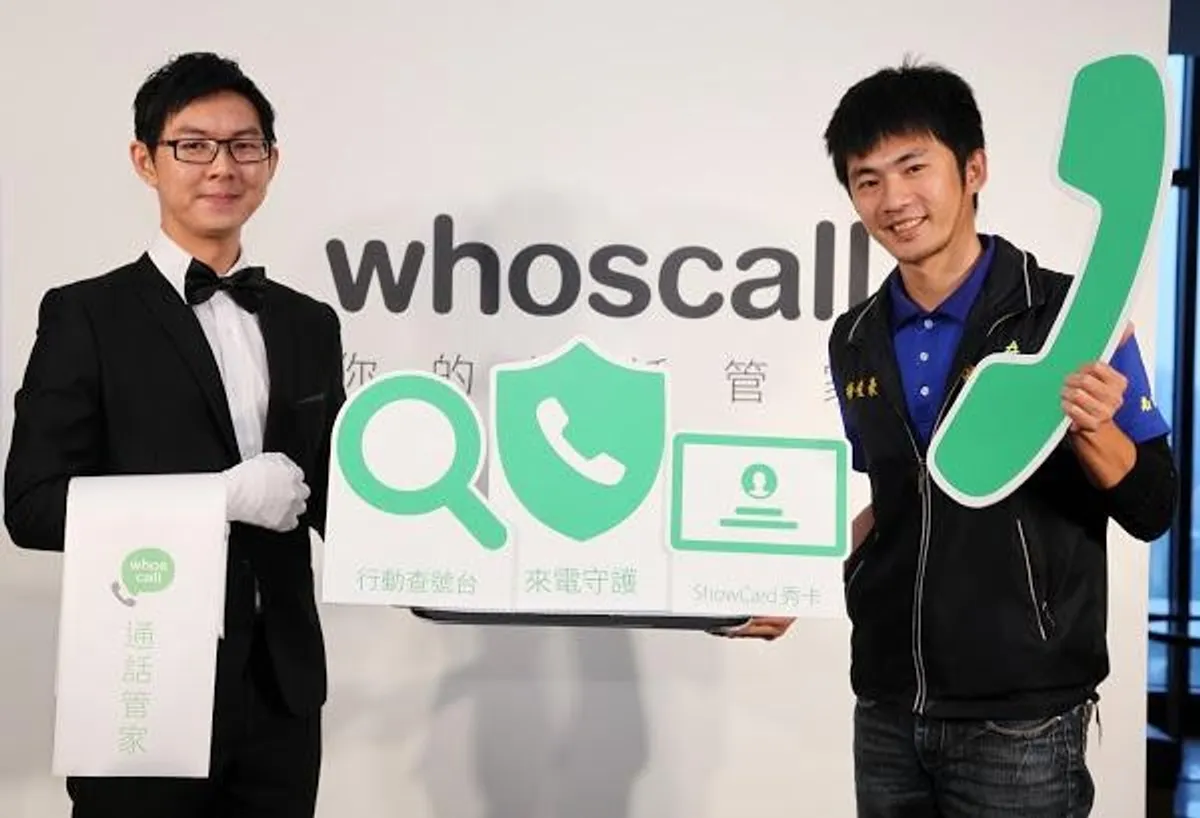
Taiwan’s police force is partnering with a popular locally developed caller ID app to solve crimes by detecting the source of mobile phone calls.
The National Police Agency is sharing its database of suspicious international phone numbers, abnormal toll-free phone numbers and the numbers of known scammers with Whoscall, a service of Taiwan-based Gogolook.
The partnership formed July 26 is intended to assist app users in filtering out potential scammers.
The app has already been downloaded 8.7 million times in Taiwan and has logged 4 million active users, making Gogolook something of a local icon as the government pushes software innovation as a potential new economic engine.
“When we first founded Whoscall, we hoped it could become the civilian version of the 165 anti-fraud hotline in Taiwan and operate until the day when there are no more reports about senior citizens being swindled of their life savings by phone scammers,” Gogolook CEO Jeff Ko said.
Taiwan records 20,000 phone fraud cases per year, 31 percent caused by risky leaks of personal data from online shopping sites.
Websites at high risk of generating phone fraud as identified by the police agency’s Criminal Investigation Bureau anti-fraud site include the site of the English-language proficiency test TOEIC and online shopping sites such as Ruten and Yahoo Auction, bureau Commissioner Liu Po-lian said.
In the past two months, 500 TOEIC exam takers fell victim to phone scams when they received calls from imposters posing as staff people in charge of the exam.
##HOW SCAMS WORK
The fakers would tell test takers they did not receive exam fees or that examinees had registered multiple times and would receive refunds. They would ask examinees for the contacts of their banks' customer service centers and later call the victim back posing as someone from the bank to request an ATM transfer that would disappear into the scammer’s hands.
Online shopping sites risk leaks of personal data because employees of the parent companies or their logistics firms have a chance to release customer data to other parties. Hackers also can steal the information by gaining access to the e-commerce computer system.
Phone scam victims often lower their guard upon hearing scammers quote accurate information on calls and then willingly follow ATM operation instructions that can lead to financial loss.
##WHOSCALL WENT VIRAL
Taipei-based Gogolook started Whoscall in 2011 and sold it a year later to Korean developer Naver, the owner of Line, for US$17.6 million. The caller identification app has a database of over 700 million numbers and has seen downloads soar from 3 million to more than 20 million, across countries, over the past three years.
Whoscall will test new services in Taiwan before promoting the app in international markets. Its download volume growth has soared in Thailand and Brazil. An economic downturn in Brazil has sparked a growth in app scams while the popularity of phone usage in Thailand has bred high phone scam rates.
The call screening app is free for download, and the company’s business model is based on online advertisements, Ko said. Whoscall is developing its own clients to avoid relying totally on Facebook and Google for online ad revenues.
The second half of 2016 will be crucial for Whoscall to promote its products and develop a new business model, Ko said.
©2026 Business Next Media Corp. All Rights Reserved. No.102, Guangfu S. Rd., Da'an Dist., Taipei City 106, Taiwan