©2026 Business Next Media Corp. All Rights Reserved. No.102, Guangfu S. Rd., Da'an Dist., Taipei City 106, Taiwan
This Taiwan startup will let you do medical tests at home
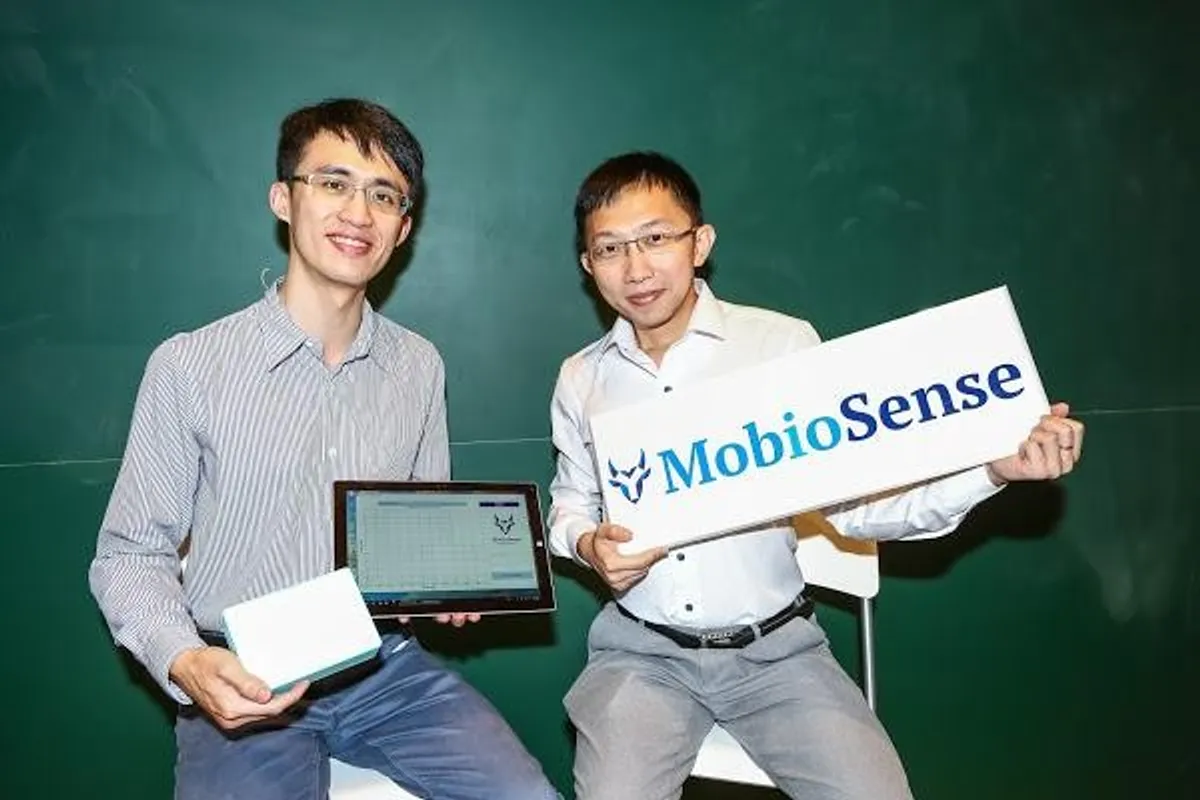
A Taipei startup has developed a portable device aimed at reducing the costs and delays of blood tests by letting patients do their own at home and send results to doctors via IoT.
A device that the year-old firm MobioSense calls “HERO” stands out among peers because it can test for multiple conditions or illnesses, company executives say. Using patented antibody-binding semiconductor biochips, the device can theoretically test any for any molecule with one drop of blood from a finger prick. The startup expects its product to be on sale in the United States by 2019.
MobioSense could hardly have chosen a better time to enter the IoT healthcare industry.
In 2013, CB Insights says, 40 percent of the US$1 billion invested in IoT went to health startups. By 2015, the global IoT healthcare market was valued at US$32.47 billion. According to a report from MarketResearch.com, the healthcare Internet of Things market segment is projected to hit $117 billion by 2020.
The demand for IoT in healthcare has been partly driven by patients eager to benefit from more streamlined healthcare services. A research report by Arqiva and YouGov in May 2015, showed that 91 percent of British adults would be prepared to monitor basic vitals at home with IoT devices. Vitals include blood pressure, heart rate, and weight.
The medical insurance industry also stands to save money through IoT, as recently developed devices will be able to catch health problems early and reduce the need for costly surgery.
IoT works for the interest of the US$1 trillion-a-year global pharmaceutical industry as well. The sooner an illness is identified, the sooner patients can start taking drugs to get better.
Finally, healthcare IoT has potential to reduce caseload pressure on clinics and hospitals.
"As the IoT evolves, and devices and data become even more integrated, we'll see doctors and clinicians armed with the ability to aid patients through more gateways, such as monitoring a patient's response to treatment through a modified wearable, or quickly accessing and sharing test results rather than waiting on the lengthy process of procuring data from a test laboratory," Jurgi Camblong of the data-driven medicine company Sophia Genetics said in an interview with tech news website TechRadar.
##TESTING THE U.S. MARKET
North America is expected to be the largest IoT healthcare market because of its population and technological advances. In the United States, according to Forbes, US$3.8 trillion is spent on healthcare every year.
That’s why MobioSense plans to tackle the U.S. market first.
“Taiwan’s healthcare system is very convenient, and health insurance is comprehensive,” CEO Chou Hua-sheng told Business Next. “We’ll first tackle the US market, and return to Taiwan when the time is ripe.”
Chou started his career working in a medical laboratory, where he would marvel at the cost and delays of blood testing in the United States. MobioSense CTO Chen You-hao went to high school with Chou and has studied blood testing research. He later worked in semiconductors and developed a chip that analyzes the molecular content of blood samples. At a school reunion, they decided to to develop the HERO testing device.
“Through different channels we’ve been able to draw on the expertise of our network of colleagues, friends and professors, which has helped us to determine the best way to spend money,” Chou said.
“Many members of our team have technical backgrounds. This has enabled us to identify technical problems early on and find commensurate solutions,” he added. “Developing a product, especially a healthcare product, entails countless setbacks. Passion has pulled us through.”
Chen and Chou initially raised US$150,000 from friends and family to start their project. They quickly received a combined US$200,000 from the Angel Project, the Taipei Startup Fund, the National Executive Yuan Germination Project and the National Taiwan Science Council. This investment went into a second prototype, which took a year to develop.
HERO works by registering the electrical charges in proteins, and biochips inside test for different illnesses. MobioSense calls its tool more accurate than traditional labs and says it can test extra small molecules. If traditional labs can detect penny-size markers, the company management believes, then HERO can detect markers as small as a grain of sand.
Within 15 minutes, results of a test can be delivered wirelessly to a patient’s connected devices. The data can be shared also with doctors to facilitate a quick diagnosis or save a medical visit.
##WHAT THE IOT-ENABLED TOOL CAN DETECT
HERO is built to test for four major illness types:
Heart Attack: MobioSense says HERO’s biochip can shorten diagnosis times by 20 to 30 minutes and cut costs by more than 70 percent.
Heart Failure: HERO cuts costs by more than 80 percent and makes home monitoring possible. Doctors and insurance companies could save more than US$6,000 dollars per patient annually, the company believes.
Kidney Injury: HERO can detect kidney failure 12 to 24 hours sooner than a traditional lab, giving doctors more time to treat and prevent permanent damage or save a life.
Viral Diseases: HERO can be used to detect viral diseases such as hepatitis or HIV. Ultra-sensitivity makes it possible to detect viruses in their acute infection phase.
The MobioSense team is developing biochips to test for additional illnesses.
Talking to Business Next, Chen said most startups in Taiwan develop software for apps and e-commerce, while relatively few create hardware.
Innovations, however, that have a lasting impact often feature a hardware component, Chou said.
“Often, starting a business comes down to the question of whether or not you want to persist, or ‘do you want to solve this problem?,” he said. “As long as you’re willing to solve an important problem, you’ll have what it takes to keep looking for the solution.”
Taiwan also traditionally develops hardware, including semiconductors, high-tech gear and machinery. Startups such as MobioSense that specialize in hardware may be able to draw on that historical strength.
MobioSense plans to sell to medical testing companies, such as Abott and Roche, for around US$100 per reader and US$10 per chip.
The HERO prototype is being manufactured in collaboration with Taiwan Semiconductor Manufacturing Co. and the project leaders began testing at the National Taiwan University Hospital in 2015. The results of these tests will be included in an application for U.S. FDA approval, which MobioSense expects to receive in 2019.
MobioSense is also developing software programs and refining the visual design of the device while talking to investors about Pre-A seed funding.
“Entrepreneurs don’t necessarily need to change the world, but we felt that we had the opportunity to solve some problems, so we decided to give it a try,” Chou said.
©2026 Business Next Media Corp. All Rights Reserved. No.102, Guangfu S. Rd., Da'an Dist., Taipei City 106, Taiwan