©2026 Business Next Media Corp. All Rights Reserved. No.102, Guangfu S. Rd., Da'an Dist., Taipei City 106, Taiwan
Get noticed by DARPA, Taiwanese startup DeCloak let you comply with GDPR effortlessly
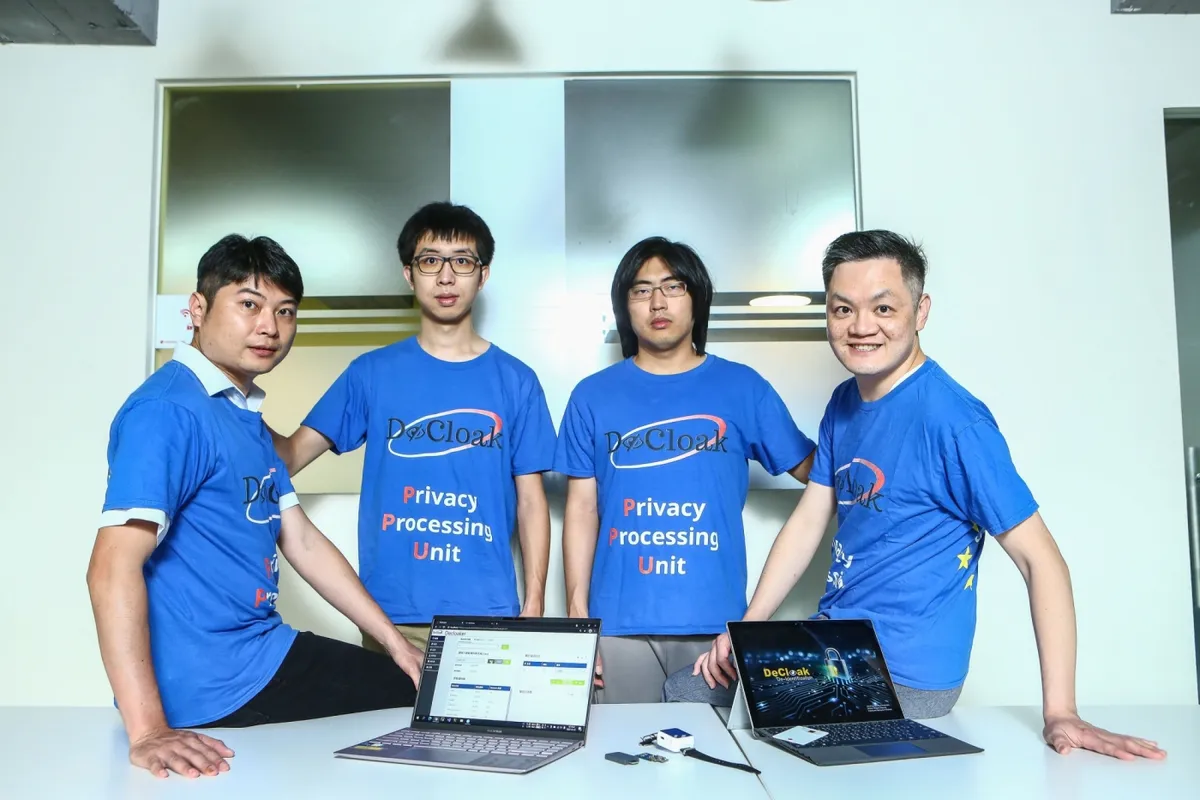
DeCloak was founded by two technical experts, professor Yao-Tung Tsou and doctor Justin Chueh. They created a de-identified algorithm that can make data untraceable but analyzers can still interpret it, which can perfectly fit into any data protection laws.
Data protection law is hard to comply with
In 2018, the European Union launched General Data Protection Regulation(GDPR), which was called the strictest data protection law in history. The launch of GDPR revealed that governments and people have grown concerned about how tech companies leverage their data.
The GDPR emphasizes people have the right to be forgotten, which means people can ask to be de-identified in regards to the data collected by tech companies, but it is difficult to meet people's requests. After GDPR was implemented for one year, Europe had fines totaled to €56M, with more than 200,000 investigations, 64,000 of which were upheld.
It goes without saying that data is becoming more and more important in today's society. Technology giants keep leveraging data to create new business, while small and medium business try to use data to do digital transformation. But with data protection laws coming, enterprises need powerful tools to guide them to comply with laws and regulations.
three products to solve the problem
"Without a doubt, big data is an inevitable trend, so our technology lets enterprises see the forest without seeing trees, which means our products can help de-identify the data but still keep the analytical meaning," DeCloak co-founder Yao-Tung Tsou said.
DeCloak's core technology is to use differential privacy to de-identify data. "Differential privacy means to add some noise to data, so people can not recognize the original dataset, but when you analyze it, you would still get the same result," said Yao-Tung Tsou. Differential privacy is nominated by authority tech media MIT Technology Review as a top 10 technology in 2020. Tech giants like Apple and Microsoft also apply differential privacy techniques to protect data.
Based on the strong differential privacy algorithm, DeCloak developed three products to tackle different scenarios. First, they developed a chip called Privacy Processing Unit(PPU) that is equipped with DeCloak's differential privacy algorithm. Once electronics use the motherboard with PPU, the data would all be de-identified. Next, DeCloak developed a PPU-Dongle that can work with any IoT device that has a USB adapter, and it is portable as well as easy to use.
The smartphone is a key device now for people to engage with the internet, and this activity generates tons of data every day. To make sure the data generated from smartphones is de-identified, DeCloak developed PP-SIM, a sticker to tag onto a SIM card, which allows data to go through the SIM card to be de-identified.
For the de-identified data, DeCloak has developed an AI prediction model that can precisely analyze the data and return the same result.
Two founders with strong technical background
Yao-Tung Tsou, previously a professor at the Communications Engineering department from Feng Chia University, has been doing research on data security and privacy mechanisms for over 10 years. He collaborated with Etron Technology research on differential privacy technology and later decided to establish DeCloak with doctor Justin Chueh, who is specialize in IC design.
From day one of establishment, DeCloak aimed at going to the global market. They attended CES2020 to actively interact with global customers and had attracted Defense Advanced Research Projects Agency(DARPA) who showed interest in their technology. With the Covid-19 ease up, DeCloak will continue to target overseas markets including the US and Europe.
©2026 Business Next Media Corp. All Rights Reserved. No.102, Guangfu S. Rd., Da'an Dist., Taipei City 106, Taiwan