©2026 Business Next Media Corp. All Rights Reserved. No.102, Guangfu S. Rd., Da'an Dist., Taipei City 106, Taiwan
Mosaic Venture Lab's Movtec Mobility Fund likely to be oversubscribed ahead of schedule as optimistic investors flock to Taiwan's EV Industry
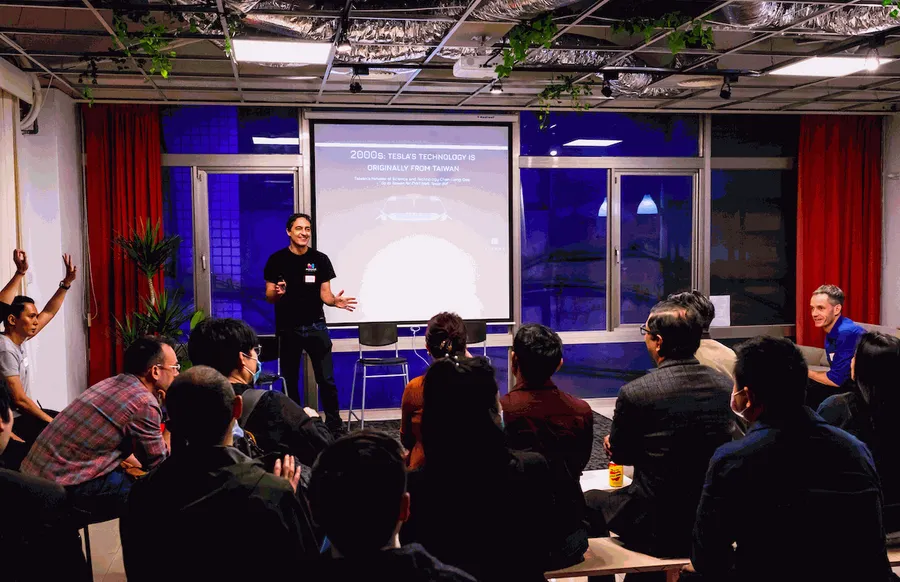
Movtec Mobility Fund I, a USD100 million venture capital fund by Mosaic Venture Lab, Ltd. in partnership with one of Taiwan’s largest financial institutions, will likely be oversubscribed way ahead of schedule as investors from governments in Taiwan and other Asian countries and private sectors have already signified their interests and initiated the due diligence stage.
This positive development comes in just a week after the fundraising announcement - as investors expressed confidence in Taiwan’s electric vehicle (EV) industry, as well as in the team behind Movtec Mobility Fund I, Mosaic managing director Volker Heistermann said in an interview noting that they could be looking at deploying the money early next year.
"We have several governments, not only Taiwan government, who's been reaching out to us, interested to invest in the fund… The fund is not just for Taiwan, we will also invest in Europe and in Israel and in the United States, and in Southeast Asia… The fund will be oversubscribed and we're in discussion with a lot of investors at the moment.
That's remarkably quick. Typically for Series A fund you're looking at two, three years to close it, especially a first-time fund," Heistermann said.
Why Taiwan
Heistermann highlighted that Taiwan industry's quick response and problem-solving capabilities as one of the reasons why Taiwan will play a significant role in this next trillion-dollar business.
"Taiwan is faster, nimbler, and even more cost efficient. When it comes to prototyping, you have thousands of SMEs here that are experts in making one little piece of a puzzle. You can call them up, provide the specs, and then they can do it a lot faster than a big giant company," he explained.
"Taiwan has grown up as a consumer electronics focused island and the car is turning into that, a computer on wheels that’s going to be put together like Legos to build… We're seeing that the car industry will not live on as it has. The supply chain is getting disrupted, as all of a sudden, electronics become much more important because they're helping personalizing the experience," he said.
"We're going to invest in international startups that can utilize Taiwan's resources. And one of our general partners in the fund is an executive from the auto industry,"Heistermann noted.
Heistermann also expounded on the areas of investment that Movtec Mobility Fund I will be used for; cabin intelligence (CI), connectivity, electrification, and shared mobility.
"On the electrification side, our focus is not the battery cell itself… For instance, power switching is an interesting topic… We're looking at smart grids, vehicle to grid is similar to smart charging but involves two-way flow of energy from and to the car. This means that if the electricity system was short on power (e.g. a nuclear power station drops offline suddenly), then the vehicle could provide power to the grid, helping balance the network. On cabin intelligence, it's all about customization. That's an area we're looking at [here in Taiwan] more specifically," Heistermann said.
EV investment and collaboration opportunities laid out by Taiwan's government
The Department of Investment Services, Ministry of Economic Affairs has cited three opportunities for developing Taiwan's EV industry. In a paper released late last year titled "Key Innovation Industries in Taiwan: Next-Generation Vehicle," the department of investment service said it could provide the best R&D and testing facility for next-generation vehicles and access to Taiwan's ICT Industry to exploit next-generation vehicle opportunities. It also said that Taiwan's whole vehicle and component manufacturing capabilities could provide international car makers with full range of production services.
The government paper said in smart driving for example, Taiwan's more complicated driving environment makes it a more suitable testing environment for the development of autonomous vehicles than other countries that are now doing the same.
It also highlighted the "Unmanned Vehicles Technology Innovative Experimentation Act" that could pave the way for self-driving facilities that will encourage foreign companies choose Taiwan for product development and real-world testing.
The paper also boasted that Taiwan's ICT industry has world-class R&D capability and manufacturing expertise. "Its many years of experiences in the automotive electronics industry have created a variety of applications for vehicle safety, mobility assistance, communications multimedia, and automotive IC. Its manufacturing capacity is strongly trusted by foreign and local vendors," read the paper.
It also noted that Taiwan's supply chain has gradually established the production capacity for key components necessary for next generation automobiles such as camera, radar, IoV communication modules, and other sensor/positioning products.
"Taiwanese companies have track records of shipments to international companies and other companies have invested in LiDAR and HD maps to strengthen market opportunities in system integration," the paper read. The government also highlighted the presence of Taiwanese car makers whom have invested significant resources in the development and adjustment of production equipment.
"They are continuing to upgrade their overall manufacturing capabilities to meet emission standards. Some manufacturers have even taken the lead on investing in EV production technologies and have the capability to manufacture whole EVs," the paper read.
Furthermore, the paper also noted the relatively flexible production lines of the Taiwanese automobile industry that can provide the full-range of manufacturing services for small lots of specialty vehicles making them a suitable pilot production partner for international car makers.
The department of investment service also noted amid the pandemic, Taiwan can be used as one of the regional supply centers for international automobile manufacturers.
"Foreign companies can take advantage of the existing infrastructure of Taiwan's automobile, component, and ICT industry, and they can also disperse supply chain risks and create a regional production network centered in Taiwan to ensure their backup production site or supplies of major components," the paper noted.
©2026 Business Next Media Corp. All Rights Reserved. No.102, Guangfu S. Rd., Da'an Dist., Taipei City 106, Taiwan