©2026 Business Next Media Corp. All Rights Reserved. No.102, Guangfu S. Rd., Da'an Dist., Taipei City 106, Taiwan
AHEAD Intelligence uses AI to help doctors conquer blood cancer, skyrocket the speed of diagnostics 100 times faster
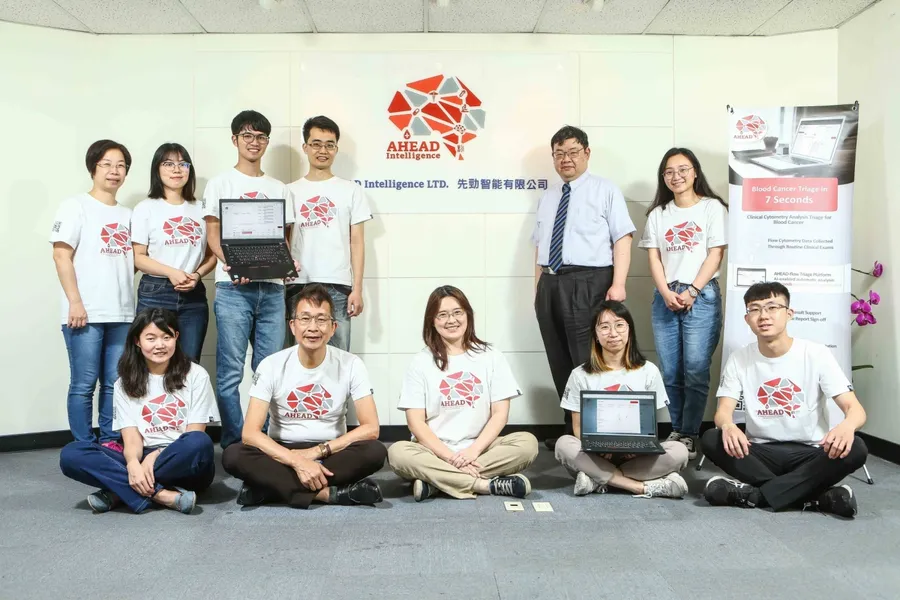
Ahead Intelligence, a spin-off startup from National Taiwan University (NTU) and backed by a multidisciplinary research team from NTU, NTU hospital and National Tsing-Hua University (NTHU), developed a fully automated flow cytometry analysis software platform that can help analyze cancer data, and speed up clinical decision making tremendously.
Leukemia and lymphoma are among the leading causes of cancer death in the world. Once the patients are diagnosed with leukemia or lymphoma, they need to initiate cancer treatment quickly to manage the disease. Efficiently interpreting and analyzing the clinical test data is important for clinical decision making, but the data is usually too complex to be analyzed quickly, and the doctors would need to wait several days, even two weeks, to get the results for further clinical decision making.
According to Dr. Ming Yao, the Attending Physician from the Hematology Division of National Taiwan University Hospital and former president of Taiwan Society of Blood and Marrow Transplantation, when doctors are treating leukemia and Lymphoma patients, they need the results from several clinical exams to characterize the disease and formulate treatment plan. Flow cytometry is one of the standard tests for diagnosis and disease monitoring
Flow cytometry is used to count and analyze the size, shape, and protein expression pattern and properties of individual cells. Once the sample has been placed in the flow cytometry instrument, it will mix the sample with saline solution and lead the sample through a narrowing channel to pass the laser beam. As the cell passes the laser beam, the laser beam will scatter in multiple directions, and the instrument will convert the scattered light into a voltage pulse. By collecting and analyzing the scattered light, specialists can gather information from a cell's size, shape, and protein expression profiles
Flow cytometry test is indispensable in blood cancer management, but analyzing flow cytometry data is very time consuming and labor intensive. Even experienced physicians still need to take at least 20-30 minutes to complete data analysis for one case. Due to the scarcity of analysts and physicians who can perform the interpretation and continual growing clinical test demand, most centers are not able to provide the interpretation report timely, hence delaying the treatment initiation and treatment plan adjustment of life threatening diseases.
Therefore, shortening the analysis turnaround time is important for these patients.
AHEAD Intelligence leverage AI to analyze data
According to the research report by the National Taiwan University, in the US, 75% of doctors think that information technology can help to decrease mistakes, 70% of doctors think information technology can increase productivity, and 60% of doctors think information technology truly has potential to lower the cost in disease management.
To tackle this problem, two Taiwanese research teams collaborated. One team was led by Dr. Bor Sheng (Kevin) Ko from the Hematology Division of National Taiwan University Hospital, and the other was led by Dr. Chi-Chun (Jeremy) Lee from the Electrical Engineering Department of National Tsing Hua University. These teams leveraged the power of AI to analyze the clinical flow cytometry test data, so doctors can get the report quickly and treat the patients in the golden hours.
At first, they applied for a research grant from the Ministry of Science and Technology (MOST) to support this project, and the study result gained a series of successes. In April 2020, they spun off this technology as a startup called AHEAD Intelligence (The US subsidiary is called AHEAD Medicine Corporation).
AHEAD Intelligence has developed a fully automated flow cytometry analysis software platform in which physicians only need to upload the raw data from the Flow Cytometry instrument, and the software will perform analysis simultaneously, which means analyze data from many specimens at a time. The software would highlight which specimens were abnormal within a couple of seconds, helping to accelerate clinical decision making tremendously.
Andrea Wang, CEO and co-founder of AHEAD Intelligence, dreamed of applying AI to medical diagnosis ten years ago when she was doing breast cancer research at Baylor College of Medicine. Unfortunately, the AI was still in the early stages and the research did not achieve the expectation.
In 2016, Andrea went to the Data Science in Taiwan Conference and met AI expert Dr. Jeremy Lee, and the idea of applying AI to medical diagnosis occurred to Andrea again. Together with Dr. Kevin Ko and Dr. Jeremy Lee, Andrea formed the AHEAD research team in 2017, later on granted with $1M equivalent research grant from Taiwan MOST before spin off from university.
Since its establishment, AHEAD intelligence has made some major achievements from academic conferences and accelerator pitch competitions, including presenting in the IEEE, a world-renowned conference, and being selected in Berkeley SkyDeck 2019 Global Innovation and Spring 2020 cohort program. Now, AHEAD intelligence is actively partnering with medical centers and hospitals from the US and Taiwan and hopes to set foot in the US market soon.
"Our team is now focusing on improving the flow cytometry analysis platform (AHEAD-flow platform) and preparing for validation study and US regulatory submission. This year, we also kicked off new collaboration with several flagship medical centers in the US including Mayo Clinic and the Roswell Park Comprehensive Cancer Center. We hope to complete product verification and validation within two years, and launch the product in the US market," said Andrea.
©2026 Business Next Media Corp. All Rights Reserved. No.102, Guangfu S. Rd., Da'an Dist., Taipei City 106, Taiwan