©2026 Business Next Media Corp. All Rights Reserved. No.102, Guangfu S. Rd., Da'an Dist., Taipei City 106, Taiwan
Fast-growing Taiwanese AI chip designer Kneron expects revenues to double in 2021
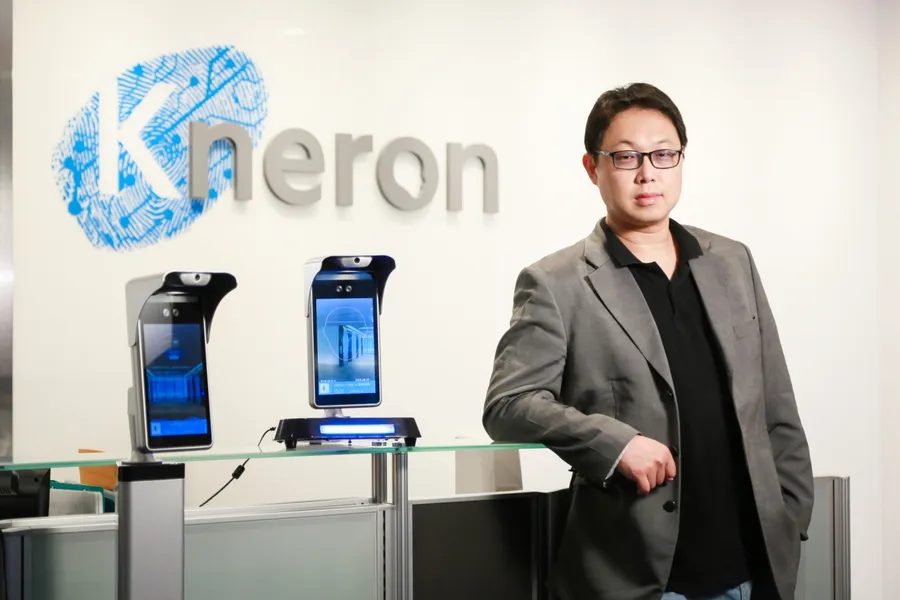
A Taiwanese-founded niche designer of chips for artificial intelligence expects to double revenues again this year due to high demand, the CEO said.
Chips that power artificial intelligence (AI) transactions in a hybrid online-offline channel doubled Kneron Co.'s gross revenue last year to $11 million and should lift that figure to $25 million in this year, CEO and founder Albert Liu said. The company has grown at that pace since it started in 2015.
Liu's company develops semiconductors for an expanding artificial intelligence market from individual consumers up through some of the biggest names in manufacturing.
Its chips enable a range of devices with AI, particularly the recognition of speech and body motions, Liu said. They sell as dongles for US$60 apiece that can be plugged into any device's USB port. Chips perform enough functions that Foxconn Technology, the world's largest contract assembler of consumer electronics, has bought a set to help production, Liu said.
An underlying technology called Edge AI makes these chips unique. Unlike other AI tools, Kneron's chips runs not only in the cloud. They work on a user's local device to raise operation speed and help ensure privacy, Liu said.
"If you need to connect to the cloud, pretty much Google and Facebook know too much," Liu said in an online interview May 31 with Meet Taipei. "Edge means it's small and localized."
The automotive sector is raising Kneron's revenues this year as the company has "won some big names", he said. Kneron is now moving away from reliance on venture capital, he added.
Kneron's success rests on its algorithm, said Brady Wang, an analyst in Taipei with the market intelligence firm Counterpoint Research. "It's making money from IoT edge chips for audio or visual recognition," Wang said.
The technology has enough demand that Kneron has gotten chipmaking factories to commit to orders through the third quarter of 2022 despite global shortages of semiconductors, Liu said. Shortages cropped up in 2020 as people working or studying from home during the pandemic raised demand for speedy laptops and automakers placed orders for electric vehicles and automated dashboards.
Liu, 40 and living in San Diego, launched Kneron in the same city after a supervisor at his former employer Qualcomm said he wasn't keen on Edge AI. "When I was at Qualcomm, I tried to convince my boss to go in this direction but it was 2017 the boss wasn't ready to go in that direction, so I started my own company," he said.
The founder had already received a graduate electrical engineering degree from the University of California Los Angeles and written a textbook for his trade. He worked 10 years for other companies including Qualcomm before launching Kneron.
Kneron has seven offices – three in Taiwan, three in China and the San Diego headquarters. Kneron has just 130 employees, 80 of which are in Taiwan.
The company's lack of its own factory has let it dodge Taiwan's 2021 drought, power shortages in May and the island's first major Covid-19 outbreak, Liu said.
Ten Taiwan cities and counties are on alert as reservoir levels remain low and surging consumption plus a production glitch have sparked power outages in May. "I think the water issue or the power issue or the pandemic, luckily for me we have no issues," he said. "Water is more on the foundry side."
All of Liu's Taiwan-based employees are working from home to stay safe as the Taipei area grapples with a wave of Covid-19 infections.
©2026 Business Next Media Corp. All Rights Reserved. No.102, Guangfu S. Rd., Da'an Dist., Taipei City 106, Taiwan