©2026 Business Next Media Corp. All Rights Reserved. No.102, Guangfu S. Rd., Da'an Dist., Taipei City 106, Taiwan
AppWorks Legal Master: The correct way to think of term sheet, and the secret about how startups use crypto to raise funds
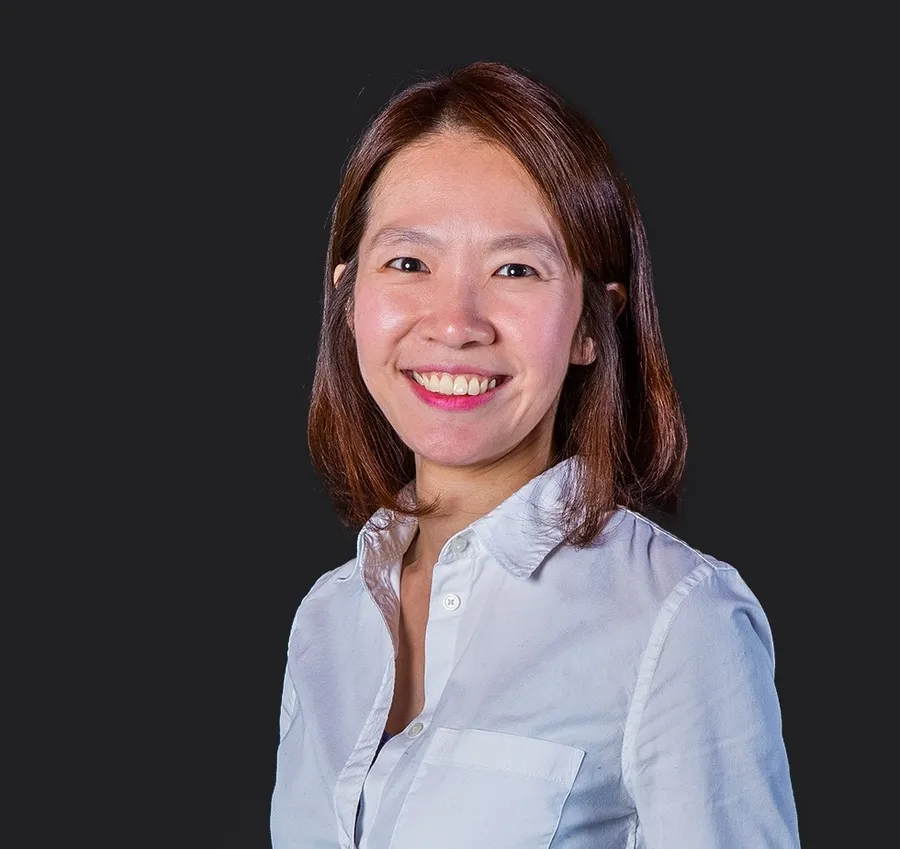
In this article, Liying Wang, the Legal Master of AppWorks, is going to share some common mistakes that startups face on legal matters. Also, as blockchain technology continues to boom, Taiwan’s unique advantages in the cryptocurrency world for startups will also be discussed.
In 2011, Business Next launched Meet Startup as the communication platform for digital innovation and entrepreneurship. Meet Global collaborates with AppWorks, one of the largest accelerators and venture capitalists in Taiwan with a strong founder community in Greater Southeast Asia, to publish a series of articles aiming to make the journey of starting a business in Taiwan smoother and easier.
Since 2012, AppWorks Masters Team has been navigating startups through the competitive world of the business jungle, helping startups survive and stand out. Currently, in the AppWorks ecosystem, there are 435 active startups, 1402 founders as AppWorks alumni, generating growing annual revenues at $13.9 billion in total.
In this article, Liying Wang, the Legal Master of AppWorks, is going to share some common mistakes that startups face on legal matters. Also, as blockchain technology continues to boom, Taiwan’s unique advantages in the cryptocurrency world for startups will also be discussed.
Watch out startups. Equity is your most valuable asset.
Liying is not only the Legal Master of AppWorks but also the founding attorney of Next and Nexus Law Office, the chairwoman of Innovation and Technology Committee at Taipei Bar Association, a renowned expert in blockchain technology, and a mother of three.
With over ten years of experience in practicing law in the technology industry, she offers strategic and practical legal services ranging from daily operations, dispute resolutions, investment and M&A transactions, especially to startups in the wave of disruptive innovations.
When asked about the most common mistake that tech startups made, she replied, “Always remember that equity is your most valuable asset.”
Answer these questions before drafting your term sheet
A term sheet is the first step of raising capital from a VC. It lays out the terms and conditions for investment, which is often involved in giving away stock in exchange for funds.
“Ask yourself these questions: Why are you raising funds? What is it for? Is it the only way to raise money? Do you necessarily have to give away your stock? A lot of startups ended up with the answer ‘I’ve never thought about it,’” according to Liying.
Giving away stock should always be the last resort, for startups may never know how much they have lost after a high valuation in the future.
One more thing worth noticing is the timing of negotiation. A lot of foreign startups, especially in the field of IoT, came to Taiwan to leverage Taiwan’s advanced high-tech manufacturing industry. Some are in search of funds, some want to seek a partnership, some hope to initiate a strategic investment with world-famous manufacturers. For those, be extra cautious of your investor’s true intentions when they are also your customer. There are firms that just want to get cheaper suppliers.
“My advice for them is to negotiate both the term sheet and the procurement deal at the same time. ” That way, startups will be in a more favorable position at the negotiating table.
What is Simple Agreements for Future Tokens (SAFT)? Would it be a better option?
As blockchain technology thrives, some startups are also considering using simple agreements for future tokens (SAFT) as an investment contract to investors.
SAFT was first created as a simplified means to help blockchain startups raise money without violating financial regulations. Startups sign SAFT in exchange for funds. But instead of distributing tokens before the business ecosystem is ready (which usually takes time), they early issue documentation offering investors access to future tokens with a more meaningful timeframe.
AppWorks has been putting special focus on innovative fields in blockchain like NFT, and DeFi. It has also advised and funded startups like Dapper Labs, the creator of CryptoKitties, and Blocto, a user-centered blockchain wallet. Liying being a well known legal counsel and pundit in this field, she noted:
“Still, you have to go back to the fundamentals. Token or equity, that is the question. There is a saying ‘one day in crypto world equates to one year in reality. ’ In such a dynamic world of cryptocurrency, you can’t just follow the crowd. ”
Taiwan’s advantages in the crypto world: Regulation. Location. Foundation.
In the ever-changing world of cryptocurrency, Taiwan’s exact moderate pace of regulation is perfect for blockchain startups.
Taiwanese government has been adopting a middle-of-the-road, wait-and-see attitude regarding cryptocurrency policies. In October 2021, Central Bank Governor Yang Chin-long mentioned that “Taiwan has no first-mover advantage” in his speech regarding the newly released governmental report on central bank digital currency (CBDC). However, they provide references for latecomers to better achieve benefit-risk balance. Yang also promised that government will continue to research and experiment on cryptocurrency.
In other words, blockchain developers can be sure that Taiwanese regulations will not go too fast to hinder its growth, nor will they go too slow to catch up with the trend. It is the artfully controlled speed that makes Taiwan a perfect test environment for blockchain startups.
Of course, Taiwan’s unique geographical location is also a big plus. It sits at the center of Northeast Asia and Southeast Asia, near major Asia-Pacific cities like Hong Kong, Shanghai, Tokyo, Singapore, and a strait across China. That is to say, Taiwan serves as a junction of Asian and Western worlds.
“Taiwan is like a universal joint. Legally, it’s like a sandbox that encourages public-private sector dialogue. Geographically, it’s a regional hub where talents cluster together, ” Liying noted.
Nonetheless, while some see blockchain and cryptocurrency technology as the core value of Web3, Taiwan had established a good foundation, reputation, and connection from the late twentieth when internet technology started to prosper. This results in an adequately developed infrastructure, a general open mindset, as well as a great talent pool and industry network.
Being a great devotee of blockchain and cryptocurrency technology, Liying also considers it as the spark that can ignite Web3 applications on a large scale. She believes that the concept of smart contract, programmable money and everything programmable will be widely adopted. In addition, all sorts of applications such as DeFi and NFT will be widely seen in the future, just like the internet today.
“I share these trends as bedtime stories to my kids because I feel like I have already got a glimpse into their future,” said Liying with excitement radiating from her face.
Whether the bedtime stories are becoming reality, the explosive growth of blockchain technology will soon tell the world the answer.
©2026 Business Next Media Corp. All Rights Reserved. No.102, Guangfu S. Rd., Da'an Dist., Taipei City 106, Taiwan