©2026 Business Next Media Corp. All Rights Reserved. No.102, Guangfu S. Rd., Da'an Dist., Taipei City 106, Taiwan
Taiwanese startup stands out in Japan with smart energy management solutions: save every 1% of energy
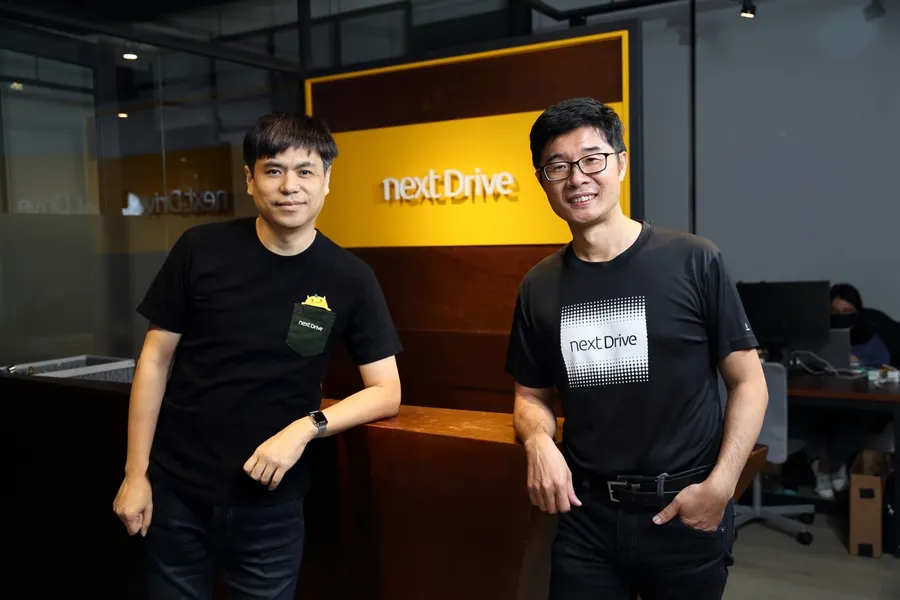
Founded in 2013, NextDrive is an Internet of Energy (IoE) company that strives to build next-generation energy management systems. The founder Jeryuan Yan was once a talent in the semiconductor industry. After seeing the potential of IoE, he dived into the new field right away and now has worked closely with the top 10 electric power companies in Japan. After securing a USD$ 31M Series C fund at the end of 2021, NextDrive is now planning to scale up in Taiwan and also enter the international market.
NextDrive just raised its Series C funding participated by ARM Holdings, Foxconn Technology Group, Ta Ya Electric Wire & Cable CO., and New Economy Ventures. Also joining the round is the largest supplier of semiconductor wafers——Sino-American Silicon Products. According to NextDrive founder Jeryuan Yan, Sino-American Silicon Products has been working on photovoltaic modules made by polycrystalline silicon, involving the downstream industry solar power plants. And NextDrive would help with the electricity management via IoE. They will make up a good team.
A next-generation electricity solution to electrical overstress
Initiatives like Net Zero Carbon Emissions and RE100 have gained momentum to surge around the globe, as electricity overuse has put the earth under strain. “The advocacies drive heated discussions about energy applications, brewing consistent and huge demand for the next three years,” said NextDrive founder Jeryuan. NextDrive tackles this problem by “optimizing the consumption of every power” via the Internet of Energy (IoE) technologies.
Jeryuan once worked in the semiconductor industry. After getting fatigued, he decided to change the career that works closer to people. He made acquaintances with Fumitoshi Keino, a Japanese expert in software development for power electricity companies for more than 28 years. NextDrive thus was founded in 2013 and found its way into the Japanese market.
“Every step is a challenge,” said Jeryuan, “language barriers, company cultures, and attitudes toward work greatly differ.” Jeryuan’s friend Shawn Shih, who graduated from the University of Tokyo, become the representative of NextDrive’s board director in Japan. And the expert Fumitoshi now the vice president of NextDrive. The company took several attempts like smart cloud storage devices NextDrive Plug, and energy gateways NextDrive Cube. In 2017, the startup transform into an IoE company, implementing the IoT innovation into circulated energy systems to upgrade the productivity of the energy infrastructure.
The product speaks for itself: NextDrive’s solutions are now widely applied in Japan
NextDrive stood out when NextDrive Plug had its debut. During the exhibition Computex Taipei, Fumitoshi noticed NextDrive’s product and reached out to the company in hope of partnership. Fumitoshi and his team would like to develop extensible software based on the product. NextDrive provided him and his team with the toolkit, and they practiced PoC (Proof of Concept) in return.
NextDrive also gained support from the Japan External Trade Organization (JETRO), an organization that works to promote mutual trade and investment between Japan and the rest of the world. JETRO provided NextDrive with temporary office space, introduced a certified tax accountant and administrative scrivener, and offered consultation on how to establish a corporation, according to JETRO. NextDrive is the first Taiwanese startup that successfully landed in Japan with the help of JETRO. In 2016, NextDrive gave birth to the NextDrive Cube, an IoE solution for every household.
NextDrive Cube features a delicate appearance, which is highly spoken of as “an art device.” The product is also characterized by its high extensibility and plug-and-play design. As Japan has almost 90% coverage of smart meters, it turned out to be the perfect market for NextDrive to launch its product. NextDrive Cube with its IoE system soon won the favors of the top 5 Japanese electric power companies and the energy ventures Enechange.
The company now focuses on software development based on its hardware. They develop the Route B smart meter module, which will be connected to NextDrive Cube through wireless Wi-SUN. The cube is installed on a smart meter, and the energy management gateway enables users to monitor energy consumption in real-time. And they further integrate solar energy and energy storage facilities into the system, aiming for a next-generation smart electricity community.
After achieving grand success in Japan, NextDrive came back to Taiwan for localization.
From 1% of installing smart meters to making blackouts like history
“Every 1% of energy counts,” said Jeryuan, “we can avoid power blackouts for good if we manage the energy properly.” NextDrive comes up with two ways to relieve the pressure of electric overstress.
First, users with regional energy storage facilities could sell the energy to Taiwan Power Company through reverse current in peak time. Second, Taiwan Power Company will buy you a cup of coffee or give out vouchers if you can walk out of your house during the rush hour. Either way is a win-win for users and Taiwan Power Company. NextDrive serves as the key technologies provider that makes the connections come true.
The first thing NextDrive does to localize is to grow the customer base. There are now only one million smart meters installed among 8.7 million households in Taiwan. Since September of 2021, NextDrive has launched the “saving 1% of energy” campaign, aiming for 3 million installations of smart meters by 2023. The campaign helps communities or households install smart meters for free, in exchange for the energy consumption data.
Make the best use of electricity consumption data
NextDrives provides HEMS (Home Energy Management System) for users to better manage their electricity. People used to receive their electricity bills after a month or two, so they can be indifferent to how energy is consumed and how much the energy costs. With smart meters and HEMS, users learn their energy usage and bills in real-time via social media LINE.
With communication networks embedded, HEMS are able to aggregate all the data and find patterns for electricity usage, which leads to more application possibilities. For example, HEMS could tell whether users forget to turn off their household appliances or not, and users can remote their appliances through the system. The data center could identify human activities through electricity usage, which will facilitate IoT delivery. One of NextDrive’s Japanese customers has worked with a delivery company, which raises the delivery efficiency from 76% to 98%.
Moreover, NextDrive also comes up with CEMS (Community Energy Management System), which is the extension of HEMS. CEMS targets campuses, companies, and communities as their users, integrating renewable energy power generation systems, regional energy storage facilities, and charging piles for electric vehicles.
Huge potentials to expand across the Pacific Ocean to Australia and UK
Power shortage is a global issue. NextDrive’s solutions will still work across Europe and the United States as 80% of the technologies related to energy systems are the same. With some extent of customization, NextDrives’ energy management systems could thrive across the continents.
Besides localizing the solutions in Taiwan, NextDrive also eyes for the international markets. The company followed a Japanese construction company to Australia and has set up a data house in Sydney. The energy management system will greatly benefit continental countries like Australia, as the energy data could facilitate disaster prevention. The company also plans to enter the UK after the pandemic surge.
NextDrive’s team in Taiwan consists of over 100 members, with an average of 30 years old. The energy-related solution attracts young generations, who are passionate about preventing global warming. With these youths, NextDrive will head towards the international market and make the world a better place with smart energy management.
©2026 Business Next Media Corp. All Rights Reserved. No.102, Guangfu S. Rd., Da'an Dist., Taipei City 106, Taiwan