©2026 Business Next Media Corp. All Rights Reserved. No.102, Guangfu S. Rd., Da'an Dist., Taipei City 106, Taiwan
How Taiwan created TSMC
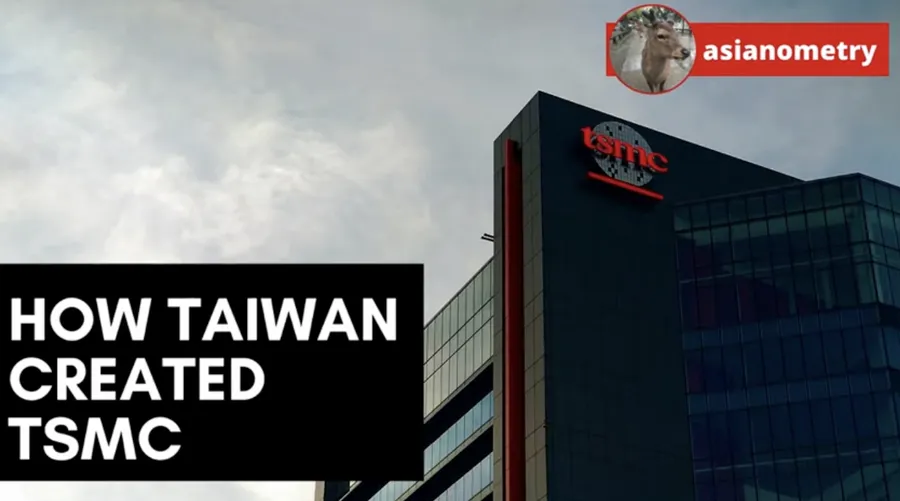
It is a question that every developing country in the world wants to know: How can we upscale our economy? How can we make more competitive, technologically advanced product that everyone else wants?
The early 1970s gave the people of Taiwan such a challenge. Times were changing. The island needed to adapt in order to survive in a new world full of challenges. Its economy then was made up mostly of agricultural products and simple electronic assembly - exports of low value and would be easily replaced.
In this video, I want to briefly review how the government created a world-class next-generation manufacturer, the plan they followed, and what lessons we can take away as a result.
The Debate
After previous attempts to build a world-competitive chemical industry failed, the government saw the semiconductor industry as the next logical step for their electronics assembly industry.
At the time, the United States was the global leader in semiconductor manufacturing with Japan a small, secondary player. Taiwan hosted a few foreign factories - General Instruments set one up all the way back in 1966 - but like I mentioned, those were just for low-value assembly tasks.
In trying to rise up in the semiconductor value chain, Taiwanese companies would find themselves lagging far, far behind the cutting edge. Nobody could see them as a player in the semiconductor industry. Nobody would buy their products.
If you have ever tried to create something world-class from a position of weakness, you would know just how difficult it is. Looking back on it now, success was definitely not guaranteed. A lot had to go just right.
Within the Ministry of Economic Affairs, a debate raged about the best way to overcome these challenges and help Taiwanese companies be competitive in semiconductor manufacturing.
Sun Yun-suan, Minister of Economic Affairs and a waishengren born in Shandong, backed entrance through the development of companies and industry.
Wu Ta-you, another waishengren and then director of the National Science Council, argued for funding basic electric engineering sciences relating to semiconductors in order to "root" the industry in Taiwan.
Chiang Ching-kuo, then premier of the Republic of China and Chiang Kai-shek's son, sided with Sun: "We should not spend our limited resources on basic research, but should focus on applied research for industrial purposes." The focus on applied research and practical skills would be a consistent theme in the work to come.
Creating a Foundation
In order to help private companies enter the technologically advanced and capital-intensive industries, Taiwan founded the Institute for Technology Research Institute or ITRI. The intention for this publicly funded laboratory was to do applied science research with the intention of eventually spinning off its projects as private companies.
ITRI then founded a sub-committee specifically looking to tackle the problem of getting Taiwanese companies into the semiconductor industry. They eventually focused on inviting foreign companies from the US or Europe to teach the Taiwanese people specific technologies.
In other words, the famous technology transfer agreement that China uses with so much controversy. Seven companies were invited to bid for this contract and in 1976, RCA won out over other companies like General Instruments and Hughes. They were chosen not because their technology was the most advanced, but because they were most willing and capable to teach it.
Per the agreement, RCA invited a team of some 30-40 engineers to their campus for a year to teach them not just the raw science of semiconductors but also management techniques and industrial knowledge. In other words, the valuable meat and potatoes of everyday semi-manufacturing management.
Today, technology transfer agreements like the one ITRI used are controversial. But back in the 1970s, this step did not attract so much attention for what appears to be two reasons:
First, RCA did not provide Taiwan with its cutting edge technology. It was a licensing agreement for something a few years behind the cutting edge. But then a few years later, RCA pulled out of the semiconductor industry altogether and left Taiwan with a license for all of its technologies. This was lucky.
Second and more critically, Taiwan chose extremely wisely in which technology to learn. The Taiwanese asked to learn a tech called complementary metal oxide semiconductors, or CMOS. CMOS technology at the time had not fully matured and its market was rather small. But over time, it would grow into the dominant semiconductor manufacturing process technology.
So basically, Taiwan had acted the role of a venture capitalist and chose to back a young horse that paid off in big, big way.
From Research to Profit
Most people know Taiwan Semiconductor Manufacturing Company, and that TSMC founded the independent foundry model. But not so many people are aware that TSMC was not Taiwan's first big foundry. That would go to United Microelectronics Corporation, UMC, whose headquarters is across the street from TSMC in Hsinchu.
In 1980, ERSO took the knowledge that it gained from its time at RCA and spun off UMC. UMC acted like a traditional, vertically integrated semiconductor maker. The government provided UMC with the technology, helped recruit talent to fill the company's ranks, and even closed its first deal.
There were a few green shoots. UMC soon became Taiwan's most profitable industrial manufacturer. But UMC failed to be the flagship success the country wanted. The company could not compete in the industry and found itself producing low-level chips for toys and watches. They did their best, but the field was too competitive.
ERSO would spin off two other companies looking to design chips, but both failed to take root and were eventually acquired by competitors. Many years had passed by then, but for little gain.
TSMC
TSMC's founding story is widely known and I won't spend time going over it here. It is the first independent pure foundry, representing an innovative new business model that disrupted the existing semiconductor market. But what's also true was that TSMC entered the market with technology much more advanced than UMC, which gave it a better head start in the market.
This technology came from Europe. The Dutch corporation Philips (continuing a history of close Dutch-Taiwanese ties) provided technological input on the 1.5 micron process that would make up TSMC's core service. ERSO sourced the high-skilled Taiwanese workers to properly use and operate this technology.
The Taiwan government invested some money but also wanted private investors involved because it strongly believed in market oversight of its startups. For its trouble, Philips received a substantial chunk of TSMC's shares. Intel and Texas Instruments were offered a chance to invest but passed.
Taiwanese businessmen were offered - and in some occasions ordered - to invest. Most of them being old geezers, they didn't want to. Wang Yung-ching, the Formosa Plastics titan, bought 5% of the company because the government made him. He sold all of his shares the second year after the IPO for a cute sum and thus missed out on a $20 billion fortune.
TSMC from the very beginning focused on the international export market. This is in part at the government's request as well as a reflection of Morris Chang's American background. In America, TSMC helped fuel the fabless semiconductor trend, and grew rich as a result.
In retrospect, I think this part of TSMC's strategy turned out to be just as important as the innovative business model. When UMC started, it focused on the domestic market - presumably because it felt that it could better survive there. That's true. In the Taiwanese domestic market, the government could help it out.
Yet as it turned out, the domestic market made UMC too comfortable. The company grew, but it did not become world-class. In order to create a world class firm, you need to compete across the entire world.
Taiwan's Strategy
The government had a very specific strategy for developing the semiconductor industry. Small companies, clustered together, guided en masse by the government. This is in contrast with South Korea's strategy, where the government would give lots of money to special companies (the chaebol) to go out and dominate a sector.
The government looked to Silicon Valley as their guide. It founded a whole lot of small companies and gave them a starting boost. It helped arrange resources for them, including housing (with the Hsinchu Science Park) and tax incentives (semiconductor companies were taxed at just 1.5% in the early 90s).
Once those companies started, the Taiwan government did not pump them with subsidies nor try to shield them from competition. In other words, no protective tariffs so to give them a captive domestic market. This is a failing of many administrations in Latin America or Europe who try to create a domestic industry by banning foreigners from its markets.
Additionally, the government did not try to prop up a company once it had started to fail or flounder. This is harder said than done, as many governments hate public failure. Think of how much hay the US public made out of the 2011 Solyndra bankruptcy. Politicizing a normal act of capitalism only makes governments more nervous about trying again next time.
While the government did not play favorites with individual companies, it did work to help the industry as a whole upon the existence of an existential threat. For example, during a recent earthquake, the government ordered its state owned utilities to provide water and power to the science park first over other areas.
There are a few things that the Taiwan government had nothing to do with. A big one has to do with sourcing human talent. The 1980s and 90s saw a reverse brain drain out of western countries into Taiwan. This is attributed to two factors: The booming Taiwanese economy, and less so to a surge in Chinese nationalism over the national sovereignty of the Daioyu Islands. Taiwan, identifying as the free China at the time, benefitted from overseas Chinese coming back to help the motherland
As with all things in life, success is never preordained. The Taiwan government had a strategy but a lot of other things had to go right in order for it to work out. Yes they worked hard and deserve a lot of credit, but they also happened to be in the right place at the right time. You can work hard, and come out with a meh. Just ask Singapore. They tried to make their own TSMC just a few years later with iffy results.
Additionally, scholars studying the success of Asia's technology companies continually emphasize a couple commonalities: The need to partner with more advanced foreign technologies and the need to "stress-test" your products by putting them out into the global competitive landscape.
I think that's something many developing governments can take into consideration as they seek to build new markets for themselves in the near future.
Watch more youtube from Asianometry
©2026 Business Next Media Corp. All Rights Reserved. No.102, Guangfu S. Rd., Da'an Dist., Taipei City 106, Taiwan