©2026 Business Next Media Corp. All Rights Reserved. No.102, Guangfu S. Rd., Da'an Dist., Taipei City 106, Taiwan
Kabob turns smart retail management into a multi-national, multi-million business
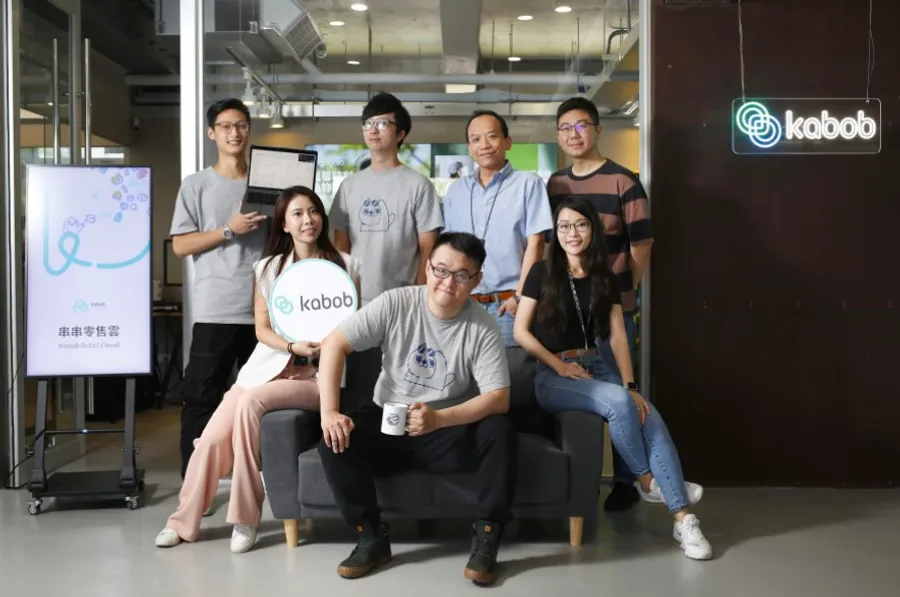
Serial Entrepreneur, Steve Tsai, created an all-in-one retail management solution for retail and restaurant chains - Kabob Cloud. The integrated management platform offers close to 20 apps including cloud-based digital signage, background music, ordering, reservations, AI-recognition and even content creation tools to automate the complex management process for its chained-store clients including Gogoro, Burger King and McDonald’s.
When stepping foot in a bubble tea shop or a fast-food store, the first thing to catch the customers’ attention is the promotional messages on brochures or posters. The nature of these printable materials creates a huge burden for chain retail stores and restaurants for the effort that has to be put in by the headquarters’ management team, requiring a complex and time-consuming process of designing, distributing, and displaying at individual stores. To automate and simplify such a long process, Tsai created an integrated platform that offers 19 management tools as part of their smart retail solution. Among which, the “digital signage” solution, Lookr, centralizes control of store displays, and is now used by high-profile clients including Burger King, Sushiro, and McDonald’s. Kabob’s clientele spreads across China, Taiwan, Japan, Singapore and North America, and is now rapidly expanding its international business.
Going from E-commerce to Retail Store Management
With the rise of e-commerce a decade ago, Tsai founded e-commerce platform for food & beverage, Takomama, in 2012. The platform once sold more than 20,000 products in one day for an individual client. After getting acquired by another e-commerce platform, FashionGuide, Tsai joined the company and took charge of their tablet-based digital signage business. The goal was to convince retail stores like supermarkets to adopt this seemingly new solution at the time. However, due to the high cost of tablets then, as well as unfamiliarity of such products from its potential clientele, the business was unable to profit and was closed down as a result.
Afterwards, Tsai joined Quanta Computer, a Taiwanese electronics manufacturer, where he served as a sales representative for its Android POS and Embedded System. On the occasions of visiting clients in Shanghai, he learned that despite the use of smart displays like Android TV, storefronts still had to change manually the promotional message and visual materials using individual USB drives. That is when Tsai raised a question to himself. “What if there’s an integrated management system for the promotional message at storefronts? Could this help increase sales and revenue?”
In the meantime, retail stores and restaurants in China were seeing increasing digitalization. This prompted the need for dynamic and digital smart-displays, as well as a platform to manage them. With this in mind, Tsai founded Kabob in 2016. By offering an app-based solution to manage digital signage systems, Kabob’s revenue hit US$ 1 million in the first year of founding.
Unlike similar systems from competitors, Kabob offers customizable packages that allow faster penetration into the market. Store owners could choose the management tools based on their needs. Services like dynamic menu displays, vacancy detection and calling systems can be added or taken out for individual customers. The flexibility and relatively lower cost are very appealing to store owners. At an annual cost of US$ 100 to 200, Kabob offers a much more competitive model compared to traditional management systems that could cost 20 times more.
The Ever-evolving Management System Offerings Close to 20 Unique Solutions
Another unique competitive advantage of Kabob is the ability to manage a large number of storefronts simultaneously with a centralized platform. Taking chain restaurants as an example, chain owners or management headquarters can distribute and control promotional content or menu displays remotely with a centralized system. Franchisees need simply to download Kabob’s management app on their smart displays, the cloud-based system would allow the headquarters to make updates and adjustments on the content of the displays with a few clicks, while also automating reservations, number-calling and other management needs at their individual restaurant locations.
While Kabob has been rapidly expanding its clientele, more and more functions are being added to their platform and has now reached a total of 19 tools. Clients include fast-food chains, drug stores, luxury retailers and even governmental organizations. “After one of our clients implemented our AI-recognition solution that detects customers’ gender, age and even their moods based on facial expression, the optimized recommendations pushed a 30% increase for their revenue.”
“We see competitors try to get into the market, but couldn’t find success.” Tsai observed. It’s because of the complex process to integrate across the platforms different smart displays operate on, like Android TV or iPads. The compatibility of Kabob’s solution allows it to be many steps ahead of its competitors.
Internationally-focused, Kabob aims at US, Japan, and China
As their clientele grows in numbers and size, Kabob has reinvented itself with two key changes:
-
Turning the SaaS model to a PaaS model
Over the years, Kabob has evolved from a SaaS provider selling individual tools, to a platform that offers an all-in-one management system. Using the PaaS (platform as a service) model to meet their clients’ individual needs by offering customizable packages.
-
Integrating Third-party Apps
After re-positioning as a PaaS provider, Kabob is also expanding its platform with third-party apps. For example, design tools Canva and BRICKS, making itself the one-stop solution for store management.
Kabob has been expanding in overseas markets and will focus on getting more international clients following its current success. Notable clients include Gogoro, Burger King and Sushiro in Taiwan, McDonald’s in China and APAMANSHOP in Japan. The subscription-based model created an annual revenue of 7 million USD$ last year, and the team will continue pushing to deepen their market penetration in Japan and the US, aiming for an even higher international presence.
Currently raising for Series B, Kabob looks to work with strategic partners while expanding their sales team in North America. Its current investors include Foodland Ventures and WI Harper. Tsai believes that with the technical expertise from Taiwan, Kabob has huge potentials on the international stage.
The article is supported by National Development Council
©2026 Business Next Media Corp. All Rights Reserved. No.102, Guangfu S. Rd., Da'an Dist., Taipei City 106, Taiwan