©2026 Business Next Media Corp. All Rights Reserved. No.102, Guangfu S. Rd., Da'an Dist., Taipei City 106, Taiwan
【2022 Meet Taipei Startup Forum】The next chapter: ecosystem of startups
2022 Meet Taipei held a Startup Forum on November 17th, inviting keynote speakers including legendary Silicon Valley investor Tim Draper, AWS Global Startup Advocate Mark Birch who flies here from New York, Vice President of Engineering at Qualcomm Sudeepto Roy, and CEO of MIH Jack Cheng to share their insights about the startup's ecosystem in Taiwan and the prospects of their professional domain.
Revolution of creating a novel EV ecosystem (MIH)
With the aim of putting the new generation with a new lifestyle on mobility, MIH Consortium focuses on the revolution of the EV ecosystem. Jack Cheng details the map of their prospects.
How to leverage outside resources and help Taiwanese companies grow faster and catch up with these EV trends? MIH Consortium wants to fulfill their goal by promoting collaboration in this industry. What they’re doing is bridging the gap for alliance members resulting in a lower barrier to entry, accelerated innovation, and shorter development cycles. MIH Consortium jumps out of the traditional supply chain, instead, they create a brand-new circle for the next generation of EVs with more innovative solutions.
“Be flexible enough to innovate” says Jack Chen at the end of his talk. In addition to Taiwan's supply chain advantages in semiconductors and communications technology, familiarity with the Southeast Asia market is another advantage for Taiwan. This is now Taiwan’s best time to sprint and gain a foothold in the EV industry.
Going global for startups, leading with 5G innovation
It is estimated that more than one billion devices will connect to 5G by 2023, which is 2 years quicker than 4G.
Qualcomm has led wireless innovation for over 35 years. They are also dedicated to incubating startups in Taiwan, India, and Vietnam, attracted by the advantage of manufacturing and supply chains in these countries. Sudeepto Roy points out that Taiwan has strong talents for AI products and services, which helps us stand out. Take a glimpse at the companies incubated by Qualcomm by category: healthcare, smart cities, robotics, AI, edge computing, or agri-tech. They basically cover all the aspects of our daily life and 5G has gradually influenced everyone’s life on a huge scale, which will eventually create an ecosystem that makes 5G service far-reaching.
Venture into the Japanese market with 3D combat
How to survive in the Japanese market? It is a papular question for lots of Taiwanese startups. Not only do you need a good product, but also a good service, says Mactaris Chen, founder of Maktar Inc.
The Japanese market is famous for strict standards. Moreover, they value trust and relationships, but it is hard to build. Chen shares his tips about how their products succeed in the Japanese market: making sure the high quality of the product, and understanding yourself and Japan. First of all, is your product good enough for Japan? Whether it is B2C or B2B, they all have to meet Japanese standards, tastes and requirements. Next, you need to think about whether the Japanese market is big enough for you. Finally, understand yourself, your business, and the Japanese market.
Chen benefits from the cooperation with Japanese agencies and the recruitment of Japanese staff. Agencies can help you create channels to sell points. As for service, Chen mentions that it will not be a good service to let foreigners serve the local people, so in this case, their customer service is managed by Japanese staff. With all the strategies he mentioned, the revenue of Maktar in Japan has doubled this year.
AI SaaS solution as a driving force
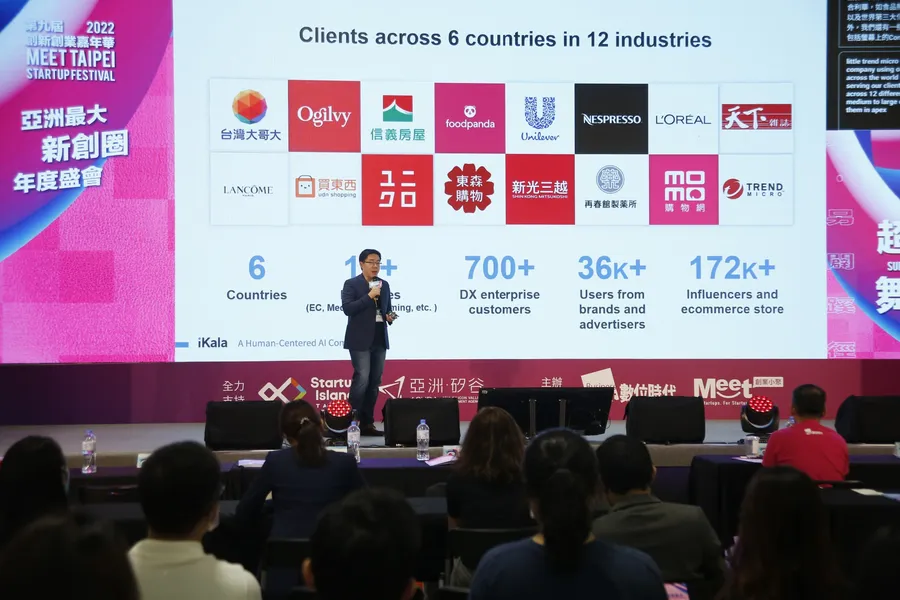
The advantage of building software is that we can scale faster, says Sega Cheng, co-founder and CEO of iKala. We’re living in the post-pandemic era where fast responses to business needs are dominant. Efficiency is important. The digital economy has shifted rapidly and iKala observed that human-centered performance-based marketing has emerged. In that case, iKala developed KOL Radar’s solution, an AI-based influencer marketing platform, which is now the largest influencer marketing SaaS provider in Asia. What they do is connect their clients with the power of AI in a short time. On a larger scale, they’re connecting Asia through their leading point in Taiwan.
Until now, iKala has created its own network in Southeast Asia, Taiwan and Japan.
©2026 Business Next Media Corp. All Rights Reserved. No.102, Guangfu S. Rd., Da'an Dist., Taipei City 106, Taiwan