©2026 Business Next Media Corp. All Rights Reserved. No.102, Guangfu S. Rd., Da'an Dist., Taipei City 106, Taiwan
This MIT professor with Harvard MD degree raises $140M to expedite cancer elimination with intelligent gene coding
Drug design used to be like blind men trying to make out the shape of an elephant. Now, with revolutionary gene coding technology, there might be a chance for researchers to design drugs rationally, intelligently and more effectively.
Mid-early 2022, one biotechnology company founded by MIT alumni, Senti Bio, went public on NASDAQ, raising a whopping total of US$140 million, which includes over US$66 million of private investment in public equity (PIPE) from the venture investment arm of Amgen Inc (AMGN.O), funds and accounts managed by Morgan Stanley's Counterpoint Global, T. Rowe Price funds and others.
According to Precedence Research, the global gene therapy market size was valued at USD$ 2.99 billion in 2021, and the outlook is very positive, with the expected compound annual growth rate (CAGR) of 20.2% from 2022 to 2030. The expanding application of advanced therapies has fostered an increasingly competitive dynamic, prompting big-name pharmaceuticals to invest in startups to enhance in-house expertise, and pave way for the commercialization of their gene therapy products.
Indeed, gene therapy have come a long way. In the year 2000, a Nature paper constructed gene editing on E.coli bacteria, which is regarded as a major breakthrough in the field of biosciences — as the technology meant the ability to tinker with genetic codes and possibly offer solutions to many unsolved medical conundrums such as cancer.
From then on, continual research proposed various technologies to read and write DNA, and eventually edit our genetic code to counter diseases that have long troubled the human race. In 2010, a girl by the name of Emma Whitehead was cured of lymphoblastic leukemia with gene-edited T-cells, a technology developed by a team of medical experts at the University of Pennsylvania.
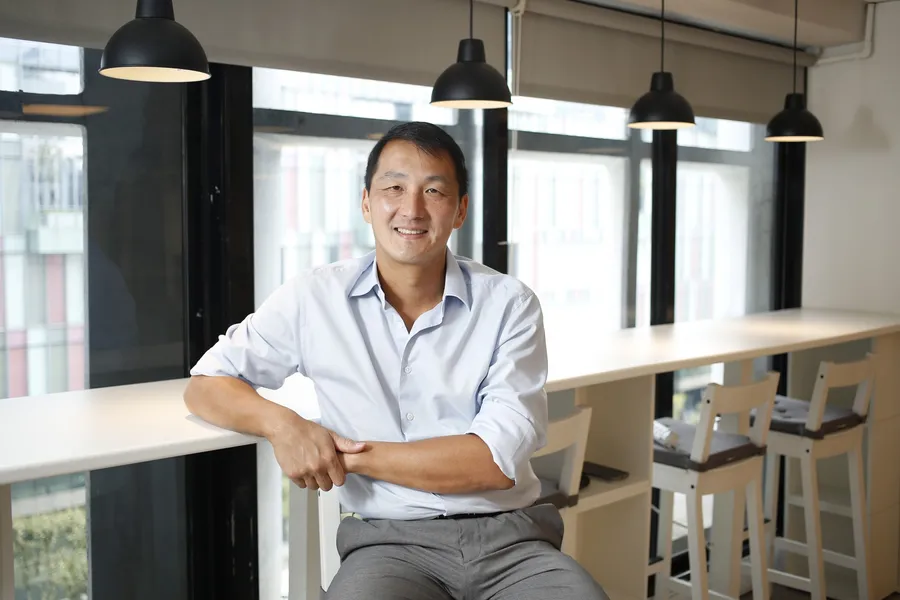
Seeing the revolutionary power of gene editing, Senti Bio co-founder and CEO Timothy Lu devoted his time and energy to synthetic biology and became a serial entrepreneur. “We are building intelligent medicine, essentially,” said Lu. The company aims to outsmart tricky diseases such as cancer with advanced gene circuit technologies that can identify malicious cells and eliminate only the harmful ones.
From engineering computers to cracking human genetic code
Lu wears two hats — one academic and one entrepreneurial. “It’s very different being in school and leading a business,” said Lu. However, Lu enjoyed both tracks and owed his success to the innovative ethos prevalent in his alma mater, the Massachusetts Institute of Technology (MIT).
“At MIT, the idea of making an impact is everywhere. There’s only so much you can do in academia. For example, if you go right into the NIH (National Institutes of Health) grant, you might get a few million dollars. But the impact on humans is not enough,” said Lu, who have had ambitions to make a big social impact very early on. That is also why Lu pursued entrepreneurship. What Lu deemed a better model and have implemented a few times is building a startup from scratch, prove the concept viable, and then work with other entrepreneurs or investors to create a greater ripple effect.
Originally, Lu started out as a computer scientist, immersed in lines of computer code during his master’s study at the Department of Electrical Enginnering and Computer Science of MIT.
“To be honest, I wasn’t interested in biology from a young age,” Tim said. “In high school, biology teachers would point to a picture and tell us the components of a cell.” But as more understanding about biology mechanisms are unveiled, researchers could actually start to “read and write” DNA and vast opportunities are seen.
Lu’s career took a turn in the early 2000s, during which human genome editing started to make great strides. People started to understand more about cells, and figuring out how cells were wired. Seminal research in the field were introduced, and more experts joined the bandwagon.
Seeing this up-and-coming bioengineering field might have the potential to rock the medical world, Lu joined the MIT-Harvard Health Sciences and Technology program in 2003, taking and completing both tracks in Engineering at MIT and Medicine at Harvard. “It was very exciting for me, instead of spending my time on computers, now we program living cells,” said Lu.
With both schools in Boston, a thriving biotech hotspot hosting prominent academia, private funding and pharmaceutical companies , Lu was at the heart of the budding synthetic biology revolution. He met many early pioneers in the field, and also mastered two academic disciplines that had difficulty communicating with each other in the past.
The pioneers of synthetic biology were in close collaboration with Lu. A Harvard professor, George Church, a.k.a. the “Founding Father of Genomics” was on Lu’s PhD committe. MIT Bioengineering professor James Collins also served on the board of Senti Bio.
Tech behind Senti Bio: Detective power
Senti Bio aims to accelerate cancer elimination with synthetic biology, which means to engineer cells to build new abilities in them. In other words, the genetic codes in cells are tinkered with so that they become “intelligent”, meaning that cells act as “detectives” to identify cancer cells from healthy cells. This detective superpower lies in their power to recognize 2 to 3 targets that are signatures of a certain disease.
“With past antibody drugs, it’s like finding a perfect key to a lock,” said Lu. But curing cancer is much more complex, therefore coming up with technology to identify multiple targets is essential to the elimination of certain cancer. With this kind of “multi-arming” technology”, Lu proudly said that the company has “been able to build in that complexity that we haven't been able to do previously”.
For example, existing CAR-T cells target CD19, which is found on both leukemia cells and healthy cells. As a result, single-target CD19 CAR-T cells will kill both cancer and healthy cells, but patients can tolerate this with supportive treatment. However, this is not the case with almost all other cancers. With most cancers, it is not possible to find a single clean target. As a result, Senti is designing logic gates in their cell therapies that can sense multiple targets, rather than a single one, and then make a logical decision to kill specific cancer cells while protecting healthy cells. This "intelligent technology" has broad applicability to a wide range of liquid and solid tumors.
The diseases with which these kinds of detective work synthetic biology could be carried out include leukemia, phenylketonuria (PKU, a rare inherited disorder whose patients could not consume aspartame) and other genetic disorders. Reasons these diseases are chosen for experiment are the relatively “cleaner targets” these proteins present. On the other hand, blood cancer cells float around the blood, which makes malicious cells easier to identify and kill. On the flip side, cancer cells in tumors are far more difficult to seek out, thus harder to eliminate. Still more research is needed for the elimination of tumors.
Gene therapy revolutionized the way in which drugs are developed. “If you think about the old drugs we use, like chemotherapy, the ways we discovered those was not through rational design. But now, with synthetic biology it can be rational,” said Lu. Now, people can actually take a peek inside the “biology black box”, and see what’s wrong with it, then propose precise medicine solutions to solve the problem.
Twists and turns of biotech commercialization
Not a lot of biotech startups can successfully make it to the market, as there are many pitfalls along the way. Lu shared some of the challenges of biotech commercialization, and their coping mechanism that might come as a surprise to many.
Typically, it costs a pretty penny in the process of biotech startup commercialization. “In labs you may get beautiful results, but to take that and turn it into real drugs, or start clinical trials, it can cost 30 to 100 million dollars or even more,” noted Lu. Therefore the first challenge comes as securing funding, which entails convincing private or institutional investors that the future of this startup is promising.
Another challenge biotech startups face is that drug production still remains an unstandardized process, which meant that the infrastructure for gene therapy drugs is far from widely applicable and difficult for fast and mass production.
Yet another set of challenges come even as drugs have entered the clinical trial. That is, drugs may fail for whatever reason. Although with the advancements in biotech research, we don’t understand human biology enough.
Speaking from experience, Lu suggests that failure rate is the biggest difference between computer coding and human genetic engineering. Computer coding hardly ever fails (or when you fail you know how to debug), but “failing” for synthetic biologists often meant a dead end since human body is almost impossible to “debug”. With a failure rate of more than 90%, Lu said synthetic biologists came up with a coping mechanism to “fail as fast” as they could.
How to be the toast among biotech startups
Senti Bio’s public listing on NASDAQ this year suggests active deployment of product to market by the company. The company is set to enter Investigational New Drug (IND) phase as early as 2023, after which comes clinical testing. Thus, commercialization is on the horizon for Senti Bio.
In the different life cycle stages of a biotech startup, there will be different investors on board, mainly due to the extremely lengthy process (sometimes more than 10 years) of biotech commercialization. Currently, two major pharma partners of Senti Bio are Spark Therapeutics and BlueRock Therapeutics. “Those are collaborations where they are paying us to do research, and then we're going to develop something that they can develop going forward into clinical trials, and then they pay us more money if they're successful,” said Lu.
Lu also noted the robust pharmaceutical industry in the U.S. is a key driving force of success. In fact, of the top 10 gene therapy companies throughout the world, eight are U.S.-based. This near-monopoly position meant that the U.S. market size is big enough, talent pools are rich and funding is sufficient.
It’s clear that Senti Bio has all things in place — talent, funding and pharmaceutical connections. This San Francisco-based startup with close ties between the Boston biotech ecosystem has secured the most important facets of a promising biotech business.
An entrepreneur of 8 biotech startups, Lu has also taken up the role of advisor in several biotech startups across the U.S., Singapore and Taiwan. Lu noted that biotech startups in Asia are “super motivated”; however, they have little access to capital, thus developments are often slow if not stagnant due to capital shortage. Moreover, many companies don’t know what pharmaceutical companies want.
“Pharma doesn’t tell you what they want word by word,” said Lu. Pharmaceuticals might tell you the high level what they want, but biotech startups would need more details. To get that information, one would have to spend time talking to pharmaceutical researchers or their leadership to really figure out what their real priorities are.
According to Lu, it is essential for biotech startups in Asia to think outside the local market since ecosystems in Singapore or Taiwan are relatively small. Furthermore, connections must be made with pharmaceutical companies R&D people. It all comes down to one key and valuable takeaway: pay attention to market dynamics.
©2026 Business Next Media Corp. All Rights Reserved. No.102, Guangfu S. Rd., Da'an Dist., Taipei City 106, Taiwan