©2026 Business Next Media Corp. All Rights Reserved. No.102, Guangfu S. Rd., Da'an Dist., Taipei City 106, Taiwan
Generative AI is changing the startup game
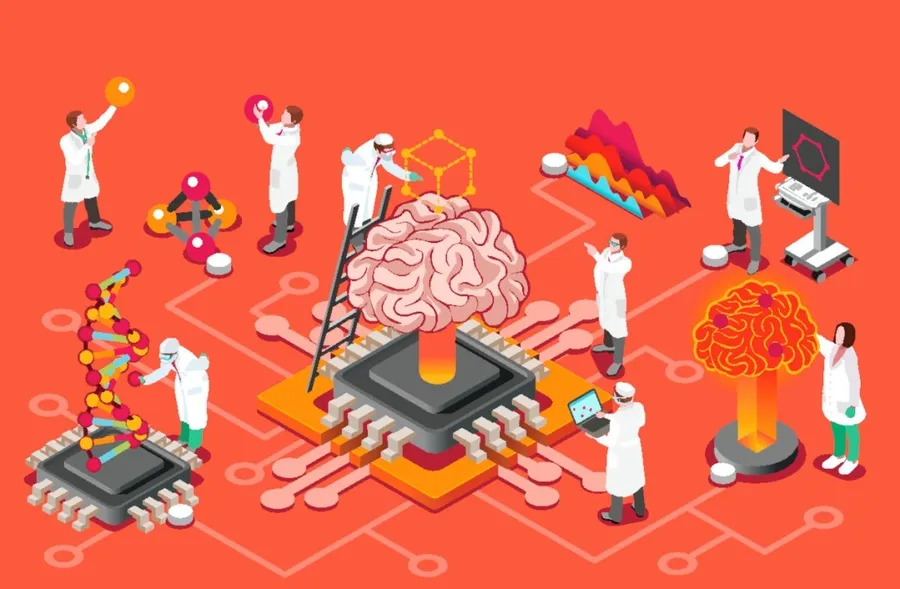
Any startup that is not using Generative AI in the next 12 months will mostly likely not succeed. Waiting for the right time to implement AI is tantamount to startup suicide.
Those are not our words. However, they are the words of more and more investors and startup leaders across the United States. And this sentiment is now starting to make its way into conversation across other startup ecosystems from London to Singapore.
Why? Because people are starting to recognize that unlike other significant advances in technology over the past few decades. Generative AI fundamentally is changing the nature and pace of innovation. It is also democratizing access to powerful technologies in a way that other technology cycles never did.
I got my start in technology at the dawn of the Web. This was back in my college days when you would access the Web through a browser called Mosaic to pull up plain text sites with a bunch of links to other sites. There were no directories, search engines or bots to find relevant sites. To most people, it looked like a toy, a pointless exercise that only tech geeks could get excited about.
Some people however saw a bold future. One entrepreneur saw the opportunity to sell books online. Another team of computer science PhD’s decided to build a better search engine. Some thought the web could be an easier way to deliver tools to sales reps and teams. Today, you may recognize these startups as Amazon, Google, and Salesforce that collectively are worth $3.2 trillion dollars.
The birth of the Web and the Dot Com boom of the 90’s created some of the most valuable and iconic companies in the world that changed entire industries. What seemed like outlandish ideas over two decades ago have become an integral part of our lives and our work.
Generative AI is not only as big of a leap as the Web, it is fast eclipsing the Web in terms of the pace of innovation, industry disruption, and potential wealth generation. What seems like a toy with a chat interface today will be the playground where the next leading trillion-dollar technology companies will emerge.
What is so fundamentally different about Generative AI versus the past decade of AI advances though? It is important to note that today’s state of the art in AI has been built on continuous advancements over the past two decades in machine learning, deep learning, and neural networks. The underlying concepts are not new, but the way Generative AI has democratized AI for all is new.
We have had the privilege of working with many startups in the machine learning space. The challenge for these startups to find success was 1) having access to enough talented data scientists and machine learning engineers, and 2) waiting months to tag data, create models, tune the models, and then hope that the model provided accurate results.
Instead of all the messy and complicated heavy-lifting required, Generative AI removes all of those steps and enables even non-technical people to use the technology to drive results. Prompt engineering has become the newest no-code tool. Developers can build AI-driven features by simply calling an API. I just saw a recent post of Generative AI reading a sketch to create a fully operational website!
The innovation behind this incredible power are Large Language Models (LLM’s). These models absorb enormous amounts of information, and using “transformers”, they identify patterns in how words and phrases relate to each other. This means that it does not require steps such as mapping training data in order to make useful predictions. The vast amounts of data ingested and the use of transformers against this data essentially figures out how best to respond to questions and prompts.
Even the largest and most complete LLM’s however can struggle to provide useful responses. There are many situations where data needed for insights is inaccessible due to being proprietary or protected by privacy rules. In these cases, prompts from a chat interface, fine tuning with larger data sets, and RAG (Retrieval Augmented Generation) can all be used to provide more accurate responses without the need for data science teams and manual data mapping efforts.
The net result for founders is that the tools are available right now to incorporate AI into their startups in a meaningful way. This is especially true for the startups that are not AI-first or ML-core, where we are observing three common ways Generative AI is being utilized:
- Improving operational efficiency using AI to reduce or eliminate internal manual processes from accounting to sales to HR and more.
- Accelerating time to market where AI provides a boost to engineering teams that can produce, review, and ship features faster.
- Enhancing the customer experience through AI-driven features that adds increasing value to customers through better personalization.
Because the bar to access Generative AI is so much lower, any startup can speed development, reduce costs, and make more informed, data-driven decisions. Instead of talking month to integrate, all it takes is weeks or days to get started. One startup we talked to implemented an entirely new product from scratch for AI-driven lead generation in two weeks!
If any startup can access these capabilities today, the only question you should be asking yourself is, when are you going to take the Generative AI leap and will you do so before your competitors do?
The original article: Generative AI is changing the startup game
©2026 Business Next Media Corp. All Rights Reserved. No.102, Guangfu S. Rd., Da'an Dist., Taipei City 106, Taiwan