©2026 Business Next Media Corp. All Rights Reserved. No.102, Guangfu S. Rd., Da'an Dist., Taipei City 106, Taiwan
21 mistakes I made with my startup
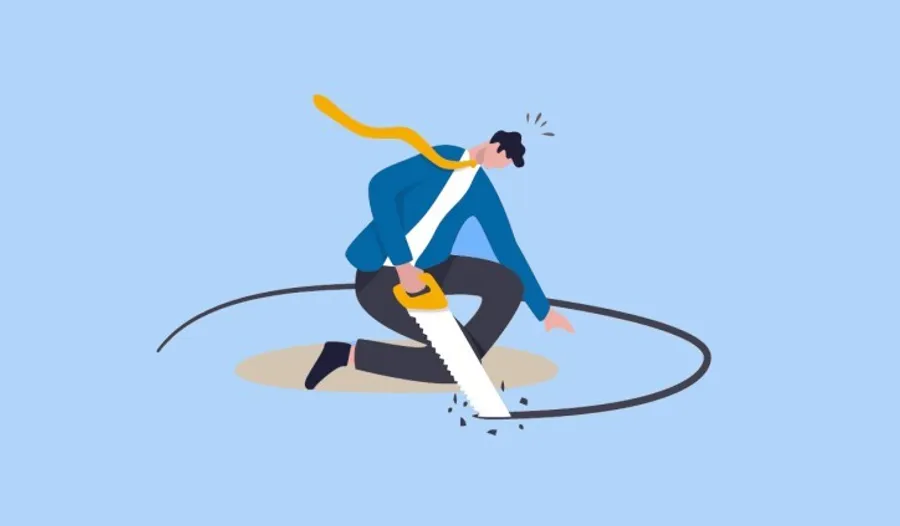
My startup had three founders, none of whom were technical. Well, I had been a software engineer, but the last time I was actively coding, the cool languages were C/C++ and SQL.
After building a very limited and unstable MVP, we quickly decided we needed real expertise, not my hacky Ruby on Rails skills picked up from a book, to build a credible product. Did we get a technical co-founder? Nope, we hired a developer studio and cloud provider to build and host our product.
There were many dumb things we did along our startup journey, but that decision has to rank near the top. Not only were they not that good (our UX was pretty dismal), they were slow to ship features, non-responsive during outages, and doing everything in their power to extract money from us.
The lesson learned? If you are a tech startup, you should probably own the tech. It not just a matter of cost, the biggest issue is alignment. When you own the tech, the incentives are clear. When someone else owns the tech, their motivation is money. That’s true even if equity is used for compensation.
Mistakes can be incredibly valuable. After all, many successful startups started with one idea before eventually realizing it was the wrong path and changing gears. It is more fair to say that mistakes are micro-learnings that get you closer to the right path.
Then there are the truly boneheaded mistakes. There is an Amazon saying that there is no compression algorithm for experience. I would rephrase it as there is no compression algorithm for mistakes, as I felt I made every conceivable mistake, each taunting me for our naivete.
Fortunately, I have two traits in overabundance. I am incredibly stubborn and am relentless about winning. This kept us going way longer than we deserved to (long enough to get to an exit) despite running into brick wall after brick wall.
So in the hopes of helping you avoid the bonehead mistakes and focus on the useful mistakes, here are 21 things I generally recommend you avoid in order to position your startup for success:
- Do not outsource tech – It should go without saying for any tech startup. You need to own your tech. Even if you use outside help for an MVP, get a tech co-founder ASAP.
- Paying for investor access – This used to be a thing outside Silicon Valley, even in NYC. We did this and of course got no results. With the funding downturn, regrettably this is returning.
- Going to startup pitch events – We spent way too much time pitching to audiences that were neither customers or investors. Be very choosy with the events you participate in.
- Obsessing on pitch decks – We took every comment on our pitch, made numerous edits, and ended up with a thousand decks. Some change is useful, but do not over index on this.
- Cold outreach to investors – None of us had any networks into the VC world, so we did cold outreach. VC’s marked it as spam or ignored it. Hugely non-productive.
- Undervaluing network to open doors – Despite our limited networks, we knew a lot of well-connected people, that we never reached out to for help. Your network is your opportunity.
- Not maintaining cap table discipline – We gave away equity like it was candy to anyone that helped, and our cap table was a mess. This scares investors and quickly dilutes your stake.
- Choosing the wrong co-founders – We were absolutely not compatible, but too far along to see we were not a good team. Vet your potential co-founders thoroughly before starting.
- Founders that were not full-time – One co-founder was working full-time, poisoning our team dynamic. Everyone should be all-in, otherwise it’s not a startup, it’s a hobby.
- Painfully slow decision making – Each of the founders had different personalities and we were all opinionated. This meant every decision was a debate or argument, slowing us down.
- Allocating time on non-productive work – We spent time on office space, logos, color schemes & other non-essential matters that were papercuts that flushed away a lot of time.
- Neglecting culture – This never even came up when we started. Taking even a half-day to align on what we valued could have saved us tons of time from decision making to hiring.
- Making dreadful hires – Because we had no culture or hiring process, we lagged on good candidates and rushed poor candidates onboard. Bad hires are 3x more expensive.
- Spending money on things with no ROI – We were mostly frugal, but still managed to flush away money with no return on things like PR, branding, marketing tactics & swag.
- Overvaluing PR – PR is useful, but mostly at the scale phase. Early on it was costly, ineffective & a drag on our limited resources because we did not have a “sellable” story yet.
- Overinvesting in marketing early on – Marketing is a scale motion. Before you have product-market fit, most marketing effort is wasted. Focus on more targeted acquisition.
- Focusing purely on enterprise – We were 100% focused on enterprise, but sales cycles were 12 months long. Going mid-market would have accelerated our growth and cash flow.
- Customizing too much for customers – Enterprises are slow moving and come with lots of needs, which lengthened implementation times and ate into margin.
- Wasting time with partnerships – Every potential partner lead was all talk, lots of meetings, no revenue. Outside of limited instances, most partnerships result in no business.
- Not prioritizing user experience – Not owned our tech contributed to a poor UX, but frankly we did not prioritize it, making it an even harder sell and implementation.
- Implementing Kubernetes – Just kidding, it was not invented at the time, but if it had been, I am pretty sure we would have used it.
The original article: 21 mistakes I made with my startup
©2026 Business Next Media Corp. All Rights Reserved. No.102, Guangfu S. Rd., Da'an Dist., Taipei City 106, Taiwan