©2026 Business Next Media Corp. All Rights Reserved. No.102, Guangfu S. Rd., Da'an Dist., Taipei City 106, Taiwan
Over 40 Infants are Left and Die in Cars Due to Heatstroke Every Year! What Makes Millilab Become the Savior in the Vehicle Safety Market?
Do you know that in the US, almost 40 infants are left in cars and die from heatstroke every year?
Moreover, 969 infants have died from heatstroke after being left in cars over the past 25 years, according to research data from SJSU.
To prevent similar tragedies from recurring, governments have started to promulgate related laws successively. Euro NCAP will begin to include 'whether vehicles are equipped with Child Presence Detection (CPD)' as one of their evaluation criteria from next year. In Japan, following an incident where a preschool child was trapped in a school bus and died, the Japanese government intends to mandate the installation of anti-lock devices on every school bus, with violators facing potential punishment or suspension of operations.
The Taiwanese startup Millilab, proficient in radar technology, seizes this business opportunity and decides to enter the vehicle safety system market. Unlike traditional security camera surveillance systems, radar is not affected by ambient light. Instead, radar uses signals to detect objects, including children and adults, thereby addressing privacy concerns.
Millilab Solve Speed, Blind Spots, and Privacy Issues at Once
In the past, surveillance cameras were the most cost-effective choice for monitoring vehicle conditions and were preferred by car manufacturers. However, cameras are prone to blind spots, and image recognition also needs to consider transmission speed and processing time, making privacy disputes more likely to appear.
Millilab believes that high-frequency millimeter wave signals will be a perfect solution. Firstly, signal transmission is less prone to blind spot issues. Secondly, the transmission speed of the signal itself is faster than image recognition, and there are fewer privacy concerns with signals.
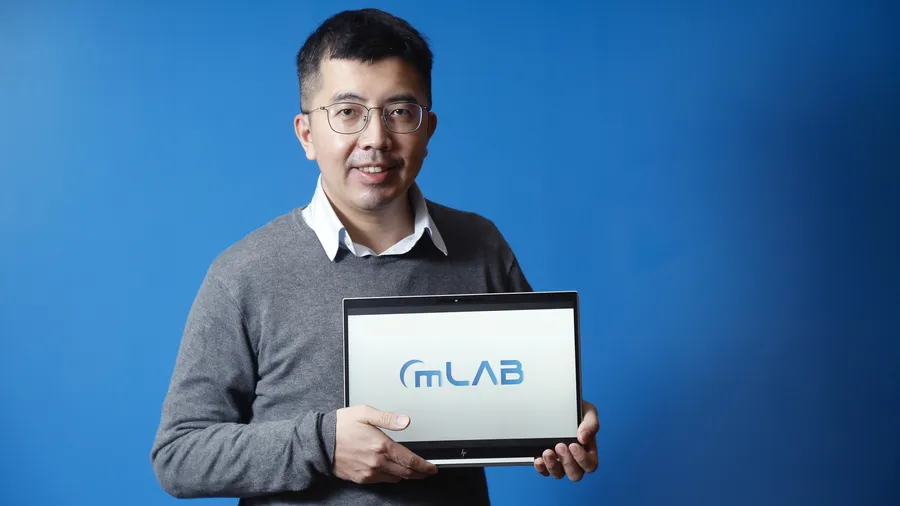
Bibben Lin, CEO of Millilab (pictured above), has previously worked in several major electronics companies, including HTC and Lenovo, where he served as RF manager, as well as Wireless Business Group Director at Wanshih Electronics, participating in the mass production of various electronic products. During this time, Bibben Lin not only accumulated experience in project management but also gained recognition for his expertise in hardware development. He has built a network in the semiconductor industry, which led him to recognize the entrepreneurial opportunity in the automotive sector.
Showing the Shadow to Customers is More Important than Achieving Perfection
Millilab offers radar-based in-car detection systems with a sensing range of approximately 7 car seats. The information it can detect includes physiological signals such as breathing and heartbeat, as well as advanced presence detection features like passenger age and number.
Bibben Lin added that while millimeter wave technology itself is not difficult, the biggest challenge in its automotive application lies in algorithm accuracy, which is also the advantage of Millilab. Additionally, although lidar technology can solve cybersecurity issues similarly, its high precision leads to higher costs, whereas using millimeter wave technology can save tens of times in terms of financial investment.
Despite having built networks and accumulated experience, the entrepreneurial journey of Millilab has not been easy. Bibben Lin shared that in 2019, when the team was newly established, they worked tirelessly without work specialization, resulting in low efficiency and failure to meet customer deadlines. After two years of experience, Millilab started to implement work specialization in 2021, making their R&D talent and efficiency the key strengths, shortening the development timeline from the original 3 to 6 months to just 1 month.
"For startups, it's crucial to present a product at 60% as quickly as possible for customers to envision, rather than obsessing over developing a 100% perfect product," Bibben Lin said. Currently, Millilab is negotiating with clients including a US children's accessories company, a Japanese home appliances firm, and a conceptual car manufacturer.
Collaborating with Semiconductor Manufacturers, Aiming to Enter Automotive Giants
Currently, Millilab adopts a customized charging model, providing customized algorithms to different customers. They hope to apply for patents together with customers in the future, allowing algorithm logic to become a moat for the team.
In terms of manufacturing, although it's challenging for Millilab to directly cooperate with automotive giants as a startup, the team actively persuades car manufacturers to use their products through intermediary semiconductor manufacturers.
For example, the team once added radar devices from Millilab to the built-in dash cams of Korean cars, enabling them to detect obstacles within 10 meters of the vehicle. Millilab is currently focusing on products that automotive giants don’t produce themselves and still have room for improvement. They position themselves as an R&D team for automotive giants, aiming to seize more business opportunities in the automotive sector by 2025 while ensuring compliance with regulations.
©2026 Business Next Media Corp. All Rights Reserved. No.102, Guangfu S. Rd., Da'an Dist., Taipei City 106, Taiwan