©2026 Business Next Media Corp. All Rights Reserved. No.102, Guangfu S. Rd., Da'an Dist., Taipei City 106, Taiwan
Revolutionizing Freshness: Cool Innovation Extends Food Lifespan and Reduces Waste
When it comes to keeping food fresh, most people think that low temperatures are all about. But here is the thing: humidity is just as important.
Imagine strawberries that usually last only a week staying fresh for up to 45 days, or chestnuts maintaining their quality for 150 days. That is the kind of difference the right humidity level can make.
Cool Innovation, a Japanese startup, tackles this challenge with their innovative technology, "Ice Moisture" (氷潤 or "Hyōjun" in Japanese). Unlike traditional systems, "Hyōjun" creates a controlled environment where both temperature and humidity are independently managed. This advanced approach avoids issues like frost buildup and inconsistent humidity. It ensures a uniform atmosphere inside the storage unit, eliminating the need for defrosting and maintaining high hygiene standards.
Cool Innovation’s technology allows for optimal conditions for each type of food or even flowers, preserving freshness over extended periods—from a few days to several months.
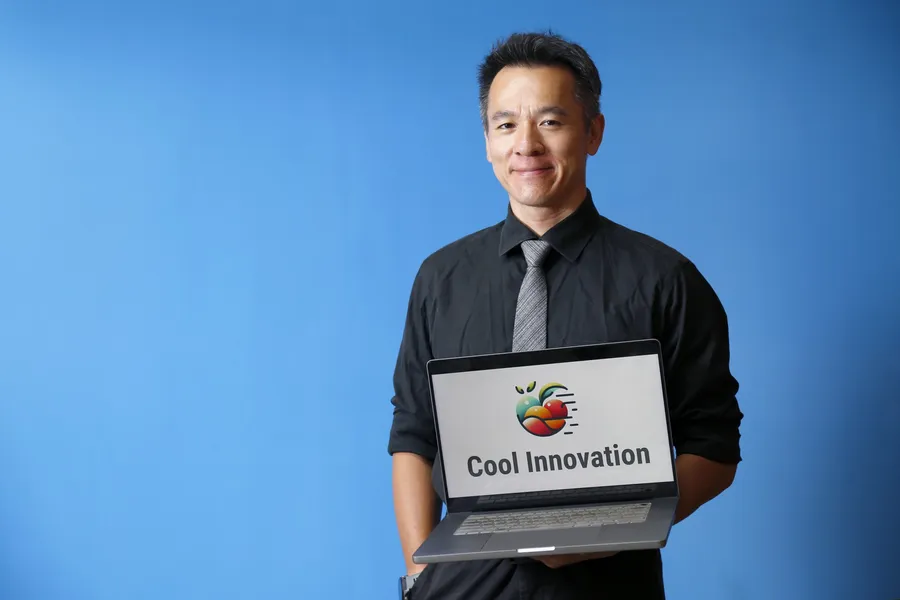
Daniel Chang, COO of Cool Innovation, began his entrepreneurial journey with a solid foundation in Taiwan and China. He spent over a decade in startups and worked for four and a half years at Amazon Web Services in China. I
Cool Innovation’s technology can preserve perishables for a longer time by addressing the limitations of traditional refrigeration systems. Conventional refrigeration relies on cold air circulated by a refrigerant, which often leads to frost buildup, temperature fluctuations, and dryness due to limits on saturated water vapor. This is similar to how a well-sealed container keeps bread fresh, but once exposed to the air, it quickly becomes dry. Traditional methods may use mist or steam to boost humidity, but these techniques are problematic as they require frequent defrosting, reducing energy efficiency and potentially introducing bacteria.
In contrast, Cool Innovation employs a more effective approach. Their system sprays cold water over packing materials while supplying air from below, creating a consistent and efficient cooling environment. This method prevents moisture loss and maintains freshness without the need for defrosting, addressing the issues of dryness and temperature inconsistency inherent in conventional refrigeration methods.
Daniel Chang explained, “Our system sprays cold water over the packing material. Cold water flows downward in a film while air is supplied from below and flows upward, exchanging heat with the cold water. This allows us to maintain both temperature and humidity without the typical drawbacks of frost build-up.”
The impact of this technology is tangible. Cool Innovation supported by with Japan’s Environment Agency and the results showed that Cool Innovation’s system reduced food loss from 40% to just 4.5% and cut energy consumption by 51%. Daniel Chang highlighted a particularly impressive result from a shipment journey: “For a trip from Manila to Palawan, which is 1,108 kilometers, our technology preserved the food for 19 days. We’re able to maintain quality and even offer different classes of products based on their condition.”
Daniel Chang added, “With our technology, we can keep strawberries fresh for a month or even longer. In Japan, for example, strawberries are in high demand during the Christmas season. Our solution helps farmers extend their shelf life, benefiting both them and consumers."
Cool Innovation can also help the U.S. access fresh Japanese Shine Muscat Grapes by using sea freight, which is more cost-effective than air freight. The Japanese Ministry of Agriculture aims to increase exports to 5 trillion yen by 2030 (approximately 35 billion USD), and Cool Innovation's technology could play a crucial role. Daniel Chang noted, “Our technology can make a significant impact, especially for products like Japanese Grapes that are rarely seen in the U.S. due to high shipping costs.”
Their business model includes leasing and subscription options, providing flexibility for various scales of operation. “We offer flexibility because just like with housing, some businesses prefer to rent rather than buy,” Daniel Chang explained. This adaptability is crucial as the company looks to expand its footprint beyond Japan.
For now their clients include logistics companies, farmers, and traders. They offer containers ranging from 20 to 40 feet, capable of maintaining temperatures from -2°C to +35°C and humidity levels from 20% to 99%. They also provide customizable warehouse solutions and small storage units.
They collaborates with the Royal Project Foundation in Thailand and prioritizes expanding in Japan due to the local team's expertise. Despite Japan's challenging startup environment, characterized by a culture that stigmatizes failure, Daniel Chang remains optimistic. “Japan is not the most startup-friendly environment. Failure here is often stigmatized, making it tough to bounce back. But we are committed to making a difference.”
Cool Innovation is not just about keeping products fresh; it’s about revolutionizing logistics and food preservation globally. With a unique approach to refrigeration, they are set to make a significant impact on the agricultural and logistics industries, ensuring that fresh produce and flowers are available and reducing food waste on a grand scale.
©2026 Business Next Media Corp. All Rights Reserved. No.102, Guangfu S. Rd., Da'an Dist., Taipei City 106, Taiwan