©2026 Business Next Media Corp. All Rights Reserved. No.102, Guangfu S. Rd., Da'an Dist., Taipei City 106, Taiwan
Interview with Speak's Founder: Standing Out in the AI Language Learning Race
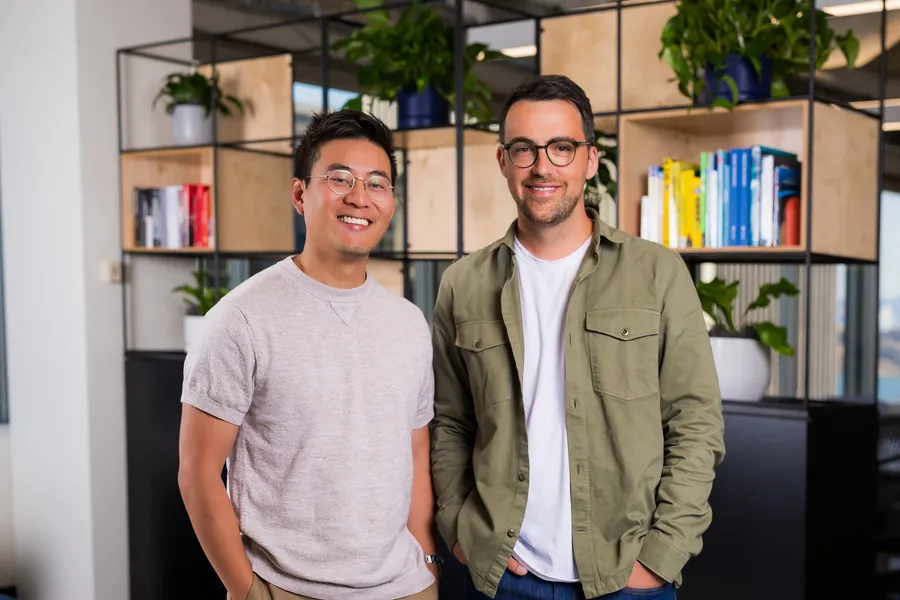
What if AI could be your personal English tutor, always available to help you practice speaking? That’s the vision behind Speak, an AI language learning app created by founders Connor Zwick and Andrew Hsu. Speak aims to solve one of the biggest challenges in language learning—helping people confidently improve their English speaking skills. But what makes Speak different in the busy and competitive world of AI language learning?
In June 2024, Speak, the AI language tutor, raised $20 million in a Series B-3 funding round, doubling its value to $500 million. The round was led by Buckley Ventures, with participation from existing investors like OpenAI Startup Fund and Khosla Ventures, as well as new investors Paul Graham and Jeff Weiner. This brings Speak’s total funding to $84 million, highlighting the company’s fast growth and strong market position.
Before AI became the major trend it is today, Connor Zwick and Andrew Hsu were already sensing its potential. “AI felt like a big deal back then, especially in the Bay Area,” Connor Zwick recalls. “In 2016, there were a ton of papers about AI coming out. Me and my co-founder Andrew Hsu saw people in the space working on these things, and we were really interested. We were lucky to be in the Bay Area because we were at the center of everything.”
What did they see that others didn’t? “The models back then were more specific—like speech models, image models. We saw that the models were about to be as good as, or even better than, humans. We thought, if we keep working on this, it will be very interesting,” Connor Zwick explains. That insight laid the groundwork for what Speak would eventually become.
From the start, Speak’s mission has been clear: to build an AI-powered English teacher that helps people learn to speak fluently. Connor Zwick describes this process like climbing a flight of stairs, with each step representing a new breakthrough in the development of AI education. “We wanted to build an AI language teacher that was teaching people English. I like to think of it as a flight of stairs—each step helps us make high-quality education available to everyone.”
Why Localization is Key to Speak’s Success in Different Countries
One key part of Speak’s approach is “localization”, tailoring the learning experience to different countries and cultures. “Localization is a very important piece,” says Connor Zwick. “There’s a reason we spent so much time developing our first market in South Korea. Every market is different, and we build our content in a very unique way for each. That’s one of our core values.” Speak doesn’t teach a Taiwanese person English the same way it would teach someone from France, ensuring that each user gets a personalized learning experience.
When you use the Speak app, you practice real-life conversations with AI. The app gives immediate feedback on your pronunciation and grammar, helping you improve your speaking skills in a pressure-free environment.
With the rise of AI tools like ChatGPT, how does Speak compete in such a crowded market? ChatGPT now offers voice interactions that allow users to practice languages through conversation. However, Zwick views ChatGPT as an opportunity rather than a threat. “We’re lucky to live in a world with OpenAI. It’s rare for big companies to open their technology, but OpenAI has done that. People will use ChatGPT to learn languages, and that’s good for us because it means people are interested in AI solutions. But those who want something more specialized will turn to Speak.”
what makes Speak different from other AI-based language tools?
One key advantage is its speed and focus. “Our curriculum is built to be highly effective, and we’ve already developed a ton of technology. The more users we get, the better our models become. What we’re seeing now is very encouraging, and it’s only going to get more exciting as ChatGPT continues to grow,” Connor Zwick says.
Another major competitor is Duolingo, a language learning giant with over 800 million downloads. Duolingo recently added AI-powered speaking features, allowing users to practice English in a more casual way. But when asked if he sees Duolingo as a direct threat Connor Zwick remains confident that Speak’s approach sets it apart.
“There’s always going to be a ton of competition. But we’re focused on doing good work, and if we keep doing that, we’ll succeed. Duolingo’s approach is different from ours. They’re more casual, focusing on making language learning fun and accessible. We, on the other hand, want to help people speak fluently as fast as possible. We’re not trying to be a Duolingo killer—we’re just going in a different direction.”
Every AI startup faces challenges with data, talent, and compute power. How does Speak manage these obstacles?
Connor Zwick believes Speak’s specialized models give them an edge. “The amount of money and energy these companies are using is huge, but at Speak, we benefit from these advancements. Our models are more specialized, and having more users helps us build better models,” he explains.
How Will AI Shape the Future of Language Learning?
Connor Zwick is optimistic about the road ahead. “Ultimately, in 5 years from now, AI will change everything. People will talk to AI to learn because it’s like talking to an expert,” he predicts.
He believes that AI could help break down language barriers across the world, leading to more global understanding. “It’s a cool world if more people speak the same language across different countries. Global peace and harmony often come from not speaking the same language, so I think AI can help bridge that gap,” Connor Zwick adds.
As AI continues to evolve, Speak's goal is to remain at the forefront of language learning, helping people around the world master their English speaking skills. To achieve this, Speak is committed to developing improved AI models, expanding into new markets, and delivering its AI-powered language learning experience to even more people globally.
©2026 Business Next Media Corp. All Rights Reserved. No.102, Guangfu S. Rd., Da'an Dist., Taipei City 106, Taiwan