©2026 Business Next Media Corp. All Rights Reserved. No.102, Guangfu S. Rd., Da'an Dist., Taipei City 106, Taiwan
Transforming UX Design: How Phase is Making Animation More Accessible
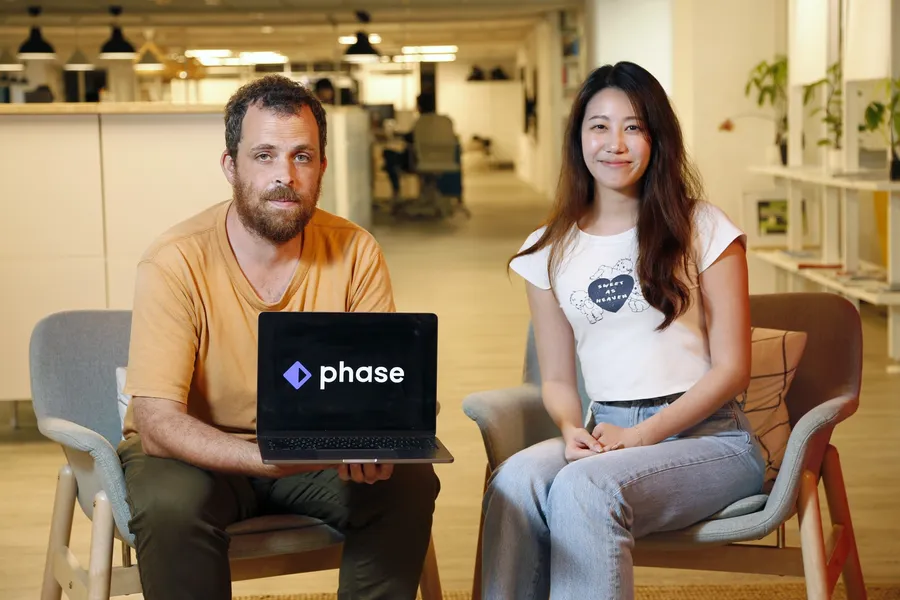
Designers often face a common problem: after spending a lot of time and creativity on making a user-friendly interface, the next step, creating animations becomes a challenge. The process can be complicated, requiring a lot of back-and-forth with engineers and the use of special software. This can take a lot of time and energy. UX designers who focus on making apps and websites easy and enjoyable to use, deal with this regularly.
So, how can designers make this process faster and easier? That’s where Phase comes in. It’s a tool that removes the need for complicated software and back-and-forth with engineers. With Phase, designers can create animations quickly and easily on their own, making the whole process much simpler, especially for UX designers, who focus on creating smooth, user-friendly experiences.
Founded in 2017, Phase originally sought to bridge the communication gap between designers and engineers. By 2021, the company introduced a no-code tool that allowed designers to create interactive websites and apps. But last year, Phase saw even more potential in animations, and they decided to pivot—aiming to dominate this growing market.
So why the switch to animation? "We realized animations are the future of UI/UX, but current tools like Figma aren’t built for that," says Nick Budden, CEO of Phase. "Working with After Effects is time-consuming, and designers shouldn’t need to rely on professional software to bring their ideas to life."
"Today’s UI design process is like making a movie," explains Nick Budden. "Designers should only need an idea, and be able to test and validate their designs quickly, without the endless back-and-forth with engineers."
Phase’s main goal is to enable designers to create high-quality animations without requiring any coding skills. By uploading their design to Phase and using a timeline editor (similar to video editing software), designers can make animations faster and easier than ever before. "What takes 15 people weeks should take one designer just two hours," Nick emphasizes.
Entering New Markets: Why Taiwan is Key
Phase have strategically launched in regions with more isolated internet markets, including Brazil, Portugal, Japan, and South Korea. In Korea alone, Phase attracted 7,000 designers within just five months.
But now, the company is setting its sights on Taiwan. "I have lived in Taiwan for 15 years. Taiwan is home," says Nick Budden, explaining why they’re preparing to enter the Taiwanese market by year’s end. Beyond personal connections, Phase has discovered a unique opportunity in Taiwan, flat designers who aren’t traditionally focused on UI/UX are eager to incorporate animations into their work.
Madeline Chen, Phase’s product marketing analyst, adds: "Through social media surveys, we found that many graphic designers in Taiwan are interested in using our tool, not just UI/UX professionals."
To meet local needs, Phase is adapting its platform and actively collaborating with Key Opinion Leaders (KOLs) to promote their product.
What Makes Phase Different?
"Phase was created to simplify the entire animation process," Nick Budden explains. Unlike tools like Figma, which require linking multiple images to create animations, Phase lets designers create high-quality animations with just a few clicks. Once a designer is happy with the animation, it’s ready to hand off to engineers, removing the typical communication delays.
Phase isn’t just about simplifying workflows, it’s about changing the way designers think about their tools. Nick Budden shares his own journey: "I studied philosophy at university, but I fell in love with design. My experience building design tools came from creating magazines, and it showed me there’s no limit to what’s possible. But when I transitioned to UI/UX, I found the tools limiting." This realization led him to create Phase, a tool where designers can simply have an idea and execute it without complex processes.
What Are the Main Challenges for Foreign Founders?
Launching a tech company as a foreigner in Taiwan hasn’t been without its challenges. "Raising money is tough when you don’t speak the language," Nick Budden admits. "I didn’t have the local connections that many Taiwanese entrepreneurs do." But despite these hurdles, Phase has successfully raised funding from both European and Asian investors, and they’re aiming to raise $100 million USD to fuel their global expansion.
Phase’s team is also multicultural, with two-thirds of their 40 employees based in Taiwan. However, Nick Budden insists that creating a strong company culture and developing processes suited to the local market are more important than team diversity.
With Phase preparing to launch in Taiwan by the end of the year, Nick Budden is keen to engage with local designers. "We want to better understand the needs of Taiwanese designers before our official launch at the end of the year," he says, encouraging designers interested in collaborating to reach out.
At the core, Phase’s goal hasn’t wavered: "We are here to give designers more intuitive tools that allow them to create great animations without needing a technical background." By simplifying communication and technical barriers, Phase hopes to unlock new creative potential for designers worldwide.
And as Nick Budden concludes, "The best outcome is when you forget that Phase even exist, because it just works."
©2026 Business Next Media Corp. All Rights Reserved. No.102, Guangfu S. Rd., Da'an Dist., Taipei City 106, Taiwan