©2026 Business Next Media Corp. All Rights Reserved. No.102, Guangfu S. Rd., Da'an Dist., Taipei City 106, Taiwan
Microsoft Partners with Aiworks, Industry, Government, and Academia to Cultivate AI Talent and Drive Transformation in Taiwan
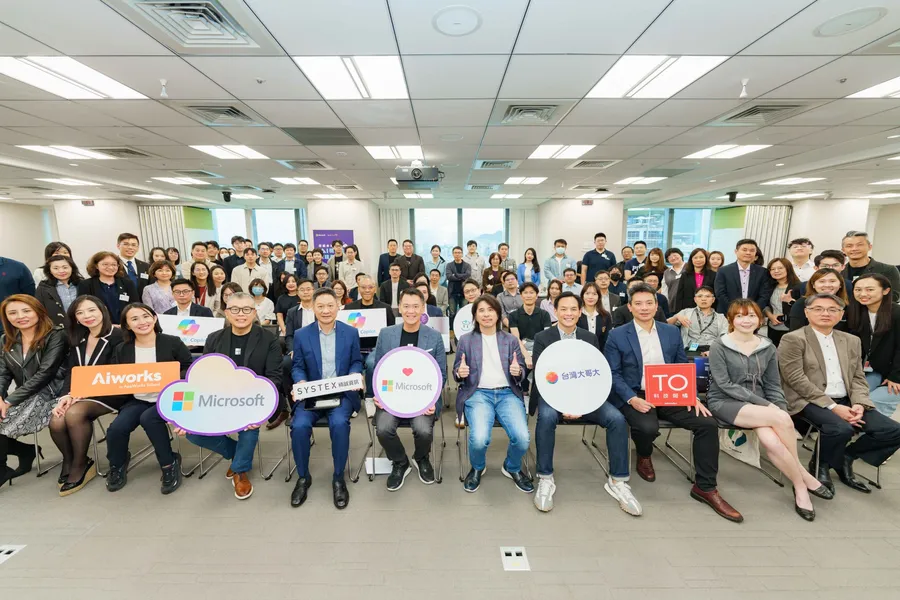
Microsoft has launched an initiative to address Taiwan's shortage of AI talent by partnering with key stakeholders from the government, business sector, and educational institutions. The goal is to create a long-term AI ecosystem that supports Taiwan’s digital transformation and establishes the country as a global leader in AI innovation. This collaboration focuses on training the next generation of AI professionals to ensure Taiwan's workforce is prepared for a tech-driven future.
The initiative is a collective effort that brings together Microsoft, the Taiwanese government, leading educational institutions, and major businesses like Systex Corporation and Taiwan Mobile. Notably, the initiative also includes AppWorks, a prominent organization supporting startups through its AI-focused program, Aiworks. As a key partner in this collaboration, Aiworks is helping to bridge the AI talent gap by providing practical, hands-on training designed specifically for Taiwan's tech ecosystem. This integration of industry leaders, government agencies, and educational bodies forms a robust foundation for AI talent development.
Microsoft, through its involvement, has emphasized its commitment to AI education and talent cultivation. According to Sean Pien, General Manager of Microsoft Taiwan, "AI talent cultivation is no longer a luxury; it is a necessity for the future of business and industry. Microsoft is dedicated to providing free educational resources, such as low-code tools like Power Platform and Copilot Studio, to help individuals across industries create customized AI applications and support their AI journeys."
Strategic Partnerships with Government and Education
A central element of this initiative is the partnership with the Taiwanese government and educational institutions. Deputy Minister of Education Ping-Cheng Yeh highlighted the government's support for AI education through the Taiwan AI University Alliance (TAICA). This alliance integrates AI resources from universities nationwide and aims to expand its reach to 50 universities. The initiative promotes cross-institutional learning opportunities, giving students access to cutting-edge AI curricula. Ping-Cheng Yeh also emphasized the importance of cultivating curiosity, independent thinking, and problem-solving skills, which are crucial for success in Taiwan's rapidly evolving digital landscape.
Industry Insights: Addressing the AI Skills Shortage
The forum also featured insights from leading companies discussing their strategies for addressing the AI talent gap. Frank Lin, Chairman of Systex Corporation, explained how his company is tackling the shortage by creating AI skill maps for employees, offering internal certifications, and organizing competitions to encourage collaboration. Systex is also working with external partners, including Aiworks, to embed AI into its core digital transformation strategy.
Jamie Lin, General Manager of Taiwan Mobile, shared his view on the growing importance of AI tools like generative AI and automation in boosting business productivity. He noted that AI's impact is no longer confined to specific industries but will soon improve productivity across all business roles. By 2025, he predicts AI adoption will accelerate in five key areas: employee productivity, customized enterprise models, digital platform integration, AI ethics, and broader AI ecosystem connectivity.
The Role of Aiworks in Building Practical AI Skills
A critical part of this collaboration is hands-on training for AI professionals, with Aiworks, under the leadership of Shirney Huang, playing a central role. Aiworks, a program from AppWorks, is specifically designed to help individuals develop the practical AI skills required to succeed in today’s business world. Huang highlighted that adopting AI isn't just about using new tools but about fostering a mindset focused on solving real business problems. Aiworks offers practical, business-centric courses that help students understand how to apply AI strategies to meet the specific goals of companies.
Shirney Huang emphasized that Aiworks courses are built around solving real-world business challenges. This ensures that students not only gain technical knowledge but also learn how to implement AI solutions effectively within their organizations to drive results.
Richard Chang, Associate Director of Hengyi Education Training Center, echoed this sentiment, stating that the key to successful AI adoption is building a skilled workforce. Microsoft combines online resources with in-person training at certified centers to ensure that employees are prepared to apply AI effectively in real-world business contexts.
The forum also touched on the role of consultancies in helping companies implement AI. Firms like Anran Technology and Lingtune Computer shared their expertise in customizing AI solutions for specific business needs. Demonstrations from Maidata Digital and Aite Technology showcased how Microsoft 365 solutions can improve business productivity and agility.
Closing Taiwan’s AI Talent Gap and Building a Sustainable Ecosystem
This initiative marks a vital step in addressing Taiwan’s AI talent shortage and laying the groundwork for a sustainable AI ecosystem. By bringing together government, industry, and academia, the partnership aims to position Taiwan as a leader in AI innovation. The combined efforts discussed at the forum will ensure that Taiwan's workforce can fully leverage AI to drive economic growth and establish a leading role in the global market.
©2026 Business Next Media Corp. All Rights Reserved. No.102, Guangfu S. Rd., Da'an Dist., Taipei City 106, Taiwan