©2026 Business Next Media Corp. All Rights Reserved. No.102, Guangfu S. Rd., Da'an Dist., Taipei City 106, Taiwan
AI with Purpose: SparkLabs Taiwan DemoDay 10 Highlights Cross-Border Innovation
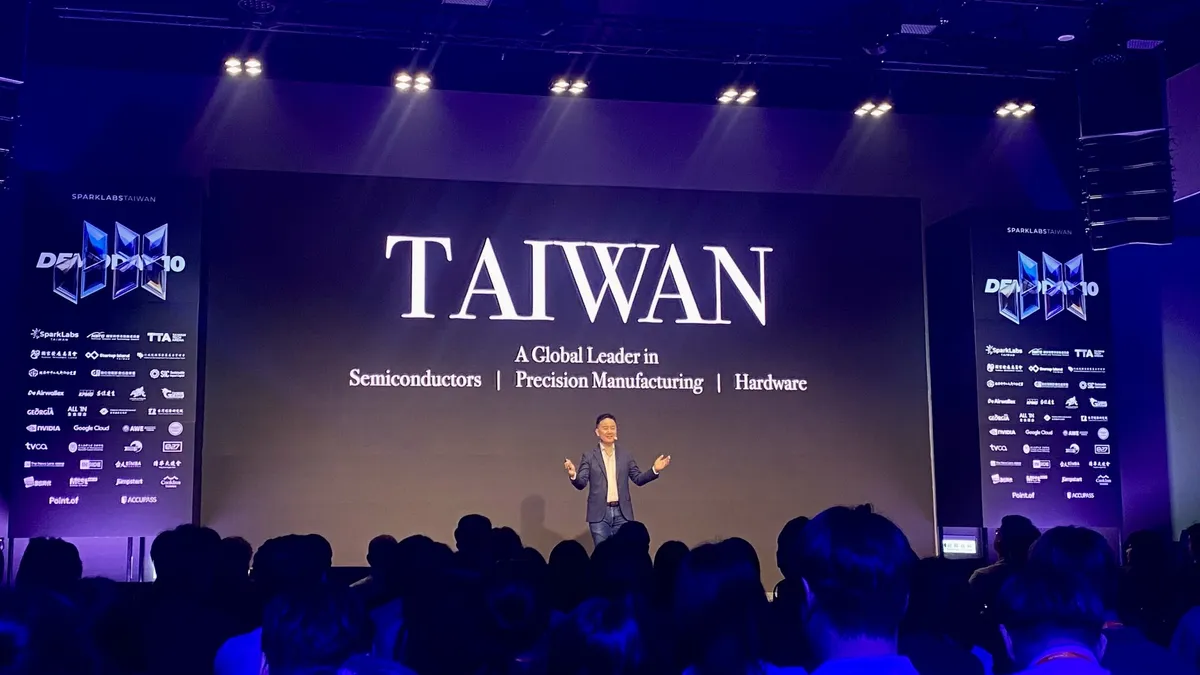
SparkLabs Taiwan held its 10th DemoDay in Taipei, featuring seven early-stage startups from Taiwan, the United States, and Australia. The event focused on applied artificial intelligence, with companies addressing challenges in climate tech, industrial computing, language localization, healthcare, and financial services.
DemoDay is part of SparkLabs Taiwan’s accelerator program, which offers selected startups mentorship, product guidance, and access to investors. The format remains consistent: founders present their businesses to an audience of VCs, corporates, and peers. This edition emphasized AI-first innovation and included companies working across verticals such as sustainability, semiconductors, digital content, and robotics.
Seven Startups Applying AI in Industry, Health, and Finance
CarbonClean Energy, founded in Taiwan with team members from Stanford and UC Berkeley, is tackling industrial emissions by converting captured CO₂ into useful chemicals and fuels using a proprietary low-energy electrolyzer. They’re already piloting with major petrochemical companies in Asia and plan to expand into Australia, Europe, and the U.S. by 2027. "Our shared vision for clean energy is to turn emissions into new opportunities for a sustainable future, especially in chemicals and fuels." shared Emma Lin, founder and CEO of CarbonClean Energy.
Glober AI, founded in the U.S. by ex-Googlers, is tackling a gap in global marketing: cultural nuance. Its AI engine localizes content across languages, regions, and generations to improve ad performance. Since late 2024, they’ve signed clients in the U.S., Japan, and greater China. Chris Yang, co-founder and CEO, summed up the company’s approach: “Let's go global and act local together.”
Rayleigh Vision Intelligence (RVI), a Taiwan-based startup with engineers from Apple and Intel, is addressing bandwidth and energy issues in AI data centers. Its optical interconnect platform, SmartLink, replaces copper wires with light-based micro-emitters for faster and cooler data transfer. Jr-Hau He, founder of RVI, described the concept as, “We are not just solving the tech bottleneck, we are building light highways that tomorrow’s AI will run on.”
Alpha Fintech, Taiwan’s first AI-powered robo-advisor for institutional investors, is already managing endowment portfolios and is preparing to expand into Singapore, Hong Kong, and South Korea. Its system uses AI to automatically adjust portfolios based on risk and performance. Serena Yang, co-founder, emphasized the platform’s broader goal: “Our mission is to build a trusted AI investment engine for the world's leading institutions. Let’s shape the future of finance together.”
Wondera, with roots in both Australia and the U.S., is building an AI music agent that simplifies music creation through conversation. The tool allows users to compose, remix, and publish music using a chat-like interface, backed by a library of over 15 million licensed tracks. Bill D., co-founder and CEO, described the vision simply: “Wandera will enable everyone to create the music you love.”
OptoIntel, a medtech startup operating between Taiwan and the U.S., is developing a portable headset that scans the retina to detect early signs of Alzheimer’s. The approach avoids radiation and invasive procedures, with clinical trials already underway. Lawrence Chen, M.D., founder and CEO, explained the intent behind the product: “We are building a compact headset that enables early screening at scale.”
MetAI, founded in Taiwan and funded by Nvidia USA, builds simulation environments for training industrial AI systems. Its MetGen platform transforms CAD layouts into operational 3D digital twins for logistics, robotics, and semiconductor planning. Daniel Yu, co-founder and CEO, described the long-term goal as, “At MetAI, our mission is to simulate the world that will train physical and industrial AI, just like LLMs did with generative AI.”
Looking Ahead: From Prototypes to Global Expansion
DemoDay 10 reflected SparkLabs Taiwan’s ongoing focus on cross-border innovation, with startups addressing issues in infrastructure, automation, and sustainability. While the pitches varied in product and sector, they shared a common theme: practical applications of AI designed for measurable outcomes in industry-specific contexts.
For these startups, DemoDay is not a finish line but a checkpoint—most are just entering pilot stages or early revenue. Their next moves will determine whether promising ideas can turn into scalable solutions.
©2026 Business Next Media Corp. All Rights Reserved. No.102, Guangfu S. Rd., Da'an Dist., Taipei City 106, Taiwan