©2026 Business Next Media Corp. All Rights Reserved. No.102, Guangfu S. Rd., Da'an Dist., Taipei City 106, Taiwan
Building Smarter Robots: AVSR AI Wants Machines That Truly Think
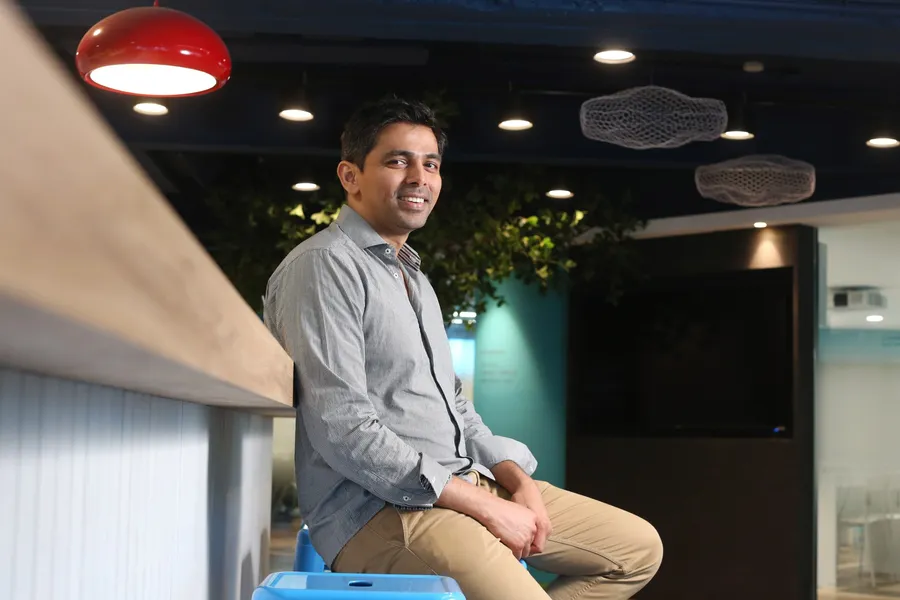
The robotics industry is advancing rapidly, with the potential for machines to perform tasks traditionally done by humans becoming more achievable. However, a critical component remains underdeveloped: intelligence. While hardware has seen significant progress, the real challenge is in building AI systems that allow robots to think, adapt, and execute complex tasks autonomously. AVSR AI is focused on addressing this gap.
Founded in 2024 by Vikrant Singh Tomar, AVSR AI specializes in developing AI software that empowers robots to perceive, reason, and interact with their environment. The company’s technology aims to introduce human-like cognition and decision-making into robots, making them more autonomous, versatile, and capable of performing real-world tasks.
Building the Foundation of Intelligent Robots
Traditional robots often follow rigid, predefined instructions, limiting their ability to adapt. AVSR AI takes a different approach, equipping robots with the ability to reason and adjust to their surroundings. The company’s technology integrates three critical capabilities: spatial intelligence, cognition, and manipulation, enabling robots to carry out tasks beyond simple programmed commands.
Spatial Intelligence enables robots to understand the relationships between objects. For example, a robot can recognize not only the presence of a cup but also its position relative to a teapot and table, allowing it to navigate and interact in a more context-aware manner.
Cognition allows robots to plan and execute tasks autonomously. Rather than following rigid steps, robots can evaluate situations, make decisions, and adjust their approach based on new inputs.
Manipulation takes things a step further, enabling robots to physically engage with objects and perform actions like assembling products or handling delicate items. This adaptability makes robots capable of carrying out a range of tasks in dynamic environments.
The Future of Robotics: Autonomous, Versatile, and Social
While many current robots are limited to specific tasks, AVSR AI is developing systems that are not just autonomous (able to act independently), but also versatile (able to perform a variety of tasks), and social (able to interact naturally with humans).
A key example of this innovation comes from an internal experiment. A robot was instructed to place an object into a machine and close the door. The robot’s initial attempt failed—the door didn’t close completely. Traditional robots would likely have halted the process, awaiting human intervention. However, AVSR AI’s robot recognized the task was incomplete, corrected the error, and continued, demonstrating the ability to adapt and resolve issues independently.
This represents a major step forward, as current robots often rely on specific sensors and predefined commands. They cannot analyze and adapt to new conditions in real-time. AVSR AI’s robots, on the other hand, are designed to learn from their environment and adjust their actions accordingly.
Bringing Real Intelligence to Robotics
AVSR AI offers a modular AI platform that can be integrated into various robotic applications. Using a Software-as-a-Service (SaaS) model, the company enables businesses to customize the AI capabilities for their specific needs. Whether in industrial automation, home assistance, or service robots, AVSR AI’s platform enhances the robot’s cognitive abilities, making them more intelligent and adaptable.
The flexibility of AVSR AI’s technology allows it to scale across different industries and applications. The company envisions a future where robots don’t just work in factories—they become an integral part of everyday life, assisting with everything from household tasks to complex operations.
Vikrant Singh Tomar’s path to AVSR AI wasn’t his first venture in the AI and robotics field. In 2015, he founded Fluent AI, which developed offline speech recognition technology for wearable devices like smartwatches and GoPro cameras. While Fluent AI’s technology was groundbreaking, he eventually left the company to pursue AVSR AI, as he recognized that the team’s vision was not aligned with his goals for the future of AI-powered robotics.
Looking back on his decision to leave Fluent AI, he emphasizes the importance of building the right team. “Having the best technology is important, but what really matters is finding the right partners who understand the value and are committed to executing that vision,” he explained.
Taiwan: A Key Market for AVSR AI
AVSR AI’s decision to participate in the Garage+ accelerator program in Taiwan aligns with its strategy to expand into key international markets. Taiwan’s role as a major hub for electronics and mechanical product manufacturing makes it an ideal market for automation and AI solutions.
During their time in Taiwan, Vikrant Singh Tomar and his team met with numerous companies to explore potential applications in manufacturing, home robotics, and service robotics. With increasing interest from both the local tech ecosystem and industrial sectors, AVSR AI is focusing on expanding its presence in Taiwan.
AVSR AI currently operates with a small team of three full-time co-founders and is looking to raise $3 million in its Series C round to scale operations, expand product development, and enhance its AI-driven capabilities.
As the need for smarter, more adaptable robots continues to grow, AVSR AI is focused on developing AI systems that can better understand and interact with the world around them. By enhancing the autonomy and versatility of robots, AVSR AI is helping to shape a future where robotics can genuinely improve both industries and daily life.
©2026 Business Next Media Corp. All Rights Reserved. No.102, Guangfu S. Rd., Da'an Dist., Taipei City 106, Taiwan