©2026 Business Next Media Corp. All Rights Reserved. No.102, Guangfu S. Rd., Da'an Dist., Taipei City 106, Taiwan
Fixing Lost-in-Translation Ads: Glober AI’s Vision for Global-First Content
In today’s digital economy, it’s easier than ever to launch an ad campaign across borders—but much harder to make it resonate. Despite advances in machine translation, global brands still struggle to create content that feels native to each market. That’s the problem Glober AI is tackling head-on.
Founded in 2024 by a team of former Google, Oracle, and Amazon veterans, Glober AI is a Taiwan- and U.S.-based startup using AI to localize marketing content across languages and cultures. Its mission is to make digital content truly global—not just translated, but culturally adapted, nuanced, and persuasive.
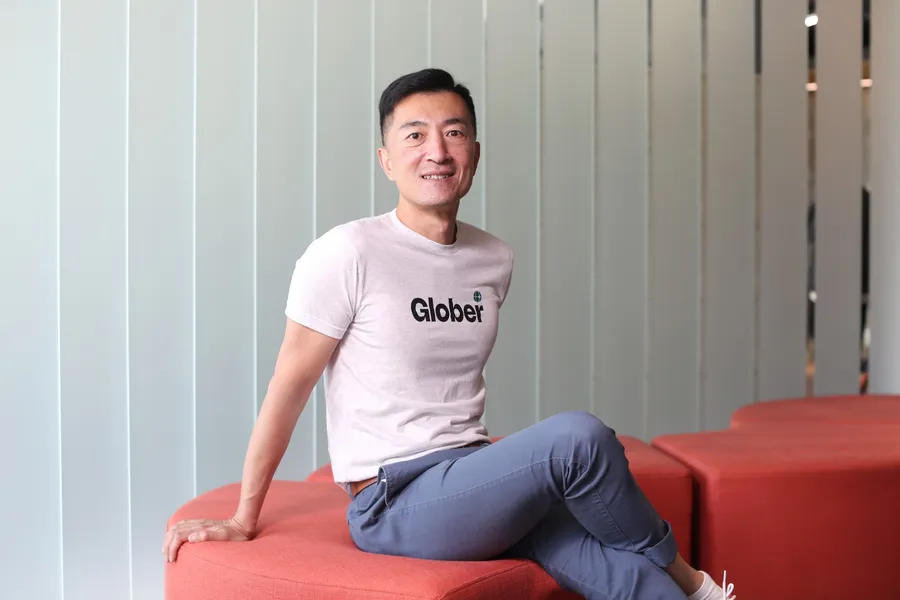
“We’ve seen companies waste huge ad budgets on generic translations that fall flat,” said Chris Yang, Co-founder and CEO of Glober AI. “Our goal is to deliver content that feels like it was written for your audience from the start.”
Before launching Glober AI, Chris Yang spent over a decade at Google, where he built the localization pipeline for more than 800 products. He later led initiatives helping advertisers localize their campaigns at scale—efforts that eventually generated over $1 billion in revenue.
But despite that success, the limits of the system were clear.
“We were only translating text,” Chris Yang explained. “There was no way to adapt images, videos, tone, or cultural context. And account managers handling 300–400 clients didn’t have time to go deep with each one. That disconnect created a massive opportunity.”
Frustrated by the constraints of a one-size-fits-all approach, he then left Google to start Glober AI, aiming to build a more holistic solution using generative AI.
A Multimodal, Culture-Aware Platform
At its core, Glober AI is a multimodal content localization platform powered by large language models and proprietary AI modules. But what sets it apart is not just its tech stack—it’s its cultural intelligence engine.
“We analyze how different demographics communicate online—from Gen Z slang in Thailand to professional tone preferences in Germany,” Chris Yang said. “That feeds into a culture bank that our AI draws from when rewriting content.”
The result is a tool that doesn’t just translate words, but adapts messaging to align with local expressions, tone, SEO norms, and even visual symbolism. For example, when localizing video ads, the system adjusts for timing constraints (e.g., shorter vs. longer sentences across languages) and voice tone, ensuring natural delivery.
Built for Marketers, Not Just Translators
Glober AI’s platform is designed for marketing teams, not language experts. It allows users to upload text, images, or video assets, specify their target audience and region, and receive ready-to-use localized content in minutes.
Some standout features include:
- Multilingual copy generation for websites, UI, emails, and product pages.
- Visual adaptation, such as swapping text in images, modifying culturally specific colors or icons, and generating variant visuals per market.
- API integration, so marketing and product teams can embed localization into their workflows.
- TA-based refinement, where users can define their target audience (age, gender, location) and let the AI adjust content tone and appeal accordingly.
The platform also uses web and social data to analyze regional speech patterns and cultural preferences, ensuring content connects with the intended demographic.
Though still in early access, Glober AI is already generating concrete results for clients. One of their clients, AI Beauty Clinic in London, saw multiple conversions within two weeks of testing Glober AI’s Japanese copy—where previous campaigns had underperformed.
“That’s when clients start to realize this isn’t just translation,” Chris Yang noted. “It’s conversion optimization through cultural precision.”
Rethinking Global Marketing
Unlike services that focus only on translation or only on media adaptation, Glober AI tackles the entire localization stack. From keywords to tone, from visuals to metadata, the platform ensures that every part of a campaign is aligned with local market expectations.
It even adapts SEO elements, helping brands rank higher on local search engines or AI-powered discovery platforms. “The more natural your translation, the more likely AI search engines are to boost your ranking,” said Chris Yang. “That’s a real, measurable edge.”
Glober AI currently operates on a B2B SaaS model, offering a mix of subscription tiers and token-based usage. Clients can purchase bundles of tokens that correspond to content volume—e.g., words translated, minutes of video adapted, or images processed.
The startup is now expanding its engineering team in Taiwan, Japan, and the U.S., with early adopters across six languages (Chinese, Japanese, English, Korean, Spanish, and Thai). It’s also preparing to raise a seed round, after completing the SparkLabs Taiwan accelerator earlier this year.
The team continues to explore new features, including multilingual voice dubbing and eventual facial localization for video content—though Chris Yang acknowledges that the latter is technically complex.
“We want to keep the voice natural, the tone local, and the speed just right,” Chris Yang explained. “Because if it feels off, people won’t engage.”
As demand grows for faster and more context-aware localization, tools like Glober AI are emerging to fill the gap between generic translation and fully manual workflows. Whether this approach will scale across industries remains to be seen, but early use cases suggest growing interest in AI-assisted solutions for global content adaptation.
“Everything we’re building is designed to help brands speak the language of their audience—literally and emotionally,” Chris Yang said.
Glober AI represents a growing category of tools aimed at helping brands adapt content across languages and cultures more efficiently.
©2026 Business Next Media Corp. All Rights Reserved. No.102, Guangfu S. Rd., Da'an Dist., Taipei City 106, Taiwan