©2026 Business Next Media Corp. All Rights Reserved. No.102, Guangfu S. Rd., Da'an Dist., Taipei City 106, Taiwan
Narrative AI Turns Sketches into Factory-Ready Tech Packs in 90 Seconds
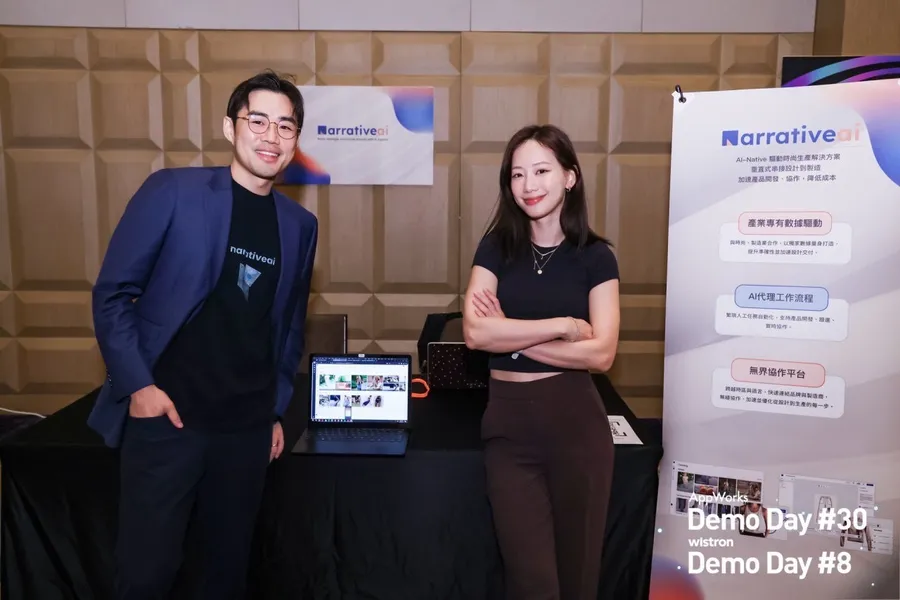
Can AI help small fashion brands design and produce faster without losing quality?
For many emerging fashion brands, the gap between an idea and a finished product is measured in months. A designer’s sketch may go to a factory, but the first sample often comes back with mistakes such as the wrong buttons, fabric, or size. Fixing these issues takes repeated rounds of revision, adding cost, delaying the launch, and wasting materials.
Narrative AI is tackling that problem. The startup’s platform can take a sketch or product photo and, in 90 seconds, generate a full technical specification file that factories can follow precisely. The aim is to cut down on the back-and-forth that slows development and help brands move at the speed of the market.
From YouTube Creator to AI Fashion Innovator
Co-founder and Chief Product Officer Joanna Chen comes from an engineering background, but she knows this problem from the inside. Alongside a career in product management and development, she started a YouTube channel in 2012. That audience, now with more than 400,000 subscribers, later became the foundation for her clothing label, JACNANA.
Running that brand brought a hard truth. Marketing reach and design vision were not enough to get the right product made. “Many creators can bring huge traffic to a brand, but they get stuck in the manufacturing process,” Joanna Chen says. The missing link was the ability to clearly and completely communicate design requirements to factories.
She partnered with CEO Teddy Yip, who had led a digital banking startup, to create a tool they would have used themselves. It is designed to make professional-grade tech packs available to small and mid-sized brands.
Why Detailed Specifications Save Time and Cost
Large global brands employ experienced pattern makers to produce detailed manufacturing instructions that cover everything from fabric composition to zipper placement. Small brands rarely have that expertise in-house. Without it, factories must guess or ask repeated questions, which leads to delays and rework.
“You input a photo, whether it is a sketch or a product image, and we can generate a complete technical design and specification file within 90 seconds,” Joanna Chen explains. Narrative AI’s system was trained on tens of thousands of authentic tech packs from industry partners, allowing it to match designs with the right measurements, materials, and construction details.
The platform also features an AI assistant that works like a digital design partner. Designers can ask for modifications, such as reducing proportions by 10 percent, or check the project’s status without leaving the workspace.
Closing the Gap Between Design and Production
Narrative AI is built for both designers and suppliers. Designers can create, store, and send their tech packs directly to partner factories. On the other side, suppliers can receive orders, view specifications, track progress, and request feedback in one place.
The business model is twofold. Designers pay a subscription or per-use fee for the AI tools. The platform also earns a 3 to 5 percent service fee on production orders placed through it. For suppliers, Joanna Chen and Teddy Yip present it not as software they need to purchase but as a channel for gaining new business from up-and-coming brands.
The company’s first target market is North America. “For creators in North America, there are almost no garment factories, and the few that exist may be monopolized by big brands. As a newer brand you cannot access those resources,” Joanna Chen says. The distance and shipping costs make it especially important to get specifications right the first time.
In her own experience, not having a tech pack meant going through seven or eight sample rounds, sometimes taking up to eight months. With one in place, she says it can often be reduced to just one or two.
While the customer focus is North America, the supply chain is global. Taiwan is a key partner region, with its high-end functional and sportswear manufacturers as well as emerging sustainable textile makers. Joanna Chen wants to integrate options such as pineapple-leaf leather and oyster shell fiber into the platform so brands can choose eco-friendly materials at the design stage.
Getting Manufacturers on Board
Technology development was not the toughest part of building Narrative AI. “What we spent the most time on was actually convincing factories to work with us,” Joanna Chen says. Many were hesitant to digitize their processes or unclear on what AI could do for them.
To work more closely with suppliers, Joanna Chen relocated from Canada to Hong Kong. Over time, she shifted her pitch from focusing on efficiency to highlighting new orders. As she puts it, “I realized I only need one person to say yes.”
Joanna Chen’s vision is for brands to match the speed of ultra-fast fashion, going from idea to production in one to two weeks, but without skipping fittings or compromising quality. She sees this as a way to give mid- and high-end brands the agility they need without adopting the wasteful practices of some mass-market players.
Narrative AI is in closed beta with brands in North America, Taiwan, South Korea, and the UK. A public launch is planned for August, alongside a $500,000 pre-seed raise to grow the engineering team and expand supplier data integration.
“The market needs this tool,” Joanna Chen says. “It is not just about adjusting processes, but about challenging how the fashion industry has worked for decades.”
©2026 Business Next Media Corp. All Rights Reserved. No.102, Guangfu S. Rd., Da'an Dist., Taipei City 106, Taiwan