©2026 Business Next Media Corp. All Rights Reserved. No.102, Guangfu S. Rd., Da'an Dist., Taipei City 106, Taiwan
US Confirms 20% Tariff on Taiwan: What Founders Need to Know
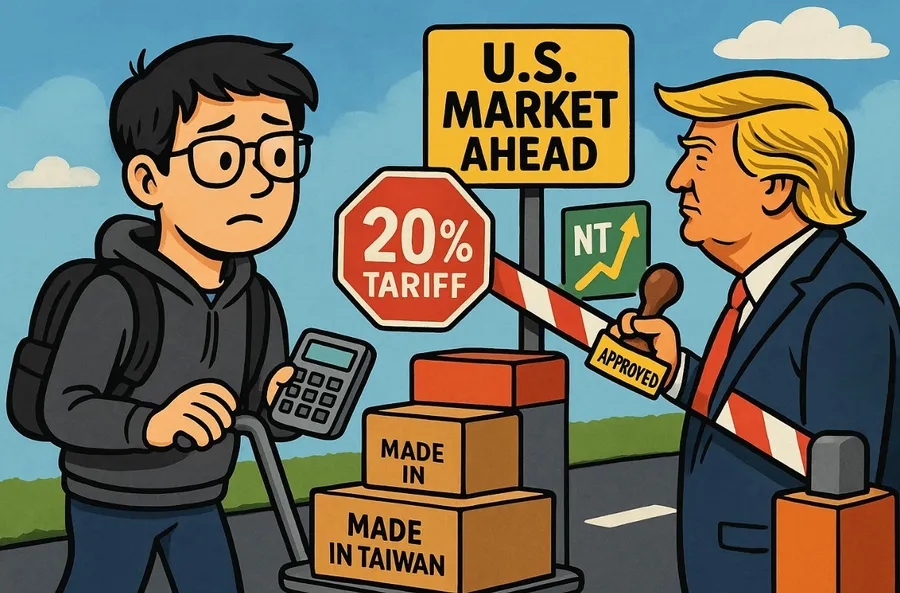
Trade tensions between the US and Taiwan just got real. On August 1, the White House confirmed a 20 percent tariff on Taiwanese goods, set to take effect next week. It’s lower than the earlier 32 percent threat, but still puts Taiwan at a disadvantage compared to Japan and South Korea, who both locked in 15 percent rates.
For startup founders and tech companies operating between the two markets, this changes the game. The US has gone from warning to implementation with the new 20 percent tariff.
Taiwan’s New Position in a Shifting Landscape
The new 20 percent rate applies broadly across Taiwan’s exports to the US, including machine tools, molds, plastics, and electronic materials. According to Taiwan’s Ministry of Economic Affairs, these industries will feel the sharpest impact, especially in sectors where Taiwanese companies go head-to-head with Japanese competitors. A stronger Taiwan dollar and a weaker yen only make pricing more challenging.
Machine tool manufacturers, for example, may start retreating from the US market altogether. The government’s own assessment describes the situation as one where Taiwanese machine tool exports could be functionally “abandoned” in the US.
The information hardware sector, which many startups rely on directly or indirectly, is also vulnerable. Government estimates suggest that its total output could shrink by more than 14 percent. Traditional manufacturing sectors—such as auto parts, fasteners, and hand tools—could see revenue drops between 5 to 9 percent, hitting many small and mid-sized businesses.
You Might Also Like:Why the US Taiwan Tariff Talks Matter for Startups
Why This Is a Startup Issue
Even if your startup doesn't export finished goods, you might be sourcing components from Taiwanese suppliers who do. If they raise prices or change production locations to stay competitive, your cost structure could shift overnight. If you’re working with American partners or selling directly to US consumers, you may need to revisit your entire pricing or go-to-market strategy.
Large manufacturers have the scale and flexibility to reroute production to the US or Mexico. Startups often don’t. That makes this tariff not just a headline, but a practical barrier to growth.
Now that the tariff rate is confirmed, many startups in Taiwan will be recalculating. If you're selling into the US, it's worth revisiting your numbers, talking to logistics partners, and exploring new options. Some founders are already inquiring about contract manufacturing in lower-tariff regions, while others are scouting new markets where Taiwanese products aren’t suddenly more expensive.
The next few months may involve tough calls—choosing between absorbing extra costs, changing suppliers, or adjusting customer-facing pricing. For some, it might be time to rethink whether the US should remain the top priority, or whether alternative markets offer a more stable path forward.
Trade Talks Continue, but Founders Shouldn’t Wait to Adjust
President Lai has stated that trade negotiations with the US are ongoing. There is still a chance that the 20 percent rate could be revised. But startups don’t have the luxury of waiting to see what happens. With implementation set for August 7, the current reality is clear.
If your business touches US commerce in any way, now is the moment to act, reassess, and prepare. Staying flexible early on can make things easier down the line.
<Sources: udn News, China Times, Business Next
©2026 Business Next Media Corp. All Rights Reserved. No.102, Guangfu S. Rd., Da'an Dist., Taipei City 106, Taiwan