©2026 Business Next Media Corp. All Rights Reserved. No.102, Guangfu S. Rd., Da'an Dist., Taipei City 106, Taiwan
From 2 Days to 1 Hour: How Recce Is Changing Data Review
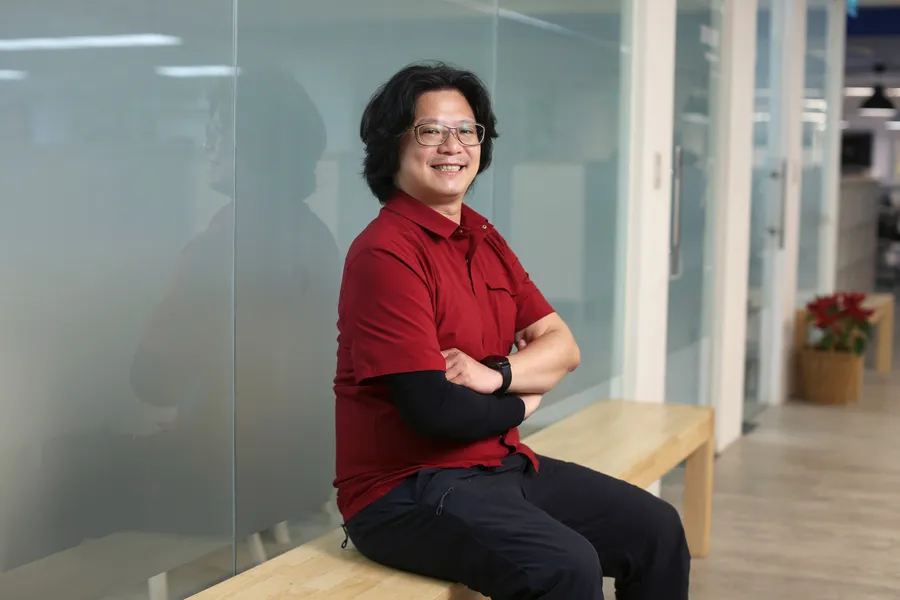
In the age of generative AI, code is no longer the bottleneck. Models can generate thousands of lines in seconds, but that flood of automation leaves one question: who checks the data behind it all?
That question is at the heart of Recce, a startup founded in 2024 by technologist CL Kao. Recce builds tools that help companies review data the way engineers review code, systematically, quickly, and with less room for human error. The company announced in April that it raised US $4 million in pre-seed funding, led by Heavybit with participation from Vertex Ventures US, Hive Ventures, Visionary, and several angel investors.
When MLOps Didn’t Work
CL Kao is no newcomer to building infrastructure for engineers. Years ago, he co-founded InfuseAI, an MLOps startup that aimed to make model deployment and monitoring easier. The technology was strong, but the business didn’t. “The people using the product were not the people buying it,” CL Kao recalled. Engineers wanted InfuseAI, but budgets were controlled by IT and business executives, and many enterprises already had their own internal tools.
The lesson was clear. “We realized MLOps didn’t work,” CL Kao said. Instead of pushing infrastructure that had to win over executives, CL Kao looked for a pain point closer to the engineer’s daily work. Generative AI gave him the opening. “Writing code used to be expensive. Now the challenge is checking it, because so much is generated automatically.”
Rather than focusing on the code itself, CL Kao turned to the data underneath. “We can’t just spot-check data once in a while. We need a systematic, engineering-based way to track how data changes and what its quality is.”
Turning Data Checks Into a Habit
Recce was created to act as a sentinel, catching potential problems at the moment new requests enter a company’s workflow. A marketing report that combines information from spreadsheets, order databases, and ad platforms might change suddenly if just one format shifts. Recce compares before and after states, using a Git-like version tree for data to highlight which columns are impacted. Compared with manual review, CL Kao said, Recce can cut validation time by as much as 90 percent.
The company has adopted an “open source first” model. Its core functions are freely available on GitHub, giving engineers a way to use Recce without altering their existing workflows. Enterprise features such as GitHub integration, environment comparisons, and validation checklists are bundled into Recce Cloud, the SaaS platform launched in 2025.
That idea is already spreading. In Rio de Janeiro, the city’s health department cut what used to be two days of manual data checks down to less than an hour. In the United States, the Philadelphia Inquirer relies on Recce to ensure advertising and recommendation systems run on clean data. A German energy company uses it to verify post-renovation energy demand estimates. Recce’s open source release now sees about 3,600 downloads each week, a sign that the concept is catching on.
Building a Movement Around Data Review
Recce has grown to a team of eight, including Karen Hsieh on operations and finance. Earlier this year, the company recruited Dori Wilson, a former Y Combinator founder, to lead U.S. market development and early sales testing. Wilson’s addition is strategic: she brings direct experience in scaling early-stage products in Silicon Valley and credibility in American startup circles, helping Recce move from Taiwan’s engineering roots into the U.S. enterprise landscape.
The $4 million pre-seed raise brought heavyweight backers into the picture. Heavybit’s Jesse Robbins joined the board, alongside Brian Behlendorf, the founder of the Apache Software Foundation. Angels such as Scott Breitenother of Brooklyn Data and Tim Chen of Nanonets also invested. For Recce, the capital is fuel for expansion, but the real opportunity is cultural. CL Kao wants data review to become as normal as code review.
“Our job is to make data usable, trustworthy, and communicable,” CL Kao said. “I believe most code reviews will become data reviews in the future.” For him, the goal is not just to build another tool but to shape a new habit for engineers everywhere. “We hope that in the future, before handling data, people will ask: ‘Have you recce’d this?’”
©2026 Business Next Media Corp. All Rights Reserved. No.102, Guangfu S. Rd., Da'an Dist., Taipei City 106, Taiwan