©2026 Business Next Media Corp. All Rights Reserved. No.102, Guangfu S. Rd., Da'an Dist., Taipei City 106, Taiwan
How a Taiwanese Startup's Tech Allows Harvard Scientists to Pull Disease Secrets Directly from Cells.
When a pathologist looks at a brain or tumor sample under a microscope, they often know where something has gone wrong. But they don’t know what is causing it. The tissue might show signs of inflammation or protein buildup, but identifying the specific molecules responsible is still a guess.
That’s the problem that Syncell is trying to solve. Its core product, Microscoop, turns a microscope into a precision extraction tool, one that allows researchers to tag, isolate, and analyze proteins from exactly the region they care about, down to the cellular level.
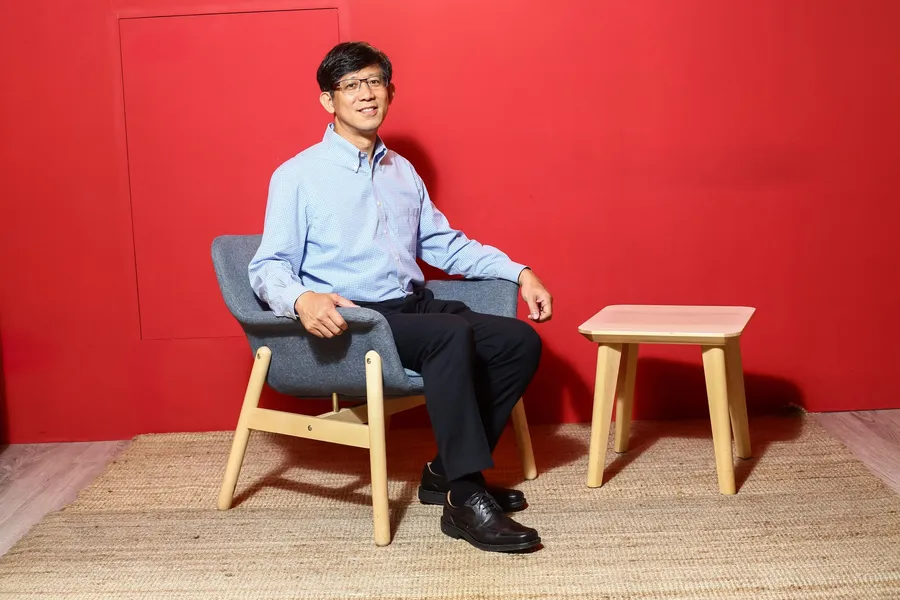
“Instead of watching a problem under the microscope, now you can reach into that spot and pull out the proteins,” said Dr. Jung-Chi Liao, the company’s founder and CEO.
The ability to do this, without needing to know in advance what you’re looking for, could help unlock the molecular secrets of conditions like Alzheimer’s, Parkinson’s, and cancer. It could also accelerate the discovery of new drug targets, biomarkers, and disease mechanisms. And it all started with a simple question in a university lab.
From Cell Curiosity to Startup Strategy
Long before starting Syncell, Dr. Jung-Chi Liao spent nearly two decades in academic science. After teaching at Columbia University, he returned to Taiwan to lead a research lab at Academia Sinica, where he studied tiny structures on cells called cilia. One question bothered him: Why could some proteins enter cilia while others couldn’t?
Existing tools couldn’t answer that. “I just needed a way to compare the proteins inside the cilium with those just outside of it,” he explained.
Their method combined microscopy with light-activated chemical tagging. It allowed them to select a region of interest (ROI) under the microscope, then activate a photochemical reaction that marked proteins in that exact region. Those tagged proteins could then be extracted using magnetic beads and sent to a mass spectrometer for identification.
At first, the method was just for internal use. But word got around and researchers from other labs who were studying Alzheimer’s, cancer, regenerative medicine started asking if they could use it too. That demand made Dr. Jung-Chi Liao realize the tool could serve a much broader purpose.
In 2020, he founded Syncell to develop it into a full platform. The commercial product, now known as Microscoop®, supports fixed cells and tissue sections, including FFPE and fresh-frozen samples. Users can define regions of interest visually or with AI guidance. The system tags proteins inside that region, extracts them, and sends them to mass spec without relying on antibodies or prior knowledge of which proteins to look for.
“It’s like going from asking the whole building who made the noise,” Dr. Jung-Chi Liao said, “to just knocking on the door of apartment 8F, room 5, and getting a straight answer.”
Building a Sales Model That Mirrors Scientific Rigor
The startup world brought new challenges to Dr. JC Liao, especially because he had spent his career in academia.
“As a professor, 90 percent of the time you feel respected,” he stated. “In fundraising, 99 percent of the time you get rejected.”
One of the hardest parts, he said, was letting go of scientific curiosity in favor of business focus. When his team discovered new Alzheimer’s-related proteins using Microscoop, he wanted to keep researching. But that would have meant diverting company resources away from the core product.
“We had to make a choice. You can't chase every interesting result. You have to focus on the instrument,” he expressed.
To sell that instrument, Syncell avoids traditional broad-market sales. Instead, the company developed what Dr. Jung-Chi Liao describes as a precision strike model. The team identifies a shortlist of institutions, top global universities, medical centers, and pharmaceutical companies and targets key opinion leaders within them. These are researchers with a strong publication record in proteomics, cell biology, or disease research.
“I was a professor. I know who can actually buy and use a high-end instrument,” Dr. Jung-Chi Liao said. “You don’t need a lot of customers. You need the right ones.”
Syncell has described active collaborations in oncology, neurology, and immunology. The company says it focuses on helping researchers who want to identify unknown proteins at specific disease sites, areas visible under the microscope but hard to analyze at the molecular level.
In August 2025, the company announced a co-marketing agreement with Thermo Fisher Scientific, a global leader in mass spectrometry. The deal integrates Microscoop with Thermo’s Orbitrap Astral and Orbitrap Astral Zoom platforms, allowing researchers to go from image-based protein tagging to deep protein analysis on a unified system.
Syncell has engaged a partnership with Harvard University, where Syncell is helping to study the mechanisms behind varying responses to different immunotherapies. By using Microscoop, Syncell can accurately identify proteins at drug action sites, providing critical insights into the underlying causes of treatment efficacy.
In 2025, Syncell raised $23.5 million USD in Series A funding led by Taiwania Capital. According to the company, its total fundraising to date exceeds $37 million USD.
Closing the Gap Between What We See and What We Know
Syncell’s work sits at the intersection of biology, microscopy, and proteomics. In many areas of research, scientists can observe disease patterns under the microscope but still struggle to identify the molecules responsible.
Microscoop is being adopted by labs studying cancer resistance, neurodegeneration, and immune response, offering a way to examine tissue sections with higher molecular precision. It doesn't replace existing methods, but it adds a new layer, helping researchers connect visible structures with previously hidden protein signatures.
For Dr. Jung-Chi Liao, the decision to leave academia wasn’t planned. It came from a tool he had built for his own research, and the realization that others might need it too.
“There was just no other method that let us see what was really going on at a specific spot,” he said. “So we had to make one.”
©2026 Business Next Media Corp. All Rights Reserved. No.102, Guangfu S. Rd., Da'an Dist., Taipei City 106, Taiwan