©2026 Business Next Media Corp. All Rights Reserved. No.102, Guangfu S. Rd., Da'an Dist., Taipei City 106, Taiwan
Why Chip Legend Jim Keller and Tenstorrent Are Betting on Taiwan
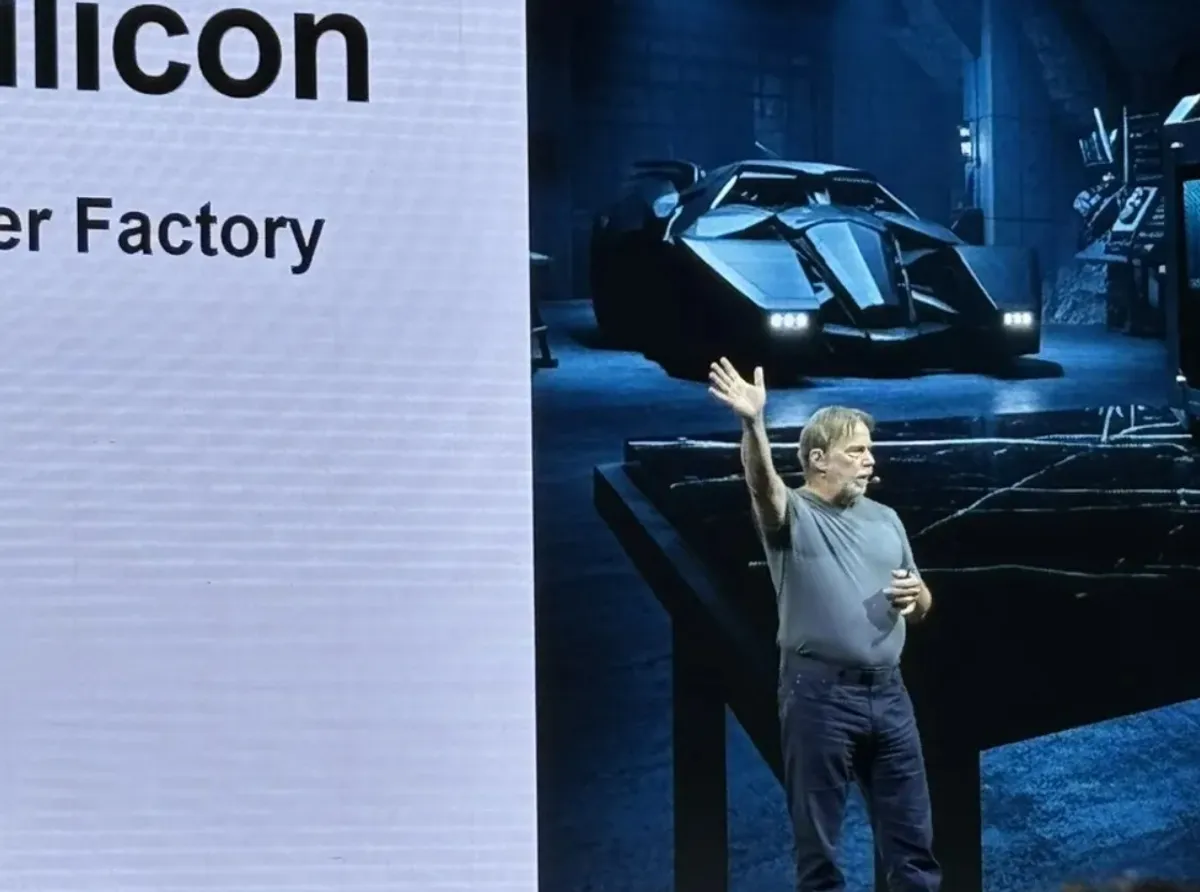
At SEMICON Taiwan 2025, the spotlight turned to Jim Keller, the legendary chip architect known for his work at Apple, AMD, and Tesla.
During his keynote, Jim Keller shared insights into the future of AI chips and made a major announcement: Tenstorrent, the United States-based startup where he serves as CEO, is opening a new office in Taiwan. The company is beginning to hire chip and software engineers locally. Jim Keller also expressed his intention to build stronger partnerships with Taiwan’s semiconductor supply chain.
The move quickly sparked industry buzz: What’s Keller’s strategy, and why is Tenstorrent betting on Taiwan?
Who Is Jim Keller, and Why Do People Call Him a Chip Legend?
Jim Keller earned the title of “chip legend” for a reason. At every critical phase of the semiconductor industry, he has been the person behind major breakthroughs, pushing the boundaries of what chips could do and helping to reshape the industry more than once.
In the 1990s, Jim Keller helped design the Alpha series of RISC microprocessors, which were considered the fastest processors in the world at the time. He later led the development of the Athlon (K7) architecture at AMD, positioning the company to challenge Intel head-on in performance for the first time. At the startup SiByte, he pioneered dual-core processor designs, a concept that quickly spread across the PC and server industries.
In 2008, after Apple acquired P.A. Semi, Jim Keller joined the company and led the development of the A4 and A5 chips. His work helped Apple reduce its reliance on external chip suppliers and gain greater control over its hardware. In 2012, he returned to AMD to lead the design of the Zen architecture, which launched in 2017 and marked a major comeback for the company.
Jim Keller then turned his focus to automotive AI, joining Tesla as Vice President of Autopilot Hardware. Within two years, he led the development of Tesla’s first custom-designed chip. After a brief stint at Intel in 2018, he joined the startup Tenstorrent in 2020, where he is now focused on developing next-generation chiplet-based processors.
| Company name | Profession | Employment period |
|---|---|---|
| Tenstorrent | CEO (formerly CTO); leading chiplet-based AI processor development | 2020–Present |
| Intel | Senior Vice President, Silicon Engineering | 2018–2020 |
| Tesla | Vice President of Autopilot Hardware | 2016–2018 |
| AMD | Chief Architect; led development of the Zen architecture | 2012–2015 |
| Apple | Architect on the A4 and A5 chip teams | 2008–2012 |
| P.A. Semi | Vice President of Engineering | 2004–2008 |
| Broadcom | Chip Architect | 2000–2004 |
| SiByte | Chief Architect; pioneered dual-core processor design | 1999–2000 |
| AMD | Processor Architect; contributed to Athlon and K8 | 1998–1999 |
| DEC | Processor Designer; worked on Alpha series chips | 1982–1998 |
Tenstorrent’s Vision: Challenging NVIDIA and Making AI More Accessible
Tenstorrent was founded in 2016 and is headquartered in Canada. The company focuses on designing AI processors, with the goal of challenging today’s expensive and closed ecosystem dominated by NVIDIA.
In an interview with Nikkei Asia, Jim Keller pointed out, “A lot of small companies don’t want to spend $20,000 on a single NVIDIA GPU.” Tenstorrent’s strategy, he explained, is to offer a lower-cost alternative — making it possible for more people to build their own AI computers.
At the forum, Jim Keller stated bluntly, “The world of AI is changing rapidly. Everything is becoming bigger, more expensive, and tightly controlled by a few players. I don’t want the future to only follow that path. Our goal is to build chips that are cheaper, faster, and more flexible — so more people can take part in this revolution.”
Jim Keller also pointed out that designing large-scale chips often takes years and can cost hundreds of millions of dollars. Once completed, any significant update to keep pace with fast-evolving AI models requires starting the entire process over again — consuming massive amounts of time and money. He argued that this model is too rigid for a field that moves as fast as AI. That’s exactly why he is advocating for a chiplet-based approach to design.
Tenstorrent’s Hardware Strategy: No HBM, All-In on Chiplets
Tenstorrent’s flagship product is the Blackhole chip, built on TSMC’s 6nm process. It features 140 AI compute cores and 16 RISC-V processors, with a development cost of around $80 million. Unlike most mainstream chips, the standout feature of Blackhole is that it does not rely on costly HBM (High Bandwidth Memory). Instead, it uses GDDR6 DRAM combined with a distributed software architecture, striking a balance between performance and affordability.
Building on Blackhole, Tenstorrent developed the Galaxy system, which integrates multiple chips using the same DRAM-based approach. It supports both scale-up and scale-out architectures, allowing systems to be linked via Ethernet to deliver greater compute power. According to the company, the Galaxy system delivers three times the performance of NVIDIA’s DGX, at roughly one-third the cost.
These smaller chips and systems can be flexibly configured into computing platforms of various scales — from lightweight deployments for small and medium-sized businesses to large-scale AI model training involving thousands of chips, all within the same system architecture. Jim Keller also revealed that one of Tenstorrent’s chips has already been shipped to LG, where it is being used in smart TV processors.
Why Jim Keller Is Betting on Taiwan
Beyond hardware, Tenstorrent is deeply committed to open-source software. The company has released a complete AI software stack — fully open and freely available for anyone to download and use. Jim Keller believes this kind of transparency and openness not only attracts a wide community of engineers but also lowers the barrier of entry for startups and research teams.
To further build a fully open chiplet ecosystem, Tenstorrent helped launch the Open Chiplet Architecture (OCA) alliance. The goal is to enable chips and systems designed by different companies to work together seamlessly. So far, between 30 and 40 companies have joined the effort. Jim Keller explained, “What I want to build is a computer factory where everyone can participate. If you have an idea, you’ll find the tools here to put together your own AI system.”
Jim Keller emphasized that Taiwan offers not only a complete semiconductor supply chain, but also a deep pool of talented engineers, which is exactly why Tenstorrent chose to set up a presence here. He also noted that chip development cycles will only get faster in the future, and staying agile will be the key to leading in the AI revolution.
©2026 Business Next Media Corp. All Rights Reserved. No.102, Guangfu S. Rd., Da'an Dist., Taipei City 106, Taiwan