©2026 Business Next Media Corp. All Rights Reserved. No.102, Guangfu S. Rd., Da'an Dist., Taipei City 106, Taiwan
Decoding Sweat: A Wearable Revolution Pushing Sports Science Beyond Heart Rate
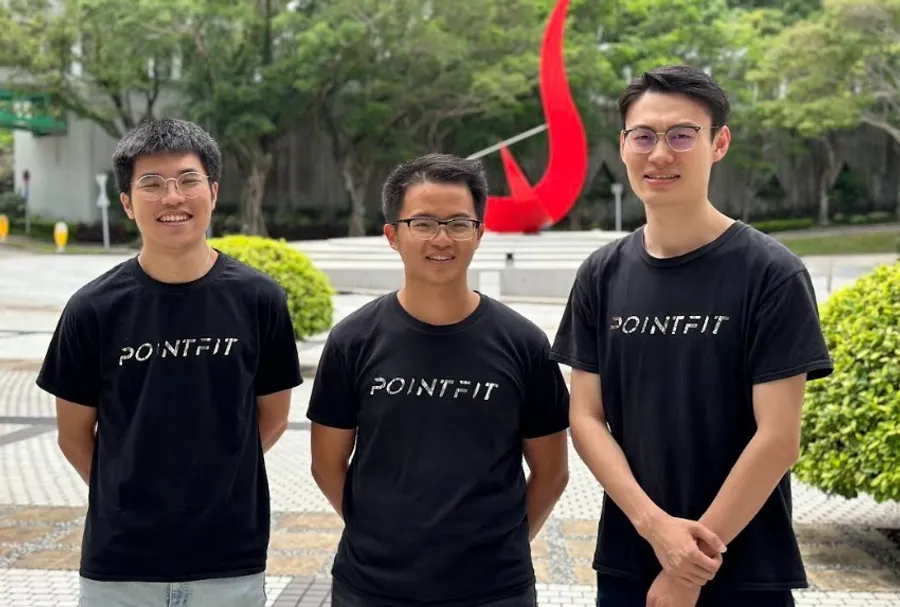
Smartwatches and fitness trackers have changed how people approach exercise, but most only scratch the surface of what is possible in sports science. While these devices monitor heart rate or count steps, they offer little insight into what is happening inside the body at a biochemical level. For athletes and coaches, the real challenge is predicting fatigue and preventing injury by tracking metabolic changes as they happen.
One of the most reliable ways to monitor endurance and fatigue is by measuring lactate, a key marker that rises as muscles work harder. Traditionally, this has required invasive blood tests that disrupt training and are difficult to perform outside the lab. This gap between everyday wearables and laboratory testing is where Hong Kong-based startup PointFit steps in.
PointFit’s solution is a wearable sensor that analyzes sweat to provide live feedback on an athlete’s metabolic state, all without needles or lab visits. The idea came to life through the personal and academic journey of Kenny Oktavius, who co-founded the company and serves as CEO.
“When I moved to Hong Kong in 2015 to study chemical engineering, I had no idea I would start a business,” Kenny Oktavius explained. “As an engineer, I just wanted to make something useful and interesting.”
Turning Court-Side Challenges Into High-Tech Solutions
The roots of PointFit’s technology go back to a university research project, where Kenny worked on a transparent nanomembrane material. “It’s called polyethylene. The core technology allows it to capture sweat biomarkers, but at that time it was just a transparent nanomembrane material,” he explained.
Sports have always been important to Kenny Oktavius and his co-founder, Elvis Wang. Both were passionate about athletics and saw firsthand that most wearables did little to actually prevent injuries. “We all love sports and we are wearing wearables, but these wearables are still very bulky and this cannot tell when you should stop before you get, say, muscle cramp or overtraining,” Kenny pointed out.
Personal experience made the gap obvious.“I often played basketball for around four hours. I would feel confident and keep playing, but soon after, I would get muscle pain or cramps.” Kenny recalled.
He saw that most consumer wearables focus on heart rate and oxygen, but those numbers alone do not reveal true fatigue. “They only measure heart rate and oxygenation, and that’s not enough,” Kenny explained. “That’s why we started looking at lactic acid, or lactate. Lactate is the gold standard for monitoring endurance, stamina, and fatigue, so we decided to develop sensors that could measure it.”
How Sweat Becomes Actionable Data with PointFit
PointFit’s sweat patch uses a nanomembrane to absorb sweat and concentrate biomarkers, which are then analyzed by electronic sensors in a wristband. The information is sent to a mobile app, where users see real-time results. “With our device, we evaporate the water, which is 99 percent of sweat. What’s left is the one percent of biomarkers, which our system analyzes further through the electrochemical circuitry. That’s how we get the biomarkers and transmit the data to the mobile app,” Kenny explained.
The wristband holds the electronics and transmitter, while the app gives direct feedback. “We are removing the guesswork. We give you numbers for your stamina and overall cardiovascular health,” Kenny said.
What makes PointFit unique is its ability to track biochemical changes during activity. “Heart rate is so easily affected by what you eat and what you drink. For example, if you’re drinking alcohol, it will also increase your heart rate, so you cannot tell whether the increase is because of exercise or because of the alcohol,” Kenny explained.
Traditional lactate monitoring requires athletes to stop and prick their finger or ear, which interrupts training. “Right now they need to break the blood. And if you break the blood, then you cannot get the real-time alert, because you need to stop and then they need to break the blood,” he pointed out. “For us, we don’t use needles, so you don’t have to prick your fingers or ears.”
Continuous real-time feedback is a key advantage. “If you cannot do continuous, then you cannot get an alert before you reach a dangerous threshold,” Kenny said.
Achieving Results in Sports and Shaping the Future of Health
PointFit’s early adopters include professional athletes, national teams, and top fitness centers. “Right now we are selling more to the professional teams,” Kenny shared. “In Hong Kong, especially the Hong Kong national teams—triathletes, for example—we do a lot of pilot trials, not only for professionals but also for consumers, especially in gyms. We’ve been working with several gyms in Hong Kong, Singapore, even in Paris, where we went to one of the biggest teams called Fitness Park.”
The team has also collaborated with Taiwan’s national squad and sports scientists. “We did a test with the national team in Kaohsiung, Taiwan, with their sports science division. We did it in running and worked directly with the coaches and athletes, and afterwards they also tried it for badminton,” he recalled.
PointFit now has a ten-person team with expertise in engineering, software, and product design. “Right now we are a ten-person team from a diverse engineering background,” Kenny explained. “I studied chemical engineering. Then we have people from electrical, software, web design. Everything in our product, we make ourselves.”
While the company’s initial focus is on athletes, the long-term vision goes further. “We’re starting with sports and wellness, but later on we have plenty of new spaces in health or even in medical,” Kenny
said. “At the end of the day, what we are bringing in is not just a wearable, but really a new digital health shift.”
©2026 Business Next Media Corp. All Rights Reserved. No.102, Guangfu S. Rd., Da'an Dist., Taipei City 106, Taiwan