©2026 Business Next Media Corp. All Rights Reserved. No.102, Guangfu S. Rd., Da'an Dist., Taipei City 106, Taiwan
How Atmanity Builds Avatars That Feel Like Real People
Have you ever wished the person answering your questions online was a little more… human? Maybe you’re chatting with a support bot or watching a digital host on a live stream. They might look sharp on your screen, but something always feels off. You say hello, but their reply is just a beat too slow, their face too blank, the flow all wrong.
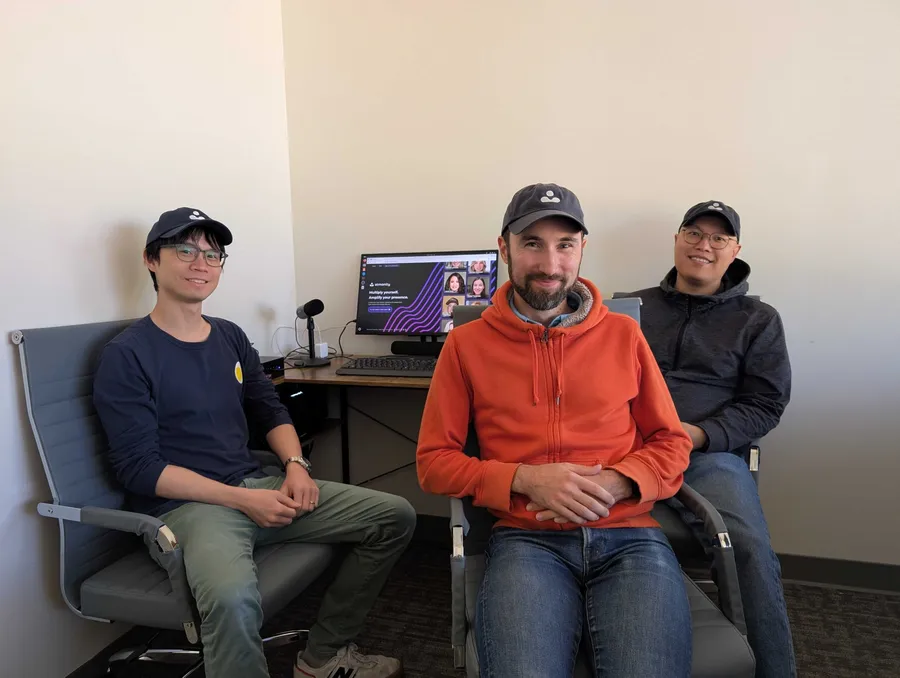
That’s the puzzle Atmanity wants to solve. The startup founded in 2024 by Chen-Ping Yu and Yi-Hsuan Tsai is not chasing high-tech effects or futuristic graphics. Instead, they’re asking: What if talking to a digital avatar could feel as natural as talking to your favorite teacher, your grandmother, or even your favorite pop star?
"A lot of avatars look impressive, but the conversation just doesn’t feel right. The light is on, but no one’s home," says CEO Chen-Ping Yu. "We want to change that."
Why Small Gestures Make a Big Difference
Atmanity’s team believes what really matters is not how an avatar looks, but how it makes you feel. It’s the subtle things—a pause in the right place, a head nod, a genuine interruption—that convince us we’re truly being heard.
"When we talk in real life, we’re not always showing strong emotions. Most of the time, it’s the little expressions, the timing, the pauses, that make us feel understood," Chen-Ping Yu says.
For Yi-Hsuan Tsai, the magic comes from capturing personality, not just a face. "It’s about personality, not just looks. We want to build digital twins that really remind you of the person you know—even if it’s just a nod, a smile, or a well-timed interruption," he explains.
The Atmanity team spends as much time studying human quirks as coding software. They ask: Does your favorite teacher pause before tough questions? Does your best friend always finish your sentences? Can a digital version of your grandma really mimic the way she laughs or raises an eyebrow?
Real Conversations, Not Just Perfect Faces
Most digital avatars today are designed to look great on screen. But Atmanity’s founders believe that a true sense of connection comes from timing and interaction.
"If you have to wait an hour for a 30-second video, it’s just not useful for a live conversation," Yu points out. Their team has been hard at work teaching their avatars to jump in at the right moment, wait patiently during a pause, and even react if you change topics midway. "We’re the first company, as far as I know, that makes avatars react in the middle of your sentence, not just after you finish," Chen-Ping Yu says. "Our model can decide when to interject, when to pause, when to let you finish. That’s the key to natural dialogue."
Of course, not everything works perfectly the first time. "We’re still improving how fast our system reacts when interrupted. Sometimes, our AI doesn’t stop quickly enough if the user jumps in, but that’s something we’re iterating on," he admits. For the Atmanity team, every small improvement is a step closer to making the conversation feel real.
What if you could talk with a digital version of your childhood hero? Or ask your favorite singer to wish you happy birthday—on video, in their own style? That's the future Atmanity is building.
"I tried talking to avatars of strangers, and honestly, there was no connection. Why would I want to talk to an avatar I don’t know?" Chen-Ping Yu asks. "But if you could clone your grandmother, your favorite singer, or your old professor, you’d want to talk. That’s when an avatar stops being a gimmick and becomes something valuable."
The potential uses for Atmanity’s digital twins reach far beyond tech demos or novelty apps. Chen-Ping Yu envisions a world where these avatars play meaningful roles across industries and in everyday life. "Brands could have a digital spokesperson who actually answers questions and reacts in real time," Chen-Ping Yu suggests, imagining a future where customer engagement feels more natural and immediate. In the classroom, he believes avatars could make learning more personal. "You could have a virtual Einstein assisting teachers," he notes, opening up new ways for students to connect with experts and history.
The possibilities also extend to elder care, where technology can help preserve connections across generations. "Families could preserve the memory of a loved one in digital form," Chen-Ping Yu explains, describing how digital twins might offer comfort, companionship, and a lasting presence for those who need it most.
A Practical Approach to Access and Privacy
To make this technology accessible, Atmanity is adopting a straightforward business model. "We’ll offer monthly plans," Chen-Ping Yu explains. Each user will have a set amount of avatar conversation time included, with the option to buy extra credits or upgrade if needed. Privacy and security are also priorities for the team. They are developing verification tools to ensure that only authorized individuals can create or share someone’s digital avatar, an approach intended to prevent misuse and protect users’ identities.
After selling his previous startup Phiar to Google, Chen-Ping Yu is determined not to repeat the mistakes of the past. "We learned you can’t spend five years building something nobody uses," he says. "Our goal this time is to launch fast, ideally within a year, and keep improving from there." Atmanity remains a small, tight-knit team, split between Silicon Valley and Taiwan and supported by investors such as GFR Fund and Zeno Ventures. They are now searching for engineers, storytellers, and researchers who are passionate about building technology that helps people feel less alone.
For Chen-Ping Yu, starting over with a new venture is about making a difference. "AI is the wave of our generation, and our background is a perfect fit. Honestly, we’re just not suited to big company life. We want to build something big and move fast," he explains.
There is still plenty of work ahead. Atmanity’s technology will need to adapt to different cultures and languages and always prioritize the safety and respect of everyone’s identity. But if the team succeeds, avatars could move from digital novelties to trusted companions, whether someone is learning a new skill, seeking support, or simply looking for a familiar face. As Chen-Ping Yu puts it, "If we can build a realistic, interactive AI avatar, product-market fit is almost guaranteed. The only question is, can we get there first?"
Atmanity is betting that the future of digital connection is not about having the most advanced graphics, but about making technology feel a little less lonely, and a little more like home.
©2026 Business Next Media Corp. All Rights Reserved. No.102, Guangfu S. Rd., Da'an Dist., Taipei City 106, Taiwan