©2026 Business Next Media Corp. All Rights Reserved. No.102, Guangfu S. Rd., Da'an Dist., Taipei City 106, Taiwan
An Ancient Thread, a Modern Cure: KAICO Is Giving Japan's Silkworm Heritage a New Purpose
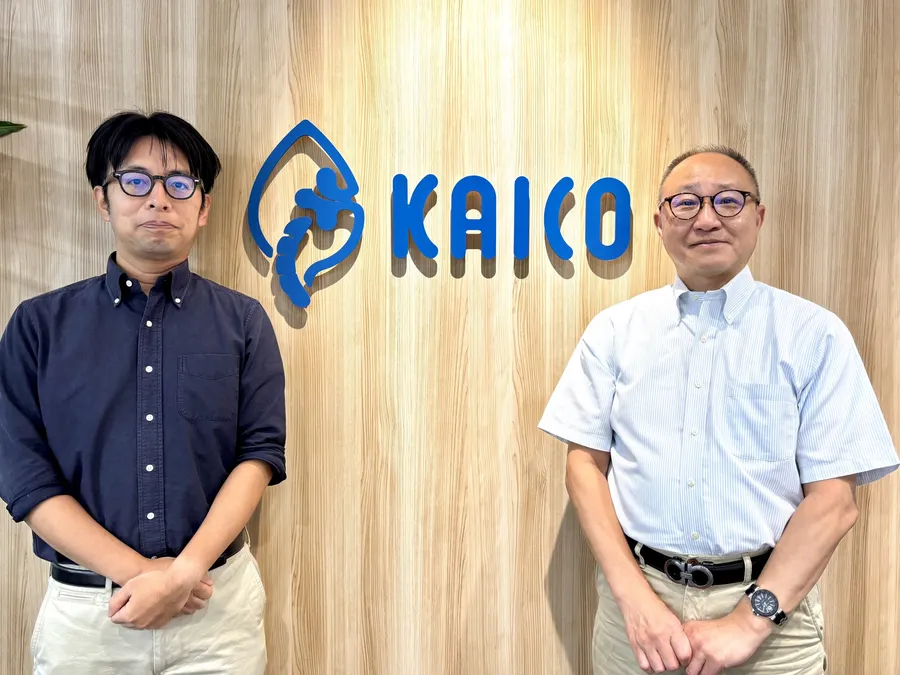
In Japan, silkworms have long symbolized craftsmanship and patience. Their delicate threads once powered the country’s textile industry, but that heritage has quietly faded as industrialization changed rural life. Now, a biotech startup from Kyushu University is giving silkworms a new role, not in clothing but in medicine.
KAICO , founded by Kenta Yamato, uses silkworms to produce proteins that can be turned into vaccines and pharmaceuticals. The company’s approach merges modern biotechnology with Japan’s silkworm-farming tradition, creating an unlikely bridge between innovation and local revitalization.
“I worked for fifteen years at Mitsubishi,” said Kenta Yamato, CEO of KAICO . “Later, I decided to study at Kyushu University’s business school, where I met Professor Kusakabe, who had been researching silkworm genes for many years. That was when the idea for KAICO began.”
At the time, Kyushu University already had a vast silkworm collection of more than 450 genetic strains used for academic research. Professor Kusakabe’s lab had been studying how these strains could be engineered to produce valuable proteins. For Kenta Yamato, who came from a corporate background, it was clear that the work had commercial potential. “Because this business was interesting,” he explained, “I decided to work together with Professor Kusakabe.”
From Research to Reality
Using what is known as the silkworm-baculovirus expression system, the company can make silkworms produce proteins used in vaccines and medicines. These proteins are the essential components that trigger immune responses in the human or animal body.
“People thought it was just an academic idea,” Kenta Yamato recalled. “So we started by developing feed additive, especially for pigs. That was our first step in proving it could work.”
At first, convincing others was not easy. “The most difficult part was to make people understand that something like silkworms could become a medical product,” he said. “Everyone knows silkworms as insects that make silk, not as something that can help humans.”
KAICO began by using silkworm proteins for animal vaccines, building evidence that the technology worked safely. Only after years of experiments did pharmaceutical partners start to take notice. “It took a long time to convince people,” said Kenta Yamato. “But when we finally start the human trial, we can show what is possible.”
That human trial, scheduled for next year, marks the company’s first step into clinical medicine. The Phase 1 study will evaluate an injectable human norovirus vaccine, which represents KAICO’s first human clinical candidate.
“During the COVID-19 pandemic, we saw how difficult it was to transport vaccines that needed cold storage,” Kenta Yamato explained. “Our feed additive aims to solve that challenge by being stable at room temperature and easy to distribute.”
For now, KAICO focuses on producing the raw protein materials, leaving pharmaceutical companies to handle clinical testing and commercialization. “Human clinical trials are very expensive,” said Kenta Yamato. “So we focus on what we do best, producing the core materials.”
The company’s first commercial product, a feed additive, has already been launched in Vietnam. “In Vietnam, the number of pig farms is much higher, and the approval process was quicker,” he noted. “That allowed us to bring our first product to real users.”
Reviving Japan’s Silkworm Heritage
KAICO’s story goes beyond biotechnology. It is also a response to a growing social issue: the decline of Japan’s rural industries. Silkworm farming, once a major source of income for many families, has nearly disappeared. Kenta Yamato saw an opportunity to connect science with community renewal.
“In Japan, the number of silkworm farmers keeps shrinking,” he shared. “So we started reaching out to them and guaranteeing we would purchase what they raised. That way, they have stable income, and the tradition continues.”
KAICO now works with local governments, cooperatives, and farmers to restore the silkworm supply chain. The company hopes to reach ten million silkworms annually by 2028, ensuring a steady source of material for its biotech production.
“We realized many farmers had stopped raising silkworms,” Kenta Yamato said. “So we began reaching out to local communities, helping them start again.”
In some regions, abandoned schools and public buildings are being reused as small silkworm facilities. Yamato sees this as a way to bring vitality back to depopulated towns. “We want to show that biotechnology can also help local economies,” he explained. “When young people see new opportunities in their hometowns, they are more likely to stay. That’s important for Japan’s future.”
The revival also comes with environmental benefits. Since silkworms feed only on mulberry leaves, the project has led to new mulberry planting efforts, which help absorb carbon dioxide and prevent soil erosion. “Because we need mulberry trees,” Yamato said, “we are planting them in different regions. It’s good for both production and the environment.”
For Kenta Yamato, this combination of science, sustainability, and rural cooperation is central to KAICO’s mission. “Biotechnology should not just serve industry,” he said. “It should support people and places too.”
From Ten Years of Research to Global Applications
KAICO’s progress has been gradual, shaped by ten years of experimentation and perseverance. Beyond Japan and Vietnam, the company has begun working with partners in Taiwan on animal health research. Meanwhile, new vaccine projects are in the pipeline for fish and pets, areas where oral administration can make treatment easier and less stressful for both animals and handlers.
“Of course, we want to make medicine for every animal,” Kenta Yamato said. “But we only have about twenty people. So we start with what our customers need first.”
The long-term goal is to expand beyond veterinary use and move deeper into human medicine. That transition will depend on the success of upcoming clinical trials and ongoing collaboration with larger pharmaceutical firms.
Looking back on his journey, Kenta Yamato remains realistic yet hopeful. “When I started KAICO, I didn’t know what the future would be,” he reflected. “But if I hadn’t tried, I would have regretted it more.”
His message to other entrepreneurs is simple: act, even if the outcome is uncertain. “Maybe it’s scary,” he said, “but don’t be afraid. Take the first step. Your step might improve the world.”
©2026 Business Next Media Corp. All Rights Reserved. No.102, Guangfu S. Rd., Da'an Dist., Taipei City 106, Taiwan