©2026 Business Next Media Corp. All Rights Reserved. No.102, Guangfu S. Rd., Da'an Dist., Taipei City 106, Taiwan
Can Your Wallet Save the Planet? Optivide Is Betting On It
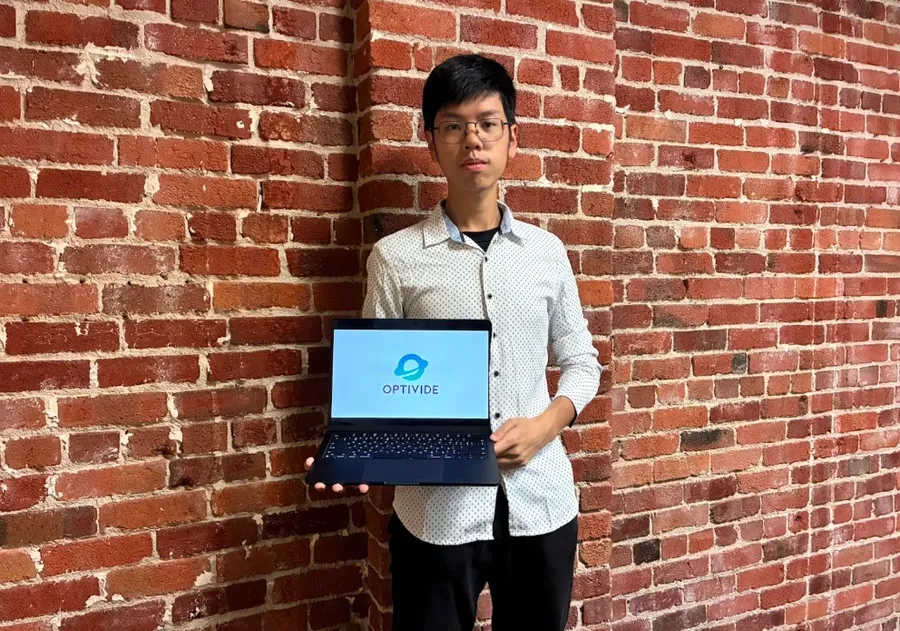
In climate circles, the talk often centers on policy and industry. Yet the day-to-day impact of climate change is deeply personal, and for most people, the sense of agency can seem frustratingly limited. Optivide, a startup founded by Danny Chen in 2023, is challenging this dynamic by putting the focus back on ordinary consumers and their daily choices. The company’s premise is pretty straightforward: can individuals genuinely shape climate outcomes without completely upending their lifestyles?
Danny Chen did not set out to be an entrepreneur. “I just wanted to understand how society works, especially the flaws in capitalism. If it was perfect, we would not see so many NGOs and volunteers working to fill in the gaps,” he reflected. From early studies in finance and hands-on experience as a volunteer in Indonesia, he found himself repeatedly coming back to the same puzzle—how to bridge profit-driven logic and social good. It was only after working in ESG consulting and seeing the possibilities unlocked by advances like ChatGPT that Danny Chen began to sense a new path. Optivide emerged from these years of searching and questioning, as a kind of experiment in blending market forces with social impact.
From Market Gaps to Product Vision
Most climate solutions, Danny Chen observed, are structured around the decisions of regulators and major investors. He believes this misses a fundamental player: the consumer. “If there is no market demand, there is no climate tech startup and no real solution,” he explained. “The consumer role is crucial, especially if you want to drive long-term change.”
Optivide’s product is designed around this idea. At its core, it is a mobile platform that weaves together personal financial planning and climate action. Users interact with the app across five main modules that address everything from global climate simulations to goal tracking, real-time financial analysis, and personal impact measurement. Each module, Danny Chen emphasized, is meant to help users see the connection between everyday financial choices and their environmental consequences.
The product uses game mechanics and a conversational financial assistant to make climate action feel accessible and even enjoyable. “We want to integrate small, meaningful actions into daily life, not make climate action into a chore. For example, if someone enjoys outdoor adventures, we let them contribute to science by snapping a few photos or collecting environmental samples as part of their routine,” Danny Chen explained. The app’s design treats climate action less as a checklist and more as a habit, rooted in positive feedback and personal agency.
The platform also relies on a unique data approach. With user consent, Optivide gathers financial data, personal impact records, and relevant public datasets in both finance and climate. These are combined with industry-standard financial planning workflows to generate highly tailored recommendations. “Most financial institutions push generic risk surveys, but we assess risk for each specific goal. Planning for retirement is not the same as planning for a child’s education,” he pointed out. “We want to avoid the conflicts of interest that are so common in traditional finance.”
Going Global from Day One
Building a climate startup is rarely easy, and Danny Chen is upfront about the struggles of being a solo founder. “Solo founding is incredibly difficult. When you have limited resources, the pressure can be overwhelming. Most days, more things go wrong than right,” Danny Chen admitted, describing the reality behind the early stages. Despite the obstacles, he considers one decision essential: Optivide was conceived as a global startup from day zero.
“The US and Europe have the most mature climate ecosystems. If you want to access resources, talent, and up-to-date trends, the Bay Area is hard to beat,” he explained. The company sets no restrictions on geography for hiring or collaboration. Anyone who can deliver results is welcome to apply. This perspective, Danny Chen believes, helps Optivide adapt to new information and challenges, rather than getting locked into one market or mindset.
As of now, Optivide remains pre-revenue and pre-product, with a prototype completed and a seed round of $3.7 million underway—$2.4 million already committed. Because of strict US financial regulations, any public launch depends on both the pace of fundraising and the time required to meet compliance and security demands.
Optivide’s philosophy on climate action stands apart from other startups in the field. Danny Chen rejects the notion that individual responsibility means adopting a single, restrictive lifestyle. “People think climate action means you must go vegetarian, never fly, or stop enjoying your life. That’s not what we want to promote. Eat steak if you want, fly private if you can afford it—just recognize that every choice has a cost,” Danny Chen emphasized. The question, he argues, is whether users are willing to offset or minimize those costs.
Danny Chen is careful to point out that climate action should be financially sustainable. “We don’t want our users to bankrupt themselves for the sake of the environment. Climate action has to be a habit that fits people’s actual lives and budgets.”
Can Optivide Turn Climate Action into a Global Habit?
Looking ahead, Danny Chen recognizes that much about the company’s path remains uncertain. “Early-stage products can’t be planned in a vacuum. We need to work with users, get feedback, and adapt. It’s more of a dance with the market than a fixed roadmap,” Danny Chen reflected. The focus for the next year is on closing the fundraising round, continuing market research, and iterating the product in close consultation with users.
Personal motivation remains a challenge. “Most of the time, it feels like everything is harder than you expect. But I keep coming back to the idea that we’re targeting gaps other companies are missing.”
Optivide is not out to change everyone’s life overnight. Danny Chen’s focus is on making conscious, flexible choices possible for ordinary people, and helping them understand the consequences of those choices. “We respect everyone’s freedom, but with freedom comes responsibility. Our goal is not perfection, but progress,” he explained. If ordinary consumers can start to move the needle, he believes, then markets, brands, and even governments will have to listen.
©2026 Business Next Media Corp. All Rights Reserved. No.102, Guangfu S. Rd., Da'an Dist., Taipei City 106, Taiwan