©2026 Business Next Media Corp. All Rights Reserved. No.102, Guangfu S. Rd., Da'an Dist., Taipei City 106, Taiwan
What If You Could Talk to Your Favorite Comic Character? Sugar AI Made It Real
Loneliness is no longer just a fleeting feeling; it has become a public health crisis. In the United States, a study from the American Psychiatric Association reveals that 30% of adults feel lonely at least once a week, and 10% feel lonely every day. Among young adults, this number rises to 24%. In the UK, over half of adults experience loneliness at least once a month, but 56% are too ashamed to admit it or fear burdening others.
The COVID-19 pandemic has exacerbated this issue, especially among young adults and those living alone. The consequences of prolonged loneliness are severe: stress, anxiety, depression, and increased risks of cardiovascular disease, strokes, and Type 2 diabetes. This widespread problem highlights a growing need for innovative solutions that address the emotional void created by isolation.
Revolutionizing Human Connection with AI Companions
In response to this challenge, technological solutions are emerging. Research indicates that AI companions, such as empathetic chatbots, can reduce loneliness just as effectively as human interactions. One longitudinal study showed that daily use of an AI companion significantly reduced loneliness over the course of a week.
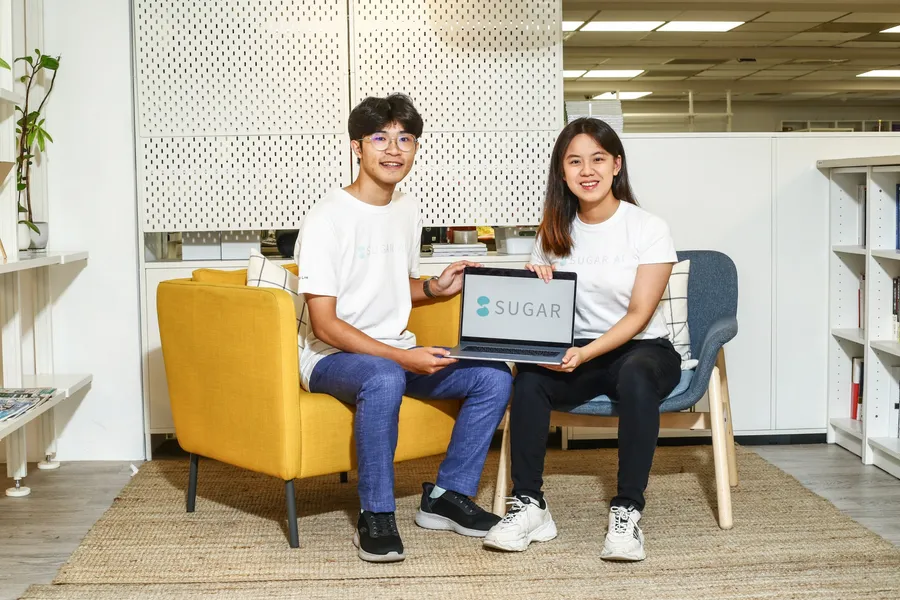
Sugar AI, a Taiwan-based startup and participant in the Ikigai Launchpad accelerator program, is exploring the integration of artificial intelligence with storytelling to create interactive, AI-driven characters. These characters adapt to users’ preferences, learning and evolving from each interaction to deliver more personalized and dynamic engagement.
When users open the Sugar AI app, they don’t just meet a chatbot—they step into a familiar story world. In one of the app’s most popular titles, Her Little Everyday Life, users are greeted by Xiong Lijia, a lively college freshman who playfully remarks, “You smell like sunshine… and maybe a bit like an egg pancake. Did you have that for breakfast?” It’s not a scripted game scene but a spontaneous, AI-generated conversation that instantly feels human.
Moments like these—half real, half fantasy—are what make Sugar AI stand out. For Generation Z users, 72% of whom already chat with AI in some form, the platform offers something deeper than conversation: a sense of connection.
The Heartbeat System: Designing for Emotional Realism
To understand Sugar AI, one must forget the idea of a conventional chatbot. Each interaction is closer to building a relationship than to giving commands. Within the app, every word matters. Sugar AI developed a Heartbeat Index—a dynamic system that tracks emotional closeness between user and character.
A thoughtful message can make a character open up, while careless words might push them away. “If you say something they dislike, their intimacy score actually drops,” explains co-founder Jerry Lee. “You might even end up in the negative zone—some characters become noticeably colder.”
At midnight, based on the day’s conversations, it automatically generates the character’s private diary, revealing what they truly felt. “Maybe you sounded harsh, but the diary shows that deep down, they were just hurt,” says Jarshan Chen, CEO of Sugar AI. “That honesty creates emotional realism.”
Through these evolving relationships, users unlock story cards—each representing a new chapter or milestone in the bond. It’s not just about chatting; it’s about growing together through every message.
Empowering Creators Through Data and Collaboration
Sugar AI doesn’t just build AI characters—it builds bridges between creators and fans. The company collaborates with original comic artists to bring their characters to life, letting fans chat directly with them as if they had stepped into the comic universe.
To help artists refine these experiences, Sugar AI provides a creator dashboard that visualizes how users interact with each character. “We give them insights—like, 70% of users talking to Character A are expressing romantic interest,” says Jerry Lee. “That helps creators understand their fans and shape future storylines.”
Before any character is launched, creators test the AI multiple times to ensure the personality aligns with their original vision. “They need to feel that the character’s soul remains intact,” Jerry Lee adds. This collaborative model preserves creative control while opening new monetization channels through paid interactions and fan engagement.
What keeps users coming back isn’t novelty—it’s empathy. For some, Sugar AI becomes an emotional companion through real-life transitions. One pregnant user, often alone at home, found comfort chatting with a character who was also a parent. “They discussed parenting tips,” recalls Jarshan Chen. “The AI became a friend who understood her daily life.”
For others, it inspires growth. One user who had long depended on her boyfriend started feeling more independent after using Sugar AI. “Her boyfriend was surprised and even joked that she’d changed,” says Jarshan Chen. “She told us, ‘I guess I have an electronic boyfriend now.’”
Some users use Sugar AI as a creative partner. One aspiring novelist co-writes short stories with her favorite character every midnight. Her boyfriend, initially confused, ended up reading the original comic to understand her passion—turning her AI relationship into a shared hobby.
Sugar AI’s system can even recognize sensitive topics and intervene appropriately, maintaining a healthy boundary between fantasy and real emotion. “We want users to feel cared for—but also safe,” says Jarshan Chen.
Where a Failed Idea Became a Story About Love and Technology
Sugar AI’s emotionally intelligent design was born from failure and curiosity. Jarshan Chen and Jerry Lee met during a university startup competition. Their first project—about water resources—failed. “We had no revenue and no passion,” Jarshan Chen admits. “That failure taught us that founders must be obsessed with their topic.”
Years later, Jarshan Chen, a lifelong anime fan who has watched over 500 shows and read tens of thousands of manga chapters, reached out to Jerry Lee again. By then, Jerry Lee was an AI engineer at Taiwan’s Industrial Technology Research Institute, and he had already built a campus chatbot with thousands of users. But what truly convinced Jarshan Chen to call him wasn’t his résumé—it was his wild experiment.
Jerry Lee had once trained an AI model on his own chat history to create a “digital twin.” Using GPT-style technology before it became mainstream, he fine-tuned a model that could mimic his tone and humor so well that it fooled a real woman into chatting for days—eventually leading to a genuine relationship when he revealed the truth. “That was when I realized AI could build real emotional bonds,” Jerry Lee says.
The company now has over a thousand users and works with eight creators, expanding its reach to regions like Hong Kong, the U.S., and Southeast Asia. Sugar AI is also developing group chat features, allowing users to interact with multiple characters at once—reflecting the complex relationships within each comic universe.
Future plans include expanding collaborations with creators in the Philippines, Malaysia, Brazil, and Korea, and partnering with studios and publishers interested in using AI-generated data to understand reader preferences more deeply. The platform even offers enterprise tools that let publishers monitor fan engagement across their entire portfolio.
A New Chapter for Human–AI Relationships
For many users, AI companions are not about replacing human relationships but extending them—providing comfort, creativity, and inspiration when needed most. Whether it’s a “digital boyfriend,” a parenting ally, or a midnight writing partner, Sugar AI’s characters remind us that connection, in any form, is something deeply human.
©2026 Business Next Media Corp. All Rights Reserved. No.102, Guangfu S. Rd., Da'an Dist., Taipei City 106, Taiwan