©2026 Business Next Media Corp. All Rights Reserved. No.102, Guangfu S. Rd., Da'an Dist., Taipei City 106, Taiwan
"Grammar Mistakes Are Welcome": This Startup's AI Friends Create a No-Pressure Way for Kids to Speak English
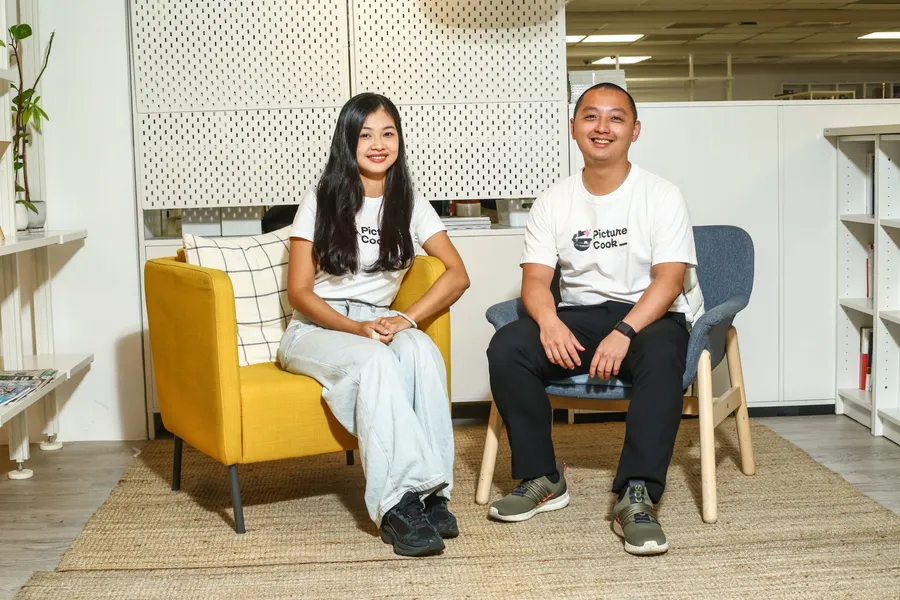
In Taiwan, learning English as a child has long meant memorizing vocabulary and preparing for tests, rather than actually speaking. That’s the starting point for PictureCook, a startup founded by Yao Hua Yang, Ling Chiu, and Ethan Ling and part of the Ikigai Launchpad accelerator program. Their mission is to help children ages five to eight build genuine communication skills and confidence.
“Taiwanese kids are great at memorizing vocabulary and taking tests, but most have never had a chance to actually use English in a real environment,” said Yao Hua Yang, Co-founder and Chief Executive Officer. “What children really need is not business English or perfect grammar, but opportunities to make friends and communicate naturally.”
Since launching last year, PictureCook has reached over 12,000 users in countries ranging from Taiwan and the United States to South Africa and the Philippines. The product now sees about 8,500 monthly active users, even before any large-scale marketing efforts. The team is currently raising $700,000 in seed funding, aiming to finish the round by the end of November to develop more content and expand globally.
Personalities That Spark Real Conversation
PictureCook puts original, hand-drawn AI characters at the center of the learning experience—like Tomato Tom, a lively storyteller, a shy cauliflower, and a corn fascinated by astronomy and math. “Our characters are not perfect. Just like real people, they each have their own strengths and weaknesses,” explained Ling Chiu, Co-founder and Chief Product Officer. “We want them to feel like real friends to the children, not just generic learning bots.”
These AI companions are designed with social interaction in mind. PictureCook believes that language is fundamentally about connection and empathy, not just technical correctness. “Even if your grammar is all over the place, your friends will still try to understand you, because the point is to connect,” shared Yao Hua Yang. The AI supports “code-switching” as well: if a child mixes Chinese and English—such as saying, “我好想吃Apple” (“I really want to eat an apple”)—the AI continues the conversation instead of correcting them. This approach lowers the pressure to be perfect and encourages children to keep communicating.
Before launching the product, the founders ran a month-long experiment with a kindergarten class. Children exchanged real drawings and messages with the PictureCook team, and their responses helped fine-tune the AI’s interaction style. “We realized that for children under five, conversation was too challenging, and over eight, the focus shifted to exam prep,” noted Yao Hua Yang. This led them to settle on five to eight as their key age group—the “golden window” for learning language through play and conversation.
Learning That Grows With Each Child
PictureCook is more than digital storybooks. The core features—a daily AI exchange diary and interactive storybooks—are crafted to invite two-way communication, not just passive listening. Every day, children receive a virtual postcard from Tom or another character, and reply with a voice message, text, or drawing. The AI then crafts a personalized response, encouraging children to share more and build on each interaction. “We want to encourage children to speak up and interact, not just memorize words,” said Yao Hua Yang.
The app’s storybooks and diary entries are all created in-house, with input from teachers and direct feedback from parents and children. Stories range from classic tales to “around-the-world” adventures, as well as topics on colors, feelings, and careers. The platform uses the CEFR framework to dynamically adjust the complexity of each story, making sure content fits each child’s language level. For teachers, this flexibility is important: they report that PictureCook’s “postcard” format nudges students from single-word replies to longer sentences and even questions.
Some parents, especially those from bilingual or immigrant families, have noticed that their children start using English in spontaneous, real-life situations after using the app, sometimes even combining it with their native language. In English-speaking countries, PictureCook is used by families who want to nurture creativity and self-expression, not just language drills.
Keeping Kids Safe While Growing a Global Community
PictureCook’s founding team brings together expertise in product design, speech recognition, and online safety. Hao En Song previously worked on real-time voice moderation for online games, and that background now shapes PictureCook’s approach to safe and positive AI interaction. As the company grows, a parent dashboard will soon allow families to track vocabulary gains, conversational progress, and overall development—important for both parents and teachers who want visible signs of growth.
The app is currently free, but paid subscriptions will launch early next year, unlocking more content and more frequent AI interactions. The team is transparent about these plans: the majority of new funding will go toward developing additional stories, new characters, and expanding into the U.S. and other English-learning markets.
While PictureCook is sometimes asked to add support for other languages, such as Mandarin or Spanish, the team says this is not just a matter of technology, but of carefully adapting stories and social content for different cultures—a process they will approach step by step. “Technically, we can switch languages easily, but the content has to truly fit the needs of each language community,” pointed out Ling Chiu.
For him, the best moments are when children do something unexpected, like singing to Tom or asking a thoughtful question. “It’s a reminder that we’re building something more than just an app. We’re helping kids build confidence and curiosity.”
©2026 Business Next Media Corp. All Rights Reserved. No.102, Guangfu S. Rd., Da'an Dist., Taipei City 106, Taiwan