©2026 Business Next Media Corp. All Rights Reserved. No.102, Guangfu S. Rd., Da'an Dist., Taipei City 106, Taiwan
Enabling Autonomous Driving for East Asian Vehicles: Turing Drive Raises USD 4.7 Million to Expand into Japan and Southeast Asia
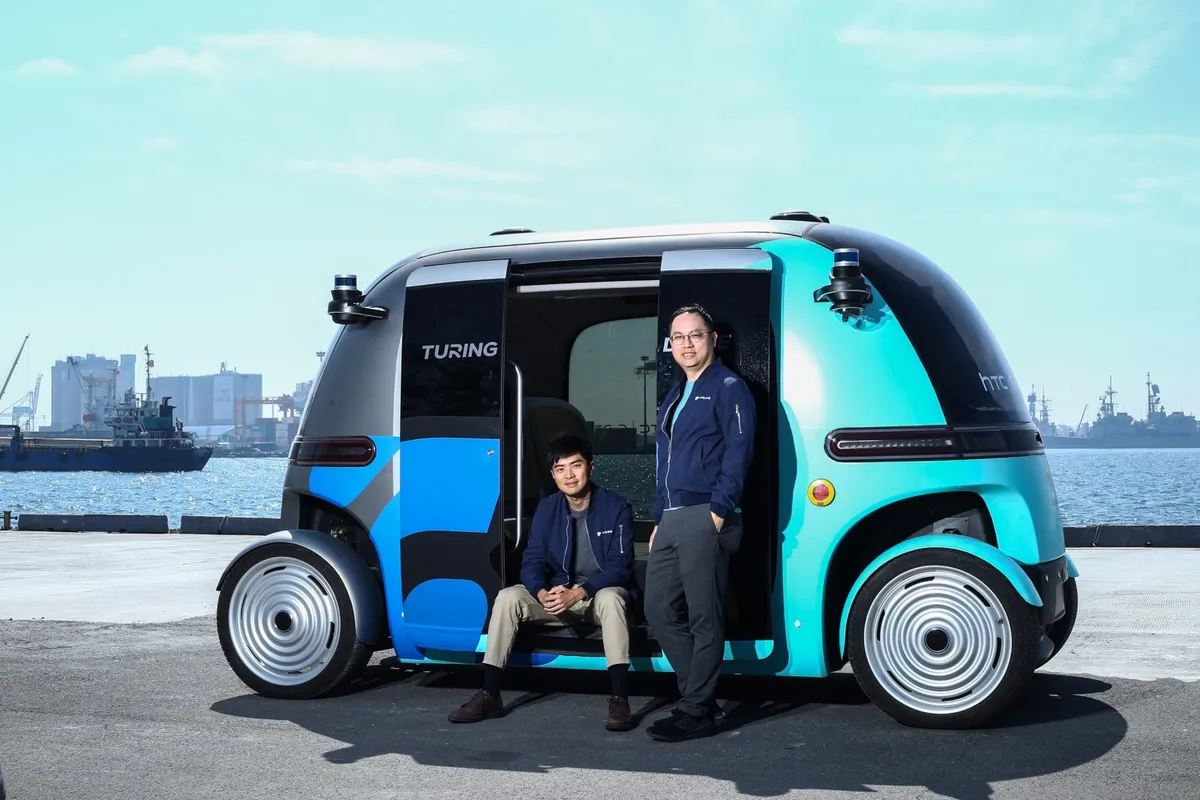
Turing Drive, a Taiwan-based AI autonomous driving startup focused on specialized environments, has announced the completion of its NT$150 million Pre-A round funding. The round was led by AVA Angel Sustainability Fund, with strategic investments from Japan’s autonomous driving system developer TIER IV, Taiwanese automotive logistics company Tonglit Logistics Co., Ltd. , and electric bus manufacturer Tron Energy.
Turing Drive has also received investment from the “AI Startup Investment Enhancement Program” of the Administration for Digital Industries, part of the Ministry of Digital Affairs. This makes Turing Drive the first publicly announced investment under the program, which is backed by the National Development Fund.
The “AI Startup Investment Enhancement Program” managed by the Ministry of Digital Affairs has a total budget of approximately USD 310 million and will invest in partnership with venture capital funds. AVA Angel Investment was also one of the first investors revealed in the program’s initial wave.
According to founder David Shen, the Turing Drive team has been deeply involved in the Japanese market since 2022, completing multiple proof-of-concept projects and establishing local partnerships. The new funding will be used to strengthen the research and development of their AI autonomous driving software and products, as well as to accelerate international expansion. The company plans to launch large-scale autonomous vehicle deployments in Japan and Singapore by 2026.
The "AI Brain" for Specialized Scenarios Doubles Turing Drive’s Annual Revenue
Turing Drive is a provider of autonomous driving software solutions. The company does not engage in hardware manufacturing itself, but instead collaborates with automotive system companies and vehicle manufacturers to create AI-powered vehicles through software and hardware integration.
Although all solutions fall under autonomous driving, this field includes different levels and applications. Turing Drive focuses on the market for Special Purpose Vehicles (SPVs), which are autonomous vehicles designed for specific tasks. Typical scenarios include industrial mobility for automating logistics inside factories, warehouses, and ports; providing sightseeing and leisure transportation services in large campuses and resorts; and filling transportation gaps in aging societies where public transit coverage is limited.
It is especially worth highlighting the “last mile” applications in rural and remote areas. For the most part, Turing Drive’s autonomous driving solutions have been implemented within factories or enclosed industrial parks. However, Hubert Chen, co-founder of Turing Drive, points out that the term “enclosed environment” should not be taken literally. Instead, he believes it should be evaluated based on risk. “For example, Shilin Night Market may be a physically closed area, but its internal environment is highly complex and places greater demands on autonomous driving systems. On the other hand, Green Island, although featuring open roads, has relatively low safety risks because there are not many other vehicles,” Chen explains.
JJ Fang, co-founder and CEO of AVA Angel Investment, which led this funding round, adds that this sector relies heavily on customized software-hardware integration and deep cooperation within specific environments. This aligns closely with the strengths of Taiwan’s industrial PC supply chain and represents the most globally competitive path for Taiwan’s autonomous driving industry.
Turing Drive’s core technology includes its AI software solution AutoDrive, the edge computing module EdgeDriv, and the intelligent operations system SyncDrive. Working closely with clients, Turing Drive creates AI-powered smart vehicles. The company has achieved revenue growth of over 100 percent for three consecutive years, with more than half of its revenue coming from the Japanese market, which is known for its high standards for quality and safety.
Hubert Chen notes that the participation of Japanese autonomous driving system provider TIER IV as an investor is especially meaningful. TIER IV, which employs nearly 400 people, is a major player in Japan’s autonomous driving sector. “From the perspective of end customers, we are more like a subcontractor,” Chen says. Turing Drive integrates its technology modules into TIER IV’s system products, which are ultimately delivered to automotive manufacturers. One of the advantages of this cooperation is that it allows Turing Drive to expand into overseas markets together with TIER IV, which the company hopes will be an efficient strategy for international business development.
Chen also acknowledges that this cooperation model is still in the “market validation” stage. While initial results have been achieved, the new funds will be used to drive growth at scale.
From a business model perspective, Turing Drive operates across three layers: fees for developing autonomous vehicle systems, software licensing fees for mass production (charged per vehicle), and monthly subscription fees for fleet management systems used in the field (also charged per vehicle). At present, Turing Drive’s clients are still in the first phase of customized development. The next goal is to move toward mass production.
The Key Strategy from POC to Mass Production: “Reverse Engineering” Business Development
To encourage automakers to begin mass production, more than technical stability is required; manufacturers must also be confident in market timing. Since Turing Drive cannot determine when its clients will mass produce autonomous vehicles, the company has adopted a “reverse engineering” approach to business development: by working directly with end users in specific environments to create demand, they can influence manufacturers upstream.
For example, Turing Drive’s direct customers may be golf cart manufacturers, but the ultimate end users are the golf courses. “The more people who experience the benefits of autonomous driving, the more they will ask their suppliers, ‘Do you have this feature?’” Chen explains. When dealers and original equipment manufacturers feel enough market pressure, they have no choice but to incorporate autonomous driving technology.
As for mass production targets, Hubert Chen shares, “As long as we can achieve mass production of one thousand vehicles, we will reach profitability. Compared to a single major Japanese golf cart client, which ships eighty thousand vehicles worldwide each year, our goal of one thousand units is actually a very modest threshold.”
Looking ahead to 2026, Turing Drive expects to obtain an autonomous driving license for public roads in Japan as early as January, which would make it the first Taiwanese company to receive such a permit in Japan. The company also plans to launch large-scale autonomous vehicle fleet deployments in both Japan and Singapore, while formally initiating its expansion into the North American market. Through these efforts, Turing Drive aims to accelerate the global presence of Taiwan’s AI-powered autonomous driving capabilities.
©2026 Business Next Media Corp. All Rights Reserved. No.102, Guangfu S. Rd., Da'an Dist., Taipei City 106, Taiwan