©2026 Business Next Media Corp. All Rights Reserved. No.102, Guangfu S. Rd., Da'an Dist., Taipei City 106, Taiwan
Taiwan’s JENJAN Expands U.S. Push with DINGGO Partnership, Tests Model in Pharma Logistics
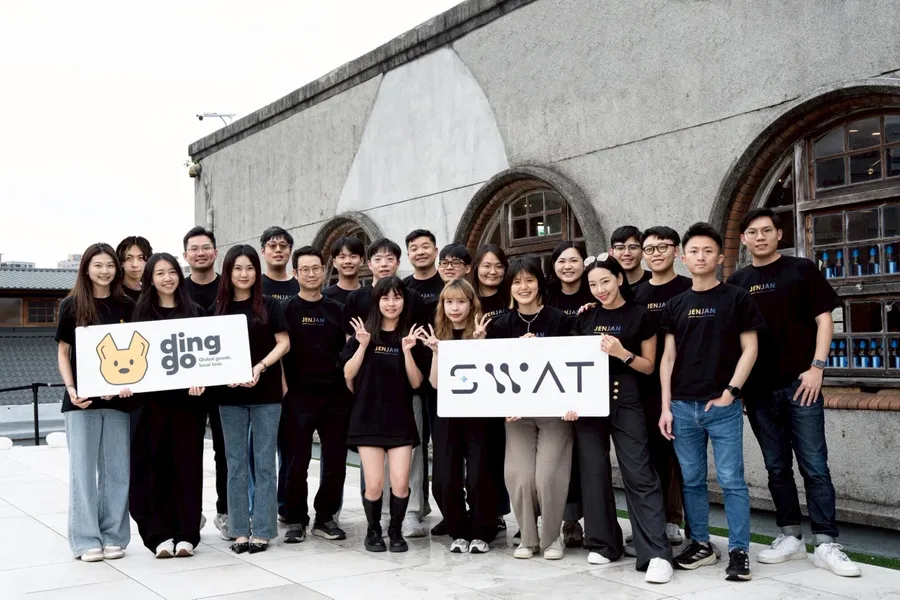
Taiwanese smart warehousing startup JENJAN, which operates in the U.S. as SWAT, is expanding its North American footprint through a new partnership with California-based e-commerce platform DINGGO, as it tests its distributed warehouse model across retail, electronics, and healthcare logistics.
One of the more unexpected footholds in that expansion sits in Dallas, where the company is helping build out a pharmaceutical warehousing operation.
That geographic and vertical range is, by design, the point.
An Asset-Light Model Built for a Heavy Problem
JENJAN's core insight, developed in Taiwan, is that traditional warehousing relies on large, centralized facilities that require heavy upfront investment and rigid demand forecasting — a model that often struggles to adapt to fluctuating inventory flows. JENJAN's answer was to flip the model: instead of building warehouses, aggregate the ones that already exist.
The company runs what it calls a distributed "satellite warehouse" network — a franchise-driven system that onboards partners with idle storage space, then layers on a unified digital management platform and AI-assisted operations to make those disparate locations behave like a single, coordinated system. Think of it less as a logistics company and more as an operating system for underutilized square footage.
In Taiwan, the model matured. In North America, it's being stress-tested against a different class of problem.
The Dallas Bet: When "Smart Warehousing" Meets Healthcare
Of all the verticals JENJAN could have targeted for its U.S. push, healthcare is among the most unforgiving. Medical supply chains operate under strict traceability requirements, regulatory compliance frameworks, and near-zero tolerance for operational error. It is, in short, the exact opposite environment from a scrappy franchise network of back-room storage units.
That's precisely why it matters that JENJAN is already there.
The company is currently helping a U.S. pharmaceutical client establish a medical warehousing operation in Dallas, focused on localizing the storage, fulfillment, and distribution of Asian medical consumables and pharmaceutical products entering the American market. The implicit argument JENJAN is making — by being in that room at all — is that its standardized SOPs, digital management infrastructure, and AI-assisted coordination can hold up under conditions where cutting corners isn't an option.
The move is as much about proving operational credibility as it is about generating revenue.
California, Dallas, and the Electronics Pipeline
The California partnership with DINGGO addresses a different dimension of the same thesis. DINGGO brings established platform traffic and market reach within the North American Chinese-American consumer segment — a distribution channel that gives JENJAN immediate, real-world volume to work with as it builds out its U.S. operational muscle. For Asia-Pacific brands looking to enter North America, the combination of DINGGO's consumer reach and JENJAN's warehousing and fulfillment infrastructure is designed to function as a turnkey market-entry stack: inventory intake, stock management, order fulfillment, last-mile delivery.
Meanwhile, a third front is quietly opening. Several electronics industry clients have begun engaging JENJAN for warehousing services — a vertical where the requirements around traceability, precision handling, and quality control sit somewhere between retail e-commerce and medical-grade logistics. It is, for a company that wants to be taken seriously as supply chain infrastructure rather than just another 3PL, a natural next step.
Framed by the company as a long-term positioning play, CEO Gary said, "What we want to build isn't just warehousing services. We want to bring Asia's mature supply chain management capabilities into the North American market."
The Larger Bet
There is a version of this story where JENJAN is simply a logistics startup chasing contract opportunities wherever it can find them — e-commerce here, pharma there, electronics on the side. But the more coherent read is that the company is methodically assembling proof points across the verticals where supply chain competence is hardest to fake and most valuable to own.
Global supply chains are still mid-restructure. North American companies are still hunting for logistics partners who can bridge the operational gap between Asian manufacturing and American distribution. And Taiwanese supply chain know-how — built through decades of serving the world's most demanding electronics and manufacturing clients — remains one of the more undervalued exports the island produces.
JENJAN is betting it can package that expertise, franchise it into satellite nodes, and run it through a digital management layer sophisticated enough to meet American healthcare compliance standards. If the Dallas warehouse holds, the rest of the model gets a lot easier to sell.
©2026 Business Next Media Corp. All Rights Reserved. No.102, Guangfu S. Rd., Da'an Dist., Taipei City 106, Taiwan