©2026 Business Next Media Corp. All Rights Reserved. No.102, Guangfu S. Rd., Da'an Dist., Taipei City 106, Taiwan
Taiwanese PropTech startup maaūu partners with Japan’s Hankyu Hanshin to streamline cross-border real estate buying
Imagine you have found the apartment. It is somewhere in the Kansai region — managed by a developer whose name carries genuine weight in the local market. The price is reasonable by any standard, especially when you run it against what comparable square footage costs in Taipei. You have the capital. You have the intent.
What you do not have is any reliable way to know whether what is written in the listing is actually what you are getting — or what happens after you sign.
This is not a hypothetical. It is the baseline condition for most Taiwanese buyers pursuing Japanese residential property, a market that has seen demand climb steadily year over year. The interest is documented, and the gap — the information gap, the trust gap, the language-and-legal-system gap — remains stubbornly, expensively wide.
That gap is the business maaūu is building into.
The information problem, precisely stated
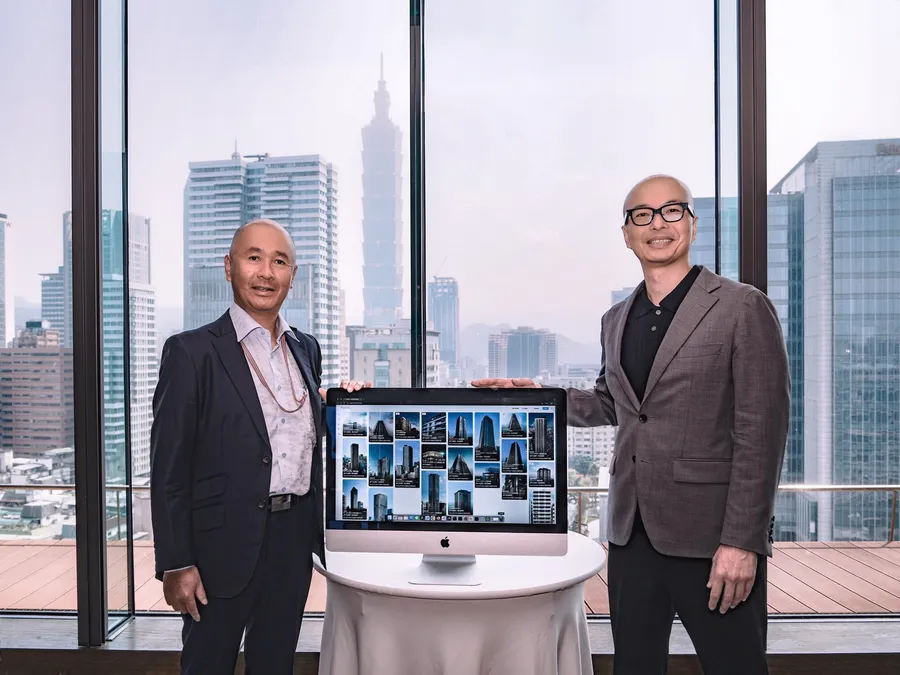
On April 24, maaūu (也有房產), a Taipei-based PropTech company founded in 2021, announced a formalized strategic alliance with Hankyu Hanshin Properties (HHP), a major Japanese developer under the Hankyu Hanshin Holdings group — a conglomerate that has been operating in Japan since 1907. The announcement followed a pilot cooperation that began in late 2024 and which both parties describe as producing concrete outcomes, though neither has disclosed transaction volumes.
The structure of the deal is worth examining carefully, because it maps almost exactly onto the layers of friction that make cross-border real estate painful.
HHP brings inventory — specifically, residential properties in the Kansai region under its Geo brand, which has repeatedly ranked highly in customer satisfaction surveys for new condominiums in the Kinki area. It also brings post-purchase rental management: the operational infrastructure that allows a buyer in Taipei to own a unit in Japan without needing to personally manage tenants, maintenance requests, or lease renewals across a language barrier and a significant geographic distance.
maaūu brings the front end. The company operates what it describes as an online-to-offline integrated sales platform — one that already handles overseas properties across markets including Taiwan, the United States, and Australia. It produces video content, runs Taiwan-side marketing and client acquisition, and has built what its team calls a data-driven sales operation on top of a self-developed sales system built over five years of operations and, by the company's own account, twenty years of accumulated architectural expertise.
"By combining HHP's deep local expertise with maaūu's digital technology capabilities, we can offer Taiwan's cross-border property buyers a purchasing experience closer to Japanese local standards," said maaūu CEO Hom Liou.
The ambition behind that statement is specific: efficient, transparent, and trustworthy property transactions — covering everything from initial inquiry through to post-purchase rental management — delivered to Taiwanese buyers who have historically had to navigate language barriers, unfamiliar legal frameworks, and inconsistent information to access the Japanese market.
The bigger picture
The partnership is structured around a problem both companies explicitly acknowledge: Taiwanese buyers have shown growing interest in Japanese residential assets year over year, but language barriers, differences in business customs, and unfamiliarity with Japan's legal framework have created significant obstacles to cross-border transactions.
To address this, the two companies are building what they describe as a full cross-border real estate sales and management ecosystem. On the transaction side, maaūu handles Taiwan-side marketing, client acquisition, and multilingual property information. HHP supplies the properties and the brokerage expertise. On the post-purchase side, HHP provides rental management services — covering the operational burden of owning a property in Japan from a base in Taiwan. Both companies have also committed to developing a multilingual international sales platform designed to accumulate cross-border transaction data and serve multiple Asia-Pacific markets over time.
HHP executive officer Kodama Naohiro framed the opportunity directly: "Demand from Taiwan and other overseas buyers for Japanese real estate continues to grow. Through deep collaboration with maaūu, we can more precisely match the needs of Taiwanese buyers, and deliver Japan's high-quality residential products and professional management support more completely to our customers."
What still has to be proven
The maaūu-HHP model is structured to address the full arc of a cross-border transaction — not just the marketing and sales front end, but the post-purchase rental management that determines whether owning a property in Japan from a base in Taiwan is actually sustainable. That the partnership embeds both layers from the start, rather than treating post-sale management as an afterthought, is the structural detail that distinguishes it from a straightforward referral arrangement.
The pilot cooperation that began in late 2024 produced what both parties describe as concrete outcomes, though neither has disclosed specific transaction volumes or figures. For a partnership whose stated goals include information transparency and data-driven operations, the absence of concrete pilot data is a detail worth noting.
Near-term, the partnership will launch Kansai properties in the Taiwan market and hold dedicated buyer seminars to help prospective clients understand the specific characteristics and value of Japanese residential assets. Over the next two years, both companies say they are committed to building out a complete cross-border real estate sales and management ecosystem, with plans to expand market scale and service locations beyond the current footprint.
The barriers that have historically kept Taiwanese buyers from fully accessing the Japanese property market — language, legal complexity, unfamiliar business customs, and uncertainty around post-purchase management — are the exact problems this partnership is designed to dismantle. Whether it can do so at scale is the question the next two years will answer.
©2026 Business Next Media Corp. All Rights Reserved. No.102, Guangfu S. Rd., Da'an Dist., Taipei City 106, Taiwan