©2026 Business Next Media Corp. All Rights Reserved. No.102, Guangfu S. Rd., Da'an Dist., Taipei City 106, Taiwan
Nvidia, Qualcomm and Intel all talked up agentic AI at Computex — but they’re betting on very different futures
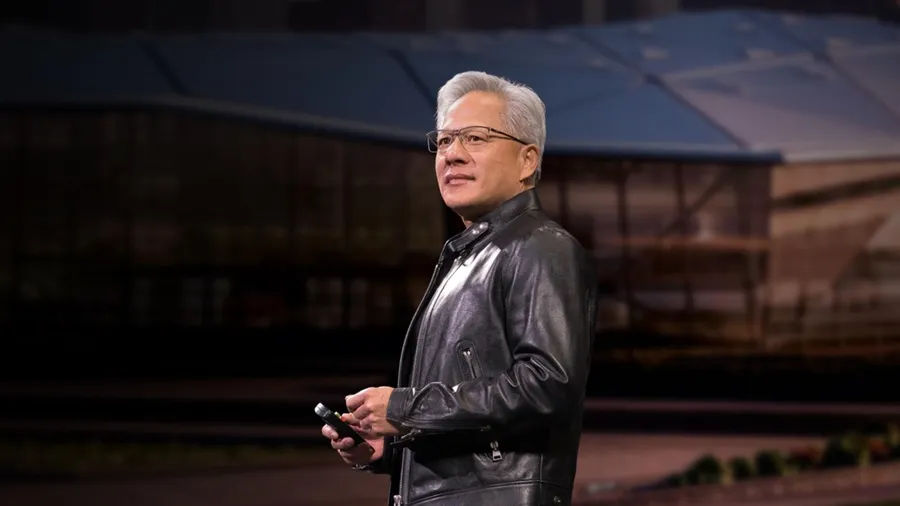
Over two days in Taipei, the CEOs of Nvidia, Qualcomm and Intel each took the Computex stage to pitch their vision for the next era of computing. Jensen Huang framed AI as a massive infrastructure business built around token-generating “AI factories.” Qualcomm’s Cristiano Amon argued that agents will move closer to users, running across phones, PCs, cars and connected devices. Intel’s Lip-Bu Tan made the case for a more integrated stack, spanning chips, manufacturing, systems and industry partnerships.
The sequencing was fitting. Huang set the terms of the conversation. Amon opened the official show with his answer. Tan, arriving last, had the most to prove.
Individually, each presentation was a polished, well-executed declaration of intent. Taken together, they revealed something more interesting: three very different theories about where value will be created in the AI era — and three very different companies betting their futures on being right.
Jensen's Math: Compute Is the Product
If there is a single concept that defined Huang's keynote at Taipei Music Center, it is what his boosters are already calling "token economics" — the idea that the real asset being sold in the AI age is not a chip, but a unit of computational output. Huang flipped the traditional hardware-vendor script entirely. Rather than talking about what his silicon can do, he talked about what it can earn.
The numbers he deployed were characteristically audacious. A 1-gigawatt AI factory pairing the new Vera Rubin platform with Groq LPX racks, Huang argued, carries the potential to generate $300 billion in annual revenue — a tenfold leap over a comparable Blackwell-generation facility. The logic is disarmingly simple: more compute means more tokens generated, more tokens means more AI output, more AI output means more revenue for the businesses that run on it. Buy more NVIDIA hardware, make more money. The math practically sells itself.
That framing also served as Huang's preemptive answer to the critics who worry AI spending is wildly outpacing real-world returns. Compute is revenues, as he framed it — a declaration that transforms the capital expenditure debate from a question of cost into one of yield. Whether enterprise CFOs fully buy that logic remains to be seen, but as a rhetorical maneuver, it was vintage Huang: grandiose, numerical, and just plausible enough to stick.
He also used the keynote to push back against the fear that AI hollows out the workforce. His evidence was GitHub commit data: developer output grew from 300 million instances in 2023 to nearly triple that figure in just the first months of 2026, which Huang translated into a simple economic argument — AI-powered tools have turned $3 trillion in software engineering salaries into $9 trillion worth of productive output, so why would any rational company hire fewer engineers? It is an optimistic read, and one that conspicuously sidesteps every profession that is not software engineering.
Anchoring the technical centerpiece of the keynote was the Vera Rubin platform — a system built with 6 trillion transistors, assembled by 40,000 engineers, and backed by 150 Taiwanese supply-chain partners. When Huang declared that "Taipei is where it all begins," it was equal parts sentiment and strategy: a reminder to every government, hyperscaler, and enterprise in the room that the hardware defining the AI era is being designed and manufactured in close collaboration with this island.
Cristiano's Opening Salvo: Intelligence Should Live at the Edge
Qualcomm's keynote, which opened the official Computex program that same afternoon, set a different philosophical tone from the start. Amon declared 2026 "The Year of the Agents" — a proclamation that the shift from prompt-based AI to persistent, autonomous AI systems is not approaching; it has arrived. The opening video made the point cinematically: AI evolving from a tool you activate to a presence that anticipates, adapts, and operates continuously, whether you're at your desk, in your car, or asleep.
That Amon was handed the slot to formally open Computex was itself a statement. For the third consecutive year, TAITRA chairman James C.F. Huang welcomed him back as the show's leadoff voice — an implicit endorsement of Qualcomm's positioning at the intersection of AI and connected devices, which is precisely where the Computex audience lives and works.
Amon's core argument is that the devices people already carry — phones, laptops, wearables — are about to become the primary interface for AI agents, and that running those agents persistently on centralized cloud infrastructure alone is neither economically viable nor physically sustainable — and that keeping sensitive user context local is an added imperative. The device becomes the endpoint; the agent lives everywhere. The implication for Qualcomm, a company whose competitive advantage rests on designing power-efficient, AI-capable silicon for mobile and edge applications, is self-evident: if the future is agents running on devices, Qualcomm's chips are what makes that possible.
He was candid about the engineering challenge embedded in that vision. Today's consumer devices were simply not designed to sustain continuously operating autonomous AI workloads. The coordinated demand placed on CPUs, GPUs, and NPUs by always-on agents is categorically different from the sporadic inference tasks current hardware was built for. New device architectures, Amon argued, will be required — a pitch that doubles as a roadmap for Qualcomm's next several product generations.
In automotive and robotics, Amon described AI agents capable of handling perception, navigation, and user personalization simultaneously — machines that sense, think, and act as integrated systems rather than executing pre-programmed instructions. His treatment of 6G was similarly ambitious: a wireless generation designed from the ground up with AI in mind, capable of integrating connectivity, computing, and environmental sensing to give agents real-time awareness of the physical world around them. Tokens, Amon said, are "the currency of AI" — and distributing where those tokens are generated, between cloud and edge, is how the industry brings that currency within reach of everyone.
The most pointed signal came in a brief aside near the keynote's close, when Amon introduced "Dragonfly" — Qualcomm's new brand for data-center products. It was a pointed signal that a company historically synonymous with mobile and edge computing is serious about competing for AI infrastructure business. The full scope of that ambition is slated for Qualcomm's Investor Day on June 24 in New York, which means Amon left the Computex stage having raised a question he deliberately chose not to answer — a rare moment of restraint from a CEO who usually prefers to detonate the announcement himself.
Lip-Bu's Wager: The Sum Is Greater Than Its Parts
Intel's keynote, delivered the following morning on June 2, had a different energy entirely. Where Huang operates in proclamations and Amon in visions, Lip-Bu Tan works in systems. His address — built around the theme of "an intelligent world built on silicon" — was less a product launch than a demonstration of organizational coherence: a CEO methodically proving that Intel's sprawling portfolio of chips, manufacturing, and partnerships can now function as a unified whole rather than a collection of expensive silos.
The headline product was Intel Xeon 6+, a server processor packing 288 efficiency cores and built on Intel's 18A manufacturing process — the same node that also powers the new Core Ultra Series 3 client chips, which have already been adopted by more than 325 consumer and commercial products. Threading the same process through chips aimed at laptops, edge devices, and data centers is not an accident; it is the argument. Intel is telling customers: wherever intelligence needs to run, we have the silicon, and it all speaks the same language.
Tan's most pointed remarks addressed the shift happening inside data centers as agentic AI workloads replace conventional compute jobs. The economics of agentic AI, he noted, are fundamentally different: because these systems iterate continuously — reasoning, acting, reflecting, and reasoning again — they place dramatically higher demand on CPUs, whose role as orchestrators of complex workflows has reasserted itself with unexpected force. Recent analyses suggest that a single agentic AI task can consume up to a thousand times more tokens than a standard single-turn inference request. In practical terms, that means the industry's longstanding assumption that AI infrastructure is essentially a GPU story deserves revisiting.
Intel's pitch is that it belongs at both ends of that equation. Through a partnership with Foxconn, which is providing system integration capabilities, it is deploying rack-scale AI infrastructure purpose-built for the demands of agentic workloads. Through a collaboration with SambaNova, it is anchoring Vector Core Compute — a new inference cloud launched by Vista Equity Partners and Cambium Capital that blends Intel Xeon CPUs, SambaNova RDUs, and NVIDIA Blackwell GPUs into a cost-efficient alternative to pure GPU clouds. It is a notably ecumenical position for a company that has historically preferred to compete head-on, and it signals something real: Tan's Intel is comfortable being part of the answer rather than insisting on being all of it.
Beyond the data center, Intel's keynote touched on territory that its rivals barely acknowledged. Partnerships with Hitachi and Siemens point toward industrial automation. Work with Echo Neurotechnologies and Greenstone Biosciences suggests a push into biomedical and drug-development applications. These are long-cycle bets that will not move a stock price next quarter, but they sketch a version of Intel that is less dependent on consumer PC cycles and more deeply embedded in the critical infrastructure of multiple industries — which is, presumably, exactly what Tan is trying to build.
Three Maps, One Territory
Strip away the leather jackets, the laser shows, and the carefully calibrated confidence, and what Computex 2026 revealed was a genuine strategic divergence among the companies most responsible for building the physical layer of the AI economy.
Huang's bet is that the AI era will be defined by massive centralized infrastructure — AI factories running at gigawatt scale, generating tokens the way refineries generate fuel, with NVIDIA's architecture as the indispensable engine. It is the most capital-intensive vision, and the one with the biggest short-term market validation, given the spending commitments already on the books from hyperscalers around the world.
Amon's bet is the most contrarian of the three: that centralization is not the whole story, that cost and latency will ultimately push significant AI workloads back toward the device, and that the company with the best edge-optimized silicon wins the largest slice of the agent economy. It is a thesis that requires the device market to evolve faster than it has managed to so far — but Qualcomm has been making this argument for years, and the hardware is finally beginning to catch up with the ambition. That Dragonfly announcement suggests Amon is also hedging: if you can't beat the cloud, you might as well build one.
Tan's bet is that the value will accrue to whoever can integrate the full stack — from chip design and manufacturing through to rack-level systems and vertical industry applications — while remaining flexible enough to partner with everyone, including rivals. It is a quieter vision than either of the other two, and a harder one to communicate on a keynote stage, but Intel's nearly six-decade presence across every layer of the compute stack makes it the only company even positioned to attempt it.
All three CEOs stood in Taipei, pointed at the same horizon, and drew entirely different roads to get there. Huang set the frame in the morning. Amon opened the show that afternoon. Tan arrived the next day with the most ground left to cover. The city, as Huang noted, is where it all begins. The question — the genuinely open one — is whose map the rest of the industry will decide to follow.
©2026 Business Next Media Corp. All Rights Reserved. No.102, Guangfu S. Rd., Da'an Dist., Taipei City 106, Taiwan