©2026 Business Next Media Corp. All Rights Reserved. No.102, Guangfu S. Rd., Da'an Dist., Taipei City 106, Taiwan
Y Combinator’s Winter 2027 Wishlist Highlights Opportunities for Taiwan’s AI and Hardware Ecosystem
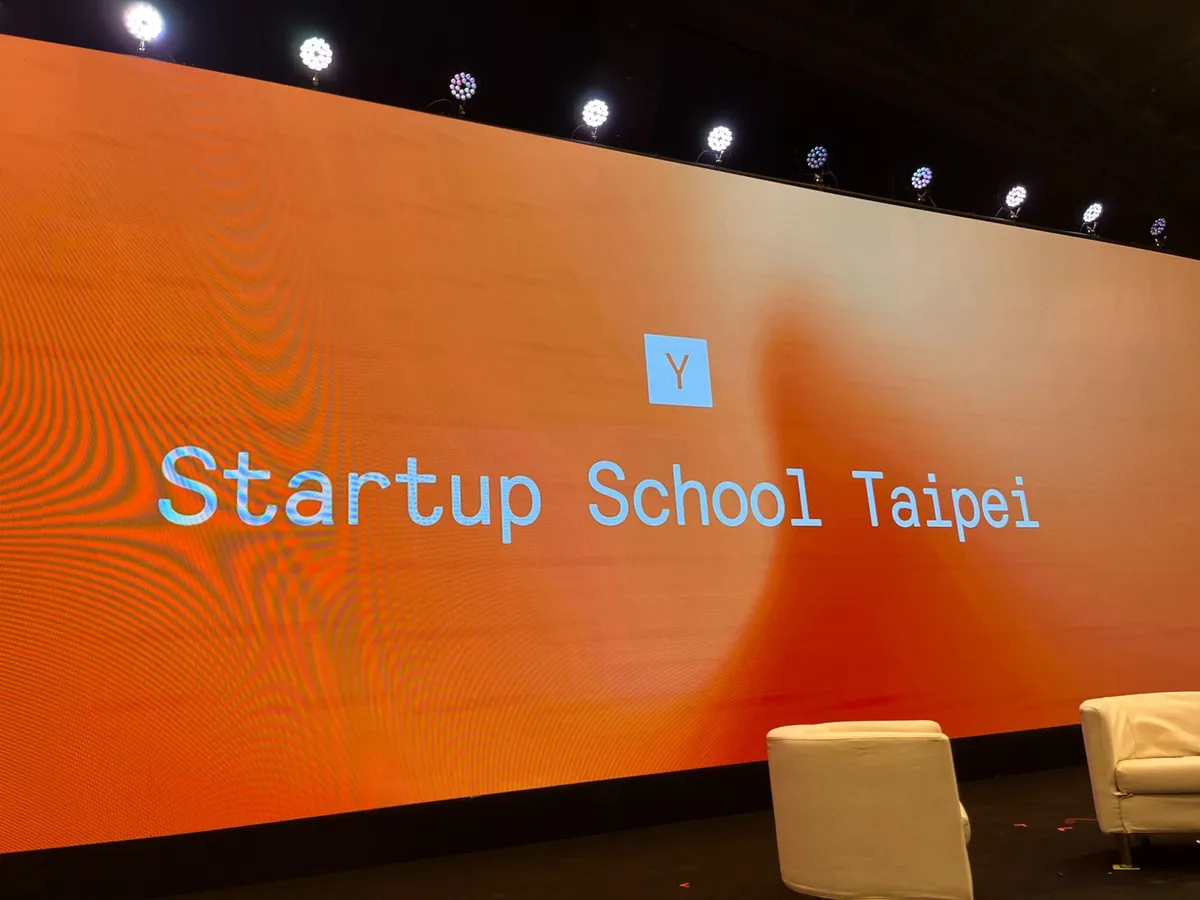
As YC prepares to bring its Startup School to Taipei for the first time, its latest Request for Startups points to 11 opportunities spanning semiconductor supply chains, robotics, data center infrastructure, government services, and industrial AI.
Y Combinator’s Winter 2027 Request for Startups (RFS) points to a shift in where the next wave of AI opportunities may emerge. As AI models become more capable, some of the biggest challenges are moving beyond software itself: infrastructure, hardware, financing, government services, and the adoption of AI across traditional industries.
The RFS outlines 11 areas where the accelerator wants to see new companies emerge. While it is not an investment mandate, the list offers a useful signal of the problems attracting attention across Silicon Valley. The Winter 2027 batch begins in January 2027 in San Francisco.
Why YC’s Latest Wishlist Matters to Taiwan
The timing is notable for Taiwan. Y Combinator is set to bring its Startup School to Taipei for the first time on November 12, with CEO Garry Tan among the speakers.
Several priorities in its Winter 2027 wishlist—including semiconductor supply chains, robotics components, data center infrastructure and industrial AI—also align with Taiwan’s established technology and manufacturing sectors. These areas could offer opportunities for Taiwanese startups and companies looking to expand into the global AI supply chain.
AI Infrastructure Is Creating New Hardware Bottlenecks
The rapid expansion of AI data centers is putting pressure on the physical supply chains behind them. Transformers can have lead times of up to three years, while switchgear, circuit breakers, and liquid-cooling systems are also facing shortages. Even specialized materials such as grain-oriented electrical steel are becoming harder to secure.
YC partner Jared Friedman describes the AI data center buildout as the largest capital investment project in US history, exceeding the combined scale of the railroads, interstate highways, and the Manhattan Project.
Robotics faces similar constraints. Despite growing demand, the US installed 38,400 industrial robots in 2025, up 12%, with many systems still imported from Japan and Europe. China, meanwhile, accounted for 94% of global sintered rare-earth magnet production in 2024. Export restrictions introduced in April 2025 reportedly disrupted supplies and forced some automakers to reduce production.
YC is looking for startups developing critical robotics components, including rare-earth magnets, motors, harmonic drives, encoders, force sensors, grippers, chips, batteries, and manufacturing equipment.
Government Could Become a Major AI Customer
Government services represent another large, underserved market for AI. In his proposal, “AI for City Hall,” YC partner Gustaf Alströmer points to opportunities to automate building permit reviews, zoning checks, inspections, public records, business licensing, and 311 citizen hotlines.
The US has approximately 19,000 cities. Reducing building permit review times to just 10% of their current duration could unlock an estimated $16 billion in additional annual tax revenue, according to the RFS.
Alströmer also proposes “Plaid for Government Benefits”: a system that allows people to verify information such as income, tax records and residency once, then reuse those records when applying for different public benefits—with their consent.
Financing the Physical AI Economy
AI software companies can often get started with relatively little capital. Robotics companies, GPU clusters and data centers cannot.
YC partner Brad Flora argues that financial services have not kept pace with the capital requirements of this new economy. Startups could build lending, leasing, securitization and hedging products around physical AI assets.
Potential models include loans backed by robots generating $500,000 in annual revenue, or put options that allow companies to hedge against changes in GPU computing capacity.
“If you understand both the machines and the money, we'd love to talk,” Flora says.
AI That Works Inside Enterprises—and Alongside Workers
As open-weight models become more competitive, companies are increasingly interested in owning and controlling their AI systems. This is particularly relevant for organizations handling sensitive data, including defense contractors, banks, hospitals and nuclear facilities.
YC partner Jon Xu sees an opportunity in helping businesses turn their internal workflows and expertise into training data, allowing them to build customized models that run within their own environments.
Another opportunity is the development of vertical foundation models for fields such as manufacturing, energy, and biology. YC partner Diana Hu believes these specialized models could deliver comparable performance with significantly less computing power.
AI could also expand access to expert-level work. In “The $15-an-Hour Expert,” Brad Flora describes how AI tools could help workers without formal credentials handle tasks traditionally performed by specialists, including tax preparation, insurance claims, medical billing, and immigration paperwork.
Rather than replacing workers, the opportunity is to give them tools that make more complex work possible.
YC’s 11 Areas of Opportunity for Winter 2027
The full Request for Startups covers 11 areas, each outlining a problem YC wants founders to tackle:
- Startups in a World of Abundant Space Access — Ankit Gupta
- The $15-an-Hour Expert — Brad Flora
- Robots Made in America — Diana Hu
- LLMs That Write Well — Jared Friedman
- Plaid for Government Benefits — Gustaf Alströmer
- Wall Street for the Physical Buildout — Brad Flora
- Vertical Foundation Models — Diana Hu
- AI for City Hall — Gustaf Alströmer
- Data Center Supply Chain — Jared Friedman
- AI for the Air-Gapped Economy — Brad Flora
- Own Your Intelligence — Jon Xu
Taken together, the list suggests that the next stage of AI entrepreneurship will not be limited to building better models. It will also depend on solving the physical, financial and operational challenges that determine how widely AI can be deployed. For Taiwan, these challenges could create opportunities well beyond the traditional semiconductor business.
©2026 Business Next Media Corp. All Rights Reserved. No.102, Guangfu S. Rd., Da'an Dist., Taipei City 106, Taiwan