©2026 Business Next Media Corp. All Rights Reserved. No.102, Guangfu S. Rd., Da'an Dist., Taipei City 106, Taiwan
Mark Cuban Invests in Natrion: The Future of Electric Vehicles
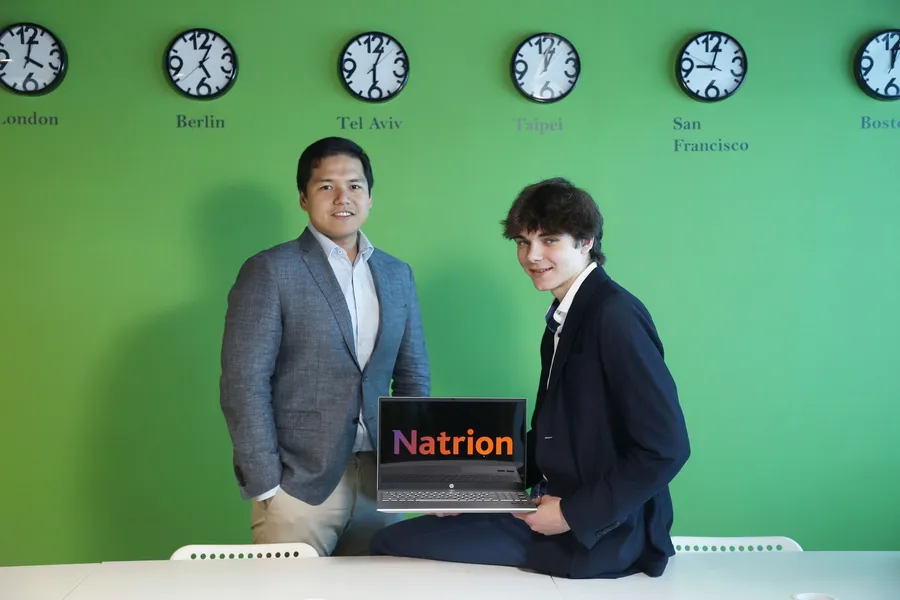
As electric vehicles (EVs) are becoming more popular, people are paying close attention to their batteries. Solid-state battery technology is seen as the ultimate solution for EVs because it promises longer-lasting batteries and better handling of range anxiety than current lithium-ion batteries. But there’s a big challenge—solid-state batteries are hard and expensive to make in large quantities because they require new ways of manufacturing them.
In response to this challenge, Natrion, founded by Alex Kosyakov at just 16 years old, has come up with a solution. Their Lithium Solid Ionic Composite (LISIC) improves battery safety and efficiency. LISIC stands out because it can fit smoothly into current battery production methods meant for lithium-ion batteries. This makes solid-state batteries much cheaper to produce, paving the way for practical use.
How did a startup, led by a young founder, manage to develop safer and more efficient batteries at a large scale for the future of electric vehicles?
Enhancing Battery Safety: The Promise of Solid-State Technology
Solid-state batteries aim to enhance battery stability by reducing the liquid component of the electrolyte. Unlike current lithium-ion batteries, which are prone to catching fire above 60 degrees Celsius, LISIC's solid-state batteries can withstand temperatures up to 250 degrees Celsius without the risk of self-ignition.
Moreover, solid-state batteries offer a 50% increase in energy density compared to batteries of the same weight or size. "This means that in electric vehicles, batteries of equivalent size can travel 50% further on a single charge," explained Natrion's founder Alex Kosyakov.
Solid-state batteries promise stability and higher energy density, driving intense development efforts. While many teams have succeeded in the lab, most of these technologies need changes to how batteries are made before they can be made in large quantities. These changes are expensive, making it hard to sell solid-state batteries.
"The solid-state batteries that everyone is excited about today seem revolutionary, but the real question is: How much will people pay for them?" asked Dah-Shyang Tsai, chief battery scientist at Natrion.
Natrion aims to sell solid-state batteries using their LISIC material as the solid electrolyte. Unlike other ways, LISIC lets them make batteries without changing how lithium-ion batteries are made, cutting costs a lot.
What is LISIC ?
Natrion's LISIC technology represents a leap forward in battery innovation, especially for electric vehicles (EVs). Unlike traditional lithium-ion batteries, which use liquid electrolytes prone to overheating and safety risks, LISIC employs a solid-state electrolyte that enhances stability and safety. This advanced material can function effectively in temperatures ranging from -50°C to 250°C without the risk of combustion, offering reliability even in extreme conditions.
Since its beginning in 2018, Natrion has been dedicated to advancing battery technology. Initially, their goal was to create backup sodium solid-state batteries for renewable energy devices like solar panels. However, they discovered that the supply chain for sodium batteries was not well developed.
"Despite sodium being about 3,000 times more abundant than lithium in the Earth's crust, our ability to extract lithium is currently much better than our ability to extract sodium," Alex Kosyakov explained. "We couldn't compete with lithium batteries in terms of cost as we had initially hoped."
Realizing that sodium batteries couldn't achieve the market scale they wanted, Natrion shifted its focus. They decided to apply their core solid-state battery technology to lithium-ion batteries, aiming at the more lucrative high-end market.
Currently studying materials engineering at the University of Illinois at Urbana-Champaign, 22-year-old Alex Kosyakov admitted he never thought he would start a company. However, he believes it’s the best way to see his technology in use. "I love this technology and want to see it utilized by everyone," he said.
"Our LISIC material combines the best qualities of various electrolytes, ensuring it maintains optimal ion content and high conductivity," explained Duke Shih, Materials Scientist & Engineer at Natrion.
Moreover, LISIC's manufacturing process aligns seamlessly with existing lithium-ion battery production methods. This compatibility allows large-scale battery factories to integrate LISIC without needing costly equipment or process changes, thereby significantly reducing production costs for solid-state batteries. Natrion positions itself not merely as a battery manufacturer but as a material supplier.
In a recent milestone, Natrion secured $2 million in seed funding, with backing from prominent investor Mark Cuban. This investment underscores confidence in Natrion's vision to advance battery technology, aiming to revolutionize not only EVs but also consumer electronics. How will Natrion's innovative approach reshape the future of battery technology, from electric vehicles to consumer electronics, and what role will LISIC play in this transformation? As Natrion looks towards expanding its presence globally, particularly in Asia through initiatives like Garage+ in Taiwan, the team remains committed to shaping a greener future through innovative battery solutions.
©2026 Business Next Media Corp. All Rights Reserved. No.102, Guangfu S. Rd., Da'an Dist., Taipei City 106, Taiwan