©2026 Business Next Media Corp. All Rights Reserved. No.102, Guangfu S. Rd., Da'an Dist., Taipei City 106, Taiwan
Hope4Care Brings Accessible Rehabilitation with Remote Monitoring and Virtual Therapy
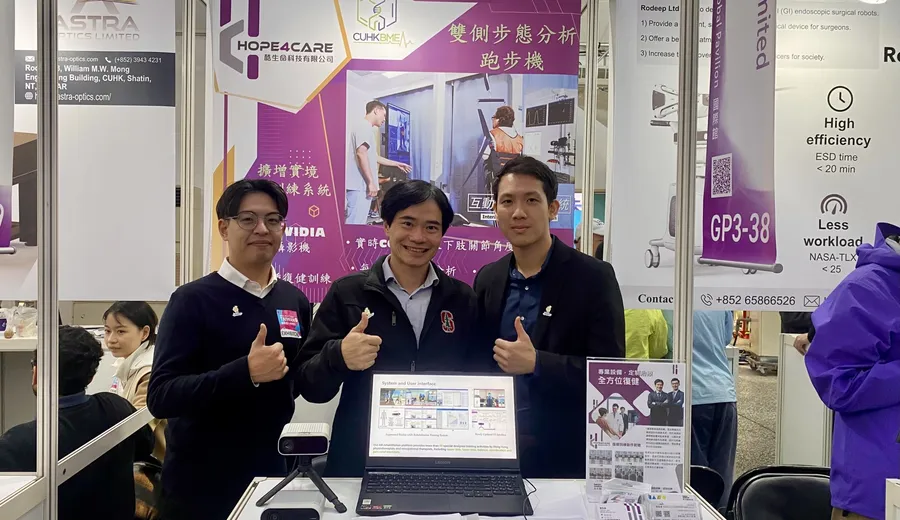
Traditional therapy often requires patients to visit clinics regularly, which can be time-consuming, inconvenient, and difficult for those with limited mobility. But what if technology could change all that? What if patients could access effective, engaging rehabilitation right from the comfort of their own homes? Hope4Care is making this possible by combining augmented reality (AR), 3D body tracking, and real-time feedback to create a more accessible, efficient path to recovery.
How does this technology work, and what makes it stand out from traditional rehabilitation methods?
Revolutionizing Rehabilitation with AR and 3D Body Tracking
Hope4Care’s platform uses augmented reality and 3D body tracking to create an interactive and immersive rehabilitation experience. By tracking a user’s movements in real-time, the system provides immediate feedback to ensure exercises are performed correctly. This approach not only increases patient engagement but also improves the effectiveness of rehabilitation, making the process more interactive and accessible.
The platform’s motion analysis feature offers real-time corrective feedback, which helps patients avoid errors and reduce the risk of injury. This is especially valuable for patients who might struggle to know if they are performing exercises correctly with traditional methods. Acting like a virtual coach, Hope4Care guides users step by step, ensuring proper form and effectiveness.
Simple and Easy: Bringing Home-Based Rehab to All User
The platform is especially useful for individuals recovering from neurological disorders or physical injuries. With personalized rehabilitation, the system adjusts to each person’s progress, making recovery easier and more efficient.
For healthcare professionals, Hope4Care offers remote monitoring features that allow them to track patients’ progress from a distance. This is particularly valuable for patients in remote areas or those with limited access to specialized care, ensuring that rehabilitation continues smoothly outside of the clinic.
Hope4Care is unique because it offers flexible, home-based rehabilitation that can be used by people with varying levels of technology skills. Unlike traditional therapy, it doesn’t require regular clinic visits, making it accessible for those with mobility challenges. Raymond Tong, the founder of Hope4Care shares "Some of our patients have conditions that make it difficult for them to go out for therapy. They may use wheelchairs, but traveling to a clinic is often a hassle, and it’s very expensive. Now, with our technology, they can perform rehabilitation exercises at home, sitting comfortably in their wheelchair. It allows them to do important training safely and effectively, which is far better than doing nothing at all at home." The platform works closely with healthcare professionals to ensure patients receive expert-guided, personalized care. It’s designed to adapt to individual needs, making rehabilitation more convenient and effective for everyone.
How Raymond Tong is Shaping the Future of Rehabilitation at Hope4Care
Raymond Tong has a background as a biomedical engineer and is the Chair of the Department of Biomedical Engineering at The Chinese University of Hong Kong. With his background in biomedical engineering and rehabilitation technology, he has guided the company’s efforts to integrate advanced technology with patient-centered care, focusing on making rehabilitation more accessible and effective.
The company has developed a business model focused on partnerships with healthcare providers. Instead of selling directly to individual patients, Hope4Care sells its platform to healthcare centers, which then incorporate the system into their treatment protocols. This ensures the technology is used professionally, under the supervision of trained therapists.
Hope4Care Expands to Taiwan and Strengthens Rehab Solutions at Home and in Clinics
Currently, Hope4Care is collaborating with 35 centers across Hong Kong and has recently expanded to Taiwan, where the platform is steadily being adopted by more clinics. These partnerships help ensure that patients have access to the technology both at home and in clinical settings, offering flexible support for rehabilitation. The platform also includes telemedicine capabilities, enabling healthcare providers to remotely monitor patient progress, ensuring continuous care regardless of the patient’s location.
Raymond Tong explains, "We decided to come to Taiwan because of our long-standing collaboration with local partners and the strong potential we see in the Taiwanese market. Like Hong Kong, Taiwan has a significant number of stroke patients, and our technology, especially the robotic hand, has proven effective in treating them." He adds, "Over the past decade, we've built strong relationships with Taiwanese businesses, and now we aim to deepen these ties by introducing our products and solutions here. Taiwan offers an excellent opportunity to advance new technologies, and we believe it’s the ideal place to help improve healthcare outcomes, particularly in the rehabilitation of stroke patients."
Hope4Care’s gamified rehabilitation exercises include scores, levels, and rewards, which help keep patients motivated and engaged throughout their recovery. By making rehabilitation more enjoyable, it encourages patients to stick to their therapy, improving consistency and outcomes.
The platform’s multilingual support ensures that it is accessible to a global audience, making rehabilitation available to individuals from different backgrounds and regions, particularly those who might otherwise lack access to such technology.
Hope4Care combines AR, 3D body tracking, and real-time feedback to provide a more interactive and effective rehabilitation experience. The platform supports both home-based and clinical rehabilitation, offering a flexible approach to recovery. With features like gamified exercises, remote monitoring, and personalized programs, Hope4Care aims to improve patient engagement and accessibility in rehabilitation.
©2026 Business Next Media Corp. All Rights Reserved. No.102, Guangfu S. Rd., Da'an Dist., Taipei City 106, Taiwan