©2026 Business Next Media Corp. All Rights Reserved. No.102, Guangfu S. Rd., Da'an Dist., Taipei City 106, Taiwan
Decoding Gastric Waves: Predicting Drug Side Effects with AI and Microchips
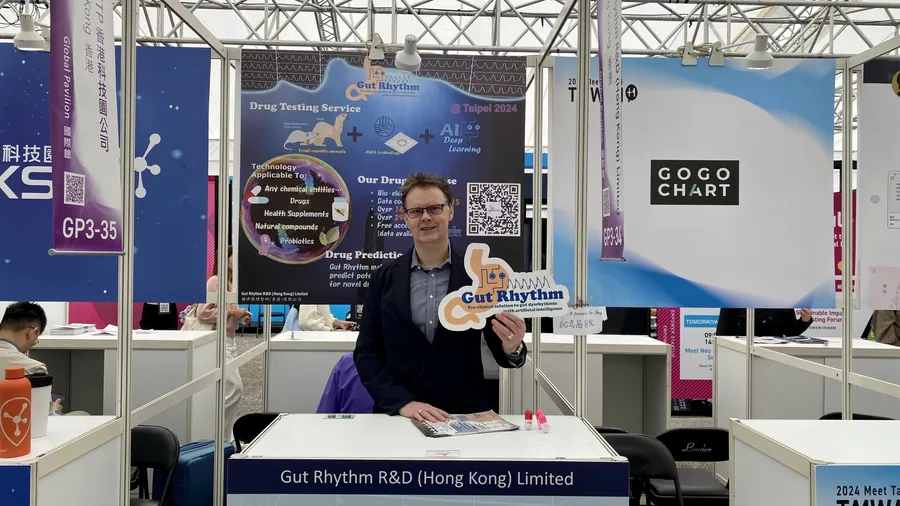
Imagine spending millions of dollars on developing a new drug, only to discover during clinical trials that it causes nausea and vomiting, making it unsuitable for human use. It's a risk many pharmaceutical companies face, and one of the top reasons why drugs are discontinued.
But what if there were a way to predict this early in the development process, before millions are invested and before animal testing fails to give you the answer?
Gut Rhythm, a startup co-founded by Dr. John A. Rudd and Julia Y.H. Liu is combining AI, deep learning, and cutting-edge microchip technology to revolutionize how we predict and prevent one of the most common and costly side effects of drugs: nausea and vomiting.
But what makes it different from traditional drug testing methods? And why is this technology so important for the future of drug discovery?
How AI Can Predict Nausea and Vomiting in Drug Development
For decades, scientists have struggled with predicting whether a drug will cause nausea and vomiting in humans until it's too late. Why is that? Because many of the animals used in drug testing, like mice and rats, don’t vomit. As a result, testing on these animals can't replicate the critical human side effect.
Dr. Rudd explains, “In drug discovery, nausea and vomiting are among the top reasons why drugs are discontinued. However, we’ve always faced a major issue: many animals used for testing don't vomit, making it difficult to predict if a drug will cause nausea and vomiting in humans.”
So, how can researchers address this problem? That’s where Gut Rhythm’s approach comes in. Instead of relying on animals, Gut Rhythm uses real gastrointestinal tissue placed on a microchip. This tissue, including parts of the stomach, duodenum, and colon, is analyzed for how it reacts to drugs, specifically looking for patterns of electrical activity called "gastric slow waves."
What Are Gastric Slow Waves and Why Do They Matter?
These slow waves are electrical signals that regulate the motility patterns of the gastrointestinal tract, which help move food through the stomach and intestines. By recording how drugs impact these waves, Gut Rhythm can predict whether a drug might cause nausea or vomiting.
“It’s a unique fingerprint of how the activity in the stomach and intestines changes when a drug is introduced,” says Dr. Rudd. “Since the gastrointestinal tract contains neurons, immune cells, and smooth muscle cells, the way a drug alters these slow waves can give us a deep understanding of its potential side effects.”
Using a proprietary database of over 300 drugs, Gut Rhythm can match the reactions of new drugs to known profiles. If a new drug clusters with those that are known to cause nausea or vomiting, it can give scientists an early warning sign—saving time, money, and resources.
Could This Technology Transform Drug Development?
Traditional methods for testing drug side effects are not only slow but also costly. Animal testing can take months and often requires multiple animals, leading to ethical concerns and high expenses. In contrast, Gut Rhythm’s system can profile a drug’s effects in just two to three days—and without the need for animal testing.
This could save pharmaceutical companies large amounts of money while also reducing their environmental and ethical footprint. But more importantly, it could revolutionize the way we develop and test drugs for human use.
Dr. Rudd shares, “If we can help drug developers identify potential issues early, they can make better decisions faster, and the drugs that do make it to clinical trials will have a much higher success rate.”
How Is AI Changing the Drug Discovery Process?
Gut Rhythm’s approach also relies heavily on AI and deep learning to analyze the data. By using AI, the company can extract even more insights from the data and continually improve the accuracy of its predictions.
Dr. Rudd met Julia Y.H. Liu when she was a PhD student of his. Since then, Julia has worked closely with him, helping the company use advanced techniques in their research. “She’s the talent behind this project,” Dr. Rudd says. “She’s helped build the AI models that allow us to profile thousands of compounds more quickly and efficiently, giving us a better chance at detecting side effects earlier in the process.”
What’s Next for Gut Rhythm?
Looking ahead, Gut Rhythm plans to expand its reach. The company has already partnered with over 30 pharmaceutical companies, including several major ones in Europe and Japan. Dr. Rudd is eager to explore opportunities for collaboration with more global companies and research institutions.
“We’re hoping to connect with pharmaceutical companies worldwide, not just in Europe or Japan. The potential for this technology is vast,” he explains.
Moreover, the company is aiming to secure investment to grow its database and refine its predictive capabilities. The team, which currently has around 12 members, is hoping that increased funding will allow them to expand their research, develop their platform further, and eventually move into their own dedicated facilities.
“We are renting space at the university for now, but our goal is to become self-sufficient and establish our own independent research center,” Dr. Rudd shares.
Dr. Rudd’s work is part of a larger push to make drug development faster, more efficient, and less reliant on animal testing. But the impact could be even broader—beyond just nausea and vomiting. As the technology advances, it could help identify other side effects as well, such as weight loss, anxiety, or even more serious conditions that might occur during drug development.
How AI is Making Drug Development Faster and Safer
AI is transforming the way we develop and test new medicines, and Gut Rhythm is at the forefront of this change. By using AI to predict side effects like nausea and vomiting before human trials even begin, the company is making drug development faster, safer, and more ethical.
This technology has the potential to save time, money, and resources, while reducing the need for animal testing. As more companies adopt Gut Rhythm’s approach, it could revolutionize drug development, leading to safer and more effective treatments for people.
Looking ahead, AI-powered platforms like Gut Rhythm’s could allow us to predict a drug's side effects long before human trials. This could make drug development not only more reliable but also more ethical, saving lives and reducing costs. As AI continues to improve, we may soon live in a world where predicting drug side effects becomes faster, easier, and more accurate.
©2026 Business Next Media Corp. All Rights Reserved. No.102, Guangfu S. Rd., Da'an Dist., Taipei City 106, Taiwan