©2026 Business Next Media Corp. All Rights Reserved. No.102, Guangfu S. Rd., Da'an Dist., Taipei City 106, Taiwan
What TSMC's $100 Billion U.S. Investment Means for Taiwan's Semiconductor Future
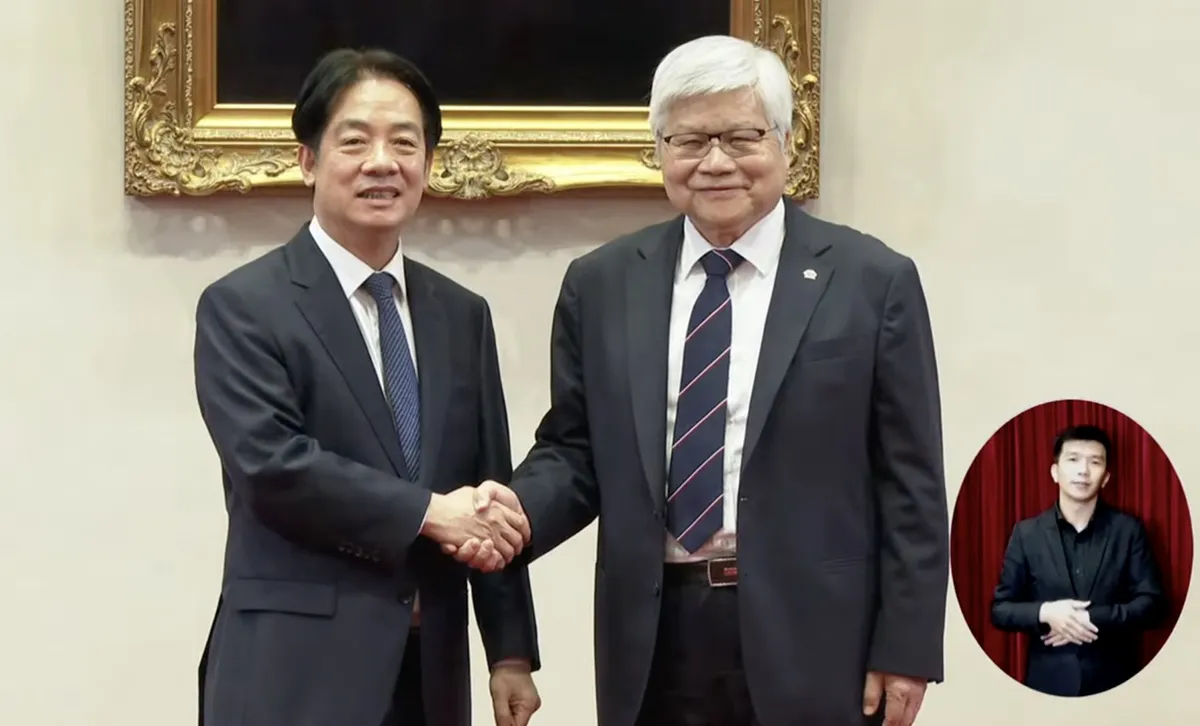
Taiwan Semiconductor Manufacturing Company (TSMC), the world’s largest independent semiconductor foundry, has recently made headlines with an announcement that it will significantly increase its investment in the United States. The company plans to invest $100 billion to build three wafer fabs, two advanced packaging plants, and a research and development (R&D) center in the U.S. This massive investment has sparked concerns, especially among those in Taiwan, with some even raising the question of whether TSMC is becoming more focused on the U.S. than on its home country, leading to the phrase “TSMC is becoming U.S.-focused” (or "美積電" in Mandarin, meaning "American TSMC").
To clear up any confusion and address concerns over the company’s commitment to Taiwan, TSMC’s Chairman, C.C. Wei, returned to Taiwan from the U.S. on March 6. Later that day, he held a press conference with Taiwan’s President Lai Ching-te. The two leaders aimed to provide clarity on the company's expansion plans.
C.C. Wei explained that the increased investment in the U.S. was driven by a strong demand for semiconductors from American customers, rather than by any pressure from the U.S. government. He reassured the public that the U.S. expansion would not impact TSMC’s plans to build 11 new production lines in Taiwan this year, underscoring that the company's commitment to Taiwan remains firm.
Why the New R&D Center in the U.S.?
In addition to addressing concerns about TSMC’s intentions, C.C. Wei explained the rationale behind the company's decision to establish a new R&D center in the United States.
Some had feared that this might result in advanced semiconductor manufacturing technologies being moved out of Taiwan. C.C. Wei made it clear that the new U.S. R&D center, which will employ about 1,000 people, was designed to help U.S.-based production lines operate more independently without having to constantly seek approval or guidance from Taiwan. This is important, as it allows for more efficient operations but does not mean that Taiwan will lose its edge in semiconductor technology. In fact, Taiwan’s R&D center remains much larger, with around 10,000 employees focused on advancing TSMC’s technologies.
C.C. Wei further emphasized that the company’s decision to expand its presence in the U.S. aligns with its global strategy to meet the growing demand for semiconductors. He noted that TSMC’s global investments, including expansions in Japan and the U.S., have always been based on customer demand. "Every investment we make is to meet the needs of our customers," he said, pointing out that TSMC’s earlier expansions into the U.S. were similarly driven by customer needs. He also stressed that the current expansion was prompted by a particularly strong demand from U.S. customers, especially in the automotive and high-tech sectors, where the need for advanced chips is surging.
Addressing some of the criticisms that TSMC's U.S. expansion could be influenced by political pressure from the U.S. government, C.C. Wei firmly stated, "There is no pressure from the U.S. government." He also commented on the growing concerns regarding subsidies provided under the U.S. CHIPS Act, an initiative designed to encourage semiconductor manufacturing in the U.S. C.C. Wei boldly stated that TSMC is not motivated by subsidies but by the desire for fairness and competition. "We are not afraid of competition. TSMC will produce the best chips wherever we set up production lines, and we do not need subsidies to succeed," he added.
TSMC’s U.S. Investment: No Impact on Taiwan's Growth
One of the most important points C.C. Wei made was that TSMC’s expanded investment in the U.S. would not affect its capital expenditures in Taiwan. While TSMC is building three new production lines in the U.S., the company is set to add 11 new production lines in Taiwan this year. "Even with this large investment in the U.S., our production lines in Taiwan are still at full capacity," he stated, highlighting that the company is still struggling to meet the overwhelming global demand for semiconductors.
C.C. Wei also discussed TSMC’s ongoing advancements in semiconductor technology. He pointed out that the company is developing leading-edge processes, such as the 2-nanometer, 1.6-nanometer, and even the 1.0-nanometer process technologies in Taiwan. These technologies are being developed by TSMC’s dedicated R&D teams, which number about 10,000 people. "These are true R&D efforts, and they are the core drivers of the company’s technological leadership," he said proudly.
C.C. Wei further emphasized that the U.S. expansion is not intended to diminish Taiwan’s technological capabilities but to complement them. The U.S. R&D center, while smaller, will enable TSMC’s American operations to be more self-sufficient, without needing to rely on Taiwan for every decision, especially for process improvements.
TSMC’s Dual Commitment to Taiwan and the U.S.
In conclusion, while TSMC's expanded U.S. investment is a significant step in the company’s global strategy, it does not mark a shift away from Taiwan. The company's commitment to Taiwan’s semiconductor leadership remains strong, and Taiwan continues to be the heart of TSMC’s technological innovation.
C.C. Wei’s reassurances at the press conference, along with the Taiwanese government’s support for TSMC’s global growth, highlight the ongoing importance of both countries in the semiconductor supply chain.
©2026 Business Next Media Corp. All Rights Reserved. No.102, Guangfu S. Rd., Da'an Dist., Taipei City 106, Taiwan