©2026 Business Next Media Corp. All Rights Reserved. No.102, Guangfu S. Rd., Da'an Dist., Taipei City 106, Taiwan
TSMC Accelerates Arizona Expansion to Meet Soaring Global AI Demand
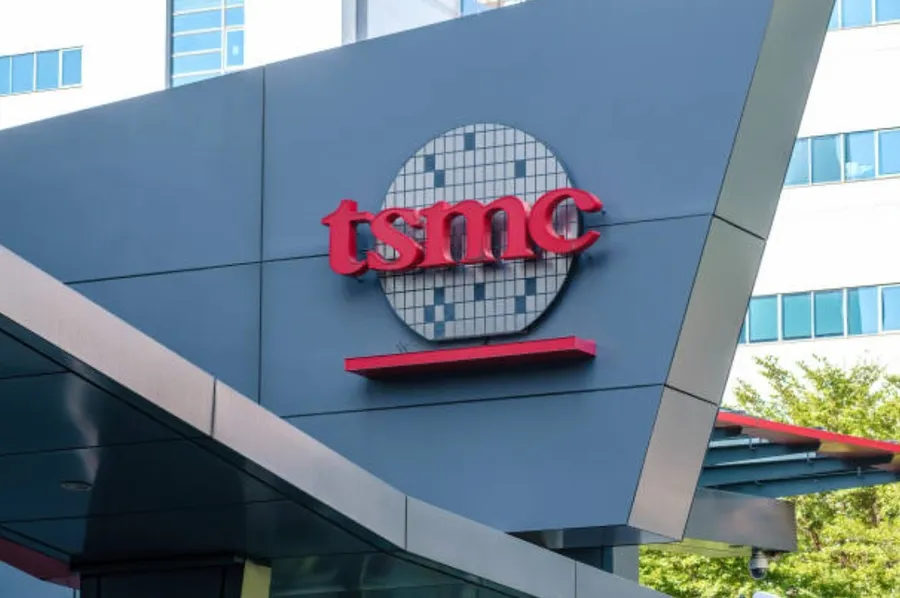
Taiwan Semiconductor Manufacturing Company (TSMC), the world’s largest contract chipmaker, is rapidly building a semiconductor mega-cluster in Arizona, accelerating the construction of its second and third wafer fabrication plants (fabs) to meet booming demand for advanced chips used in artificial intelligence, smartphones, and high-performance computing.
According to Chairman and Chief Executive Officer C.C. Wei, TSMC aims to establish an “independent, leading-edge semiconductor manufacturing cluster” in the United States. “After completion, around 30 percent of our 2-nanometer and more advanced chip capacity will be located in Arizona,” C.C. Wei said during an investor call on July 17.
The company has already completed its second fab, which will use the 3-nanometer process, and is speeding up its timeline to begin production. The first fab began producing 4-nanometer chips in late 2024, with performance yields comparable to those in Taiwan. A third fab, currently under construction, will utilize TSMC’s next-generation 2-nanometer and A16 processes.
Altogether, the initial three fabs represent a US$65 billion investment. But TSMC is not stopping there.
A $100 Billion Expansion to Power the AI Era
In response to relentless demand from American tech giants, TSMC has pledged an additional US$100 billion to build three more fabs, two IC packaging plants, and one research and development center. C.C. Wei emphasized that these facilities are essential for building a fully localized AI chip supply chain in the United States.
“Demand for chips used in AI-related applications remains strong,” C.C. Wei noted, as companies race to build out their AI infrastructure.
TSMC’s Arizona expansion is strategically designed to support U.S. clients, including major players in AI and mobile technology. The two planned packaging plants and R&D center are expected to solidify the entire ecosystem needed for advanced semiconductor production.
Meanwhile, the company’s financial results underline the urgency behind its moves. TSMC reported US$31.7 billion in revenue and a 61 percent profit jump in the latest quarter, reaching a new record. This growth is largely driven by orders for AI chips, with clients racing to secure future production capacity.
Why TSMC’s Global Expansion Comes With a Price
While the benefits of geographic diversification are clear, the costs are beginning to show. TSMC’s Chief Financial Officer Huang Jen-chao, also known as Wendell Huang, has warned that overseas production will reduce the company’s profit margins in the coming years.
“Over the next five years, investments in overseas fabs are expected to dilute the company's gross margin by 2 to 3 percentage points initially and 3 to 4 percentage points later,” Huang Jen-chao said during the same investor conference.
In addition to Arizona, TSMC is ramping up operations in Japan and Germany. Its first fab in Kumamoto, Japan, began producing chips at the end of 2024 using 12-nanometer to 28-nanometer processes. A second fab, which will use 6-nanometer and 7-nanometer technologies, is now expected to begin construction later this year following minor delays related to local infrastructure.
In Germany, TSMC’s fab in Dresden is progressing steadily and will focus on specialty technologies. Back home in Taiwan, the company is building 11 wafer fabs and four IC assembly plants, including new sites in Hsinchu and Kaohsiung that will also use 2-nanometer technology.
TSMC’s bold move into the American market reflects not only its technological leadership but also the shifting geopolitical and economic forces redefining the global semiconductor landscape. The question now is whether Arizona can truly become the world’s next chip capital, or if the road to get there will prove even more complex than the technology itself.
Sources: Taiwan News, CommonWealth Magazine, Focus Taiwan
©2026 Business Next Media Corp. All Rights Reserved. No.102, Guangfu S. Rd., Da'an Dist., Taipei City 106, Taiwan