©2026 Business Next Media Corp. All Rights Reserved. No.102, Guangfu S. Rd., Da'an Dist., Taipei City 106, Taiwan
Dancing With AI: Redefining Taiwan's Place in the Global Value Chain
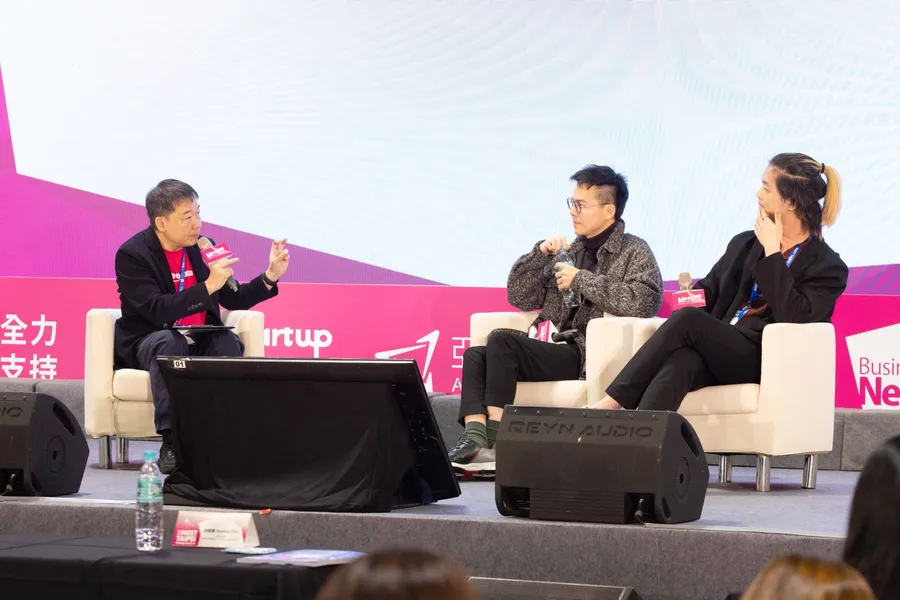
Meet Taipei 2025 opened on November twentieth with a theme that reflected both the energy and the urgency of the global technology landscape. Dancing with AI set the tone for a forum that gathered investors, founders, engineers and corporate leaders to examine Taiwan’s place in the rapidly evolving world of artificial intelligence and semiconductors. Throughout the afternoon, speakers returned to two ideas. Taiwan is becoming more important within the global AI supply chain. At the same time, AI is reshaping what it means to be talent ready in an era defined by speed.
The forum gathered experts from investment, engineering and product backgrounds who each approached AI from a different angle. Their discussions showed how quickly AI is shifting from experimental use to a practical part of business and product development.
Taiwan’s Rising Position in the Global AI Cycle
The forum began with a keynote from Jonathan Lin, Chairman and General Partner of Andra Capital, who described the past two years of AI progress as a dramatic acceleration. Pointing to the shift triggered by ChatGPT, he said that after its launch in November twenty twenty two, “the development in the past two years even surpassed the development in the past sixty years.” He also reminded the audience how quickly adoption unfolded, noting that ChatGPT reached one million users in five days and then one hundred million active users shortly after.
Jonathan Lin walked the audience through what he described as the emerging AI value chain, from processors such as GPUs, TPUs, LPUs and NPUs to the cloud infrastructure and large language models built on top of them. He highlighted that many of the most influential companies shaping these layers are still private, which reflects how early the global AI cycle still is.
He also spoke about Andra Capital’s involvement in the wider Elon Musk ecosystem. “We just completed the merger between X and xAI,” he said, adding that the firm has been invited to participate in developments across SpaceX, Starlink, Neuralink and other related companies. He explained that these projects, which range from social platforms to humanoid robotics, show how quickly the boundaries of AI are expanding.
Turning to Taiwan, Jonathan Lin pointed to the country’s unique position in the global supply chain. He emphasized that nearly all major AI related processors rely on a single manufacturer and used that point to underline the scale of Taiwan’s contribution through TSMC. In his view, Taiwan is no longer only producing chips but is now deeply tied to the infrastructure that powers AI computing centers and the applications built on top of them.
How AI Is Changing Talent and Raising New Expectations
A panel on talent brought together Sophie Chiu, Principal and Head of AI at AppWorks, Trantor Liu, Founder and Chief Executive Officer of Cake, and Catherine Wu, Lead of Product Marketing and Sales Enablement at Crescendo Lab. Their exchange offered a clear view of how AI is reshaping expectations inside teams and across the workforce.
Sophie Chiu noted that AI has not changed the fundamentals of building a company, but it has changed the pace at which people must operate. “If anything changed, I would say the speed of the packaging. You have to be super fast because AI is an amplifier that amplifies everything,” she said. She pointed out that tasks like writing and prototyping now move faster, and individuals who adapt to that rhythm are the ones who perform well.
Trantor Liu described the divide he sees emerging in the workplace. “It is either you can use AI to amplify your efficiency or you could be replaced by it,” he said. He added that this shift is already influencing hiring patterns, especially for junior roles where comfort with AI tools has become essential.
Catherine Wu explained how this transition looks inside Crescendo Lab, a company that operates with what she called an AI first principle. Their teams build products with AI, train with AI and sell AI powered solutions. She said, “People need to trust AI. If they trust AI, they could have the ability to let AI help them increase their efficiency.” For her, the biggest difference between employees who advance and those who hesitate often comes down to mindset rather than technical skill.
Together, their perspectives showed how AI is rewriting the definition of talent. Speed, adaptability and a willingness to work with new tools now hold as much weight as experience.
A Global Partnership and the Future of AI Native Startups
The forum also highlighted international collaboration. Andy Lombard, Founder and Managing Partner of Tesoro Venture Capital, shared insights from Arizona’s fast growing semiconductor and AI landscape. He explained that Arizona has now attracted more than one trillion United States dollars in related investments. He credited TSMC’s presence in the state as a major driver of this growth and described the region as an extension of Taiwan’s semiconductor ecosystem.
Andy Lombard explained how universities, research institutions and global technology companies are contributing to this momentum. He described Arizona State University’s large engineering programs and the University of Arizona’s expertise in optics and photonics. He also highlighted the Mayo Clinic’s partnership with NVIDIA for drug discovery and the work of Barrow Neurological Institute on neural implants.
These connections inspired Tesoro Venture Capital to launch a global platform that will bring about thirty startups per cohort to Arizona for support, mentoring and access to partners. Andy Lombard said he hopes to bring ten to fifteen companies from Taiwan into the program. His message to founders was straightforward. Taiwan has the precision and engineering strength needed for the AI era, and the United States offers scale and new market opportunities.
The forum continued with sessions on enterprise AI scenarios from Chunghwa Telecom and Wistron. A dedicated startup session followed, featuring Yuanlin Lin, Founder and Chief Executive Officer of Zeabur, and Ivan Linn, Co Founder and Chief Executive Officer of Wavv.
Yuanlin Lin described how AI is reshaping expectations for product development and deployment. He explained that developers now expect tools that automate infrastructure work and allow them to move from idea to execution much faster. From his perspective, the startups that grow are the ones that treat speed as a default, not a goal.
Ivan Linn shared how this shift appears in creative and audio driven environments. He noted that customers now assume that platforms will support faster workflows, higher quality generation and integrated intelligence. This raises the bar not only for product features but also for how teams organize their work.
Both founders agreed that the most significant change is the pressure placed on early stage teams. Product cycles are shorter, expectations are higher and the ability to deliver quickly has become essential for competing globally. Their experiences grounded the forum’s broader theme in the daily realities of building an AI native company.
A New Rhythm for Taiwan’s Next Stage of Innovation
This twelfth edition of Meet Taipei showed how quickly the local startup community is adjusting to global shifts in technology and industry. The discussions throughout the forum pointed to clear priorities for the years ahead: stronger international links, faster product cycles and deeper collaboration between hardware, software and emerging founders.
For Taiwan, the combination of semiconductor strength and an increasingly global set of entrepreneurs creates a solid foundation for the next stage of growth. The conversations at the Global Startup Forum reflected a community that is paying close attention to these changes and preparing to act on them.
Meet Taipei closed with a sense of focus rather than celebration. The challenges are real, but so are the opportunities, and the people gathered at the event made it clear they intend to compete for them.
©2026 Business Next Media Corp. All Rights Reserved. No.102, Guangfu S. Rd., Da'an Dist., Taipei City 106, Taiwan