©2026 Business Next Media Corp. All Rights Reserved. No.102, Guangfu S. Rd., Da'an Dist., Taipei City 106, Taiwan
Turning the Night Sky into an Anime Stage as Redcliff Expands Abroad
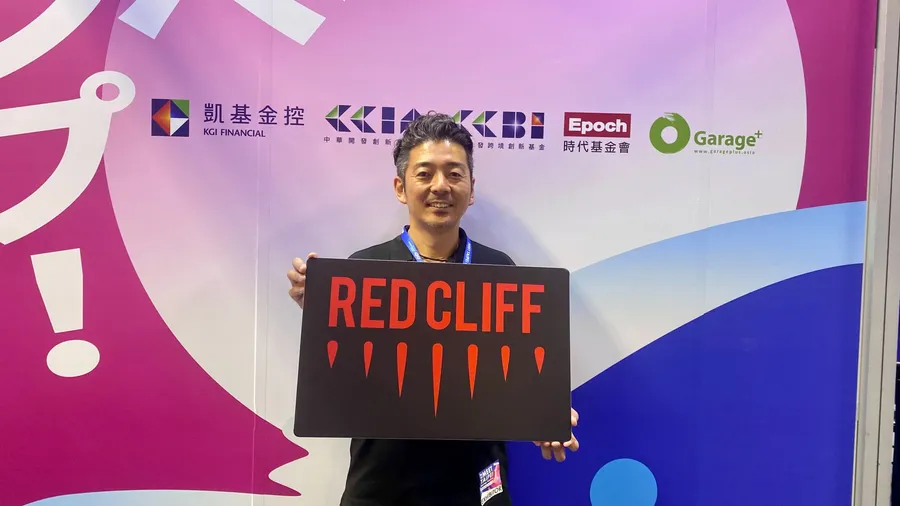
In just a few years, drone shows have become a familiar sight across Japan, from sports stadiums to major brand campaigns. Redcliff, a Tokyo-based company founded in 2019, is one of the teams bringing these large-scale aerial performances to life. The company creates each show from the first visual idea to the last light in the sky, adapting every project to its client and audience.
Instead of fireworks or traditional light displays, crowds now look up to see hundreds or even thousands of drones moving in careful formation, creating logos, characters, or moving animations above city streets and festival grounds. As demand grows for new types of public events, Redcliff has found its place at the intersection of technology, entertainment, and local culture—quietly changing what people expect from the night sky.
From Regional Projects to Night Sky Performances
Kazuma Yamamoto, Chief Operating Officer of Redcliff, comes from a background in marketing and management. Before joining Redcliff, he worked on regional revitalization projects across Japan, focusing on bringing new energy and activity to rural areas. “I studied marketing and management, and my recent work has been centered on regional revitalization in Japan,” Kazuma Yamamoto explained.
The idea of using drone shows for local development came to him at a fireworks festival in Yatsushiro, Japan. “It was the first time I experienced a drone show at the fireworks festival in Yatsushiro. I was really surprised to see that something like this was possible,” recalled Kazuma. That experience led him to Redcliff, where he saw the potential for drone shows to help towns attract visitors and connect traditional celebrations with new technology.
As the team experimented, Redcliff started developing new effects to go beyond classic nighttime displays. By equipping drones with colored smoke or small firework devices, they can create shows that work not just at night, but also during the day. “We are now developing drones that can create not just lights, but also fireworks and colored smoke, so our shows can be performed even during the day,” said Kazuma. For regions where summer fireworks are a tradition, this shift means festivals and events are no longer limited to certain times or weather conditions.
Building a Drone Show from Scratch
Redcliff’s team designs each show from scratch, programming the flight of every drone and creating visual content that matches each client’s needs. “We’ve done shows for large Japanese companies, including beverage brands like Oronamin C and Coca-Cola,” stated Kazuma Yamamoto. The company also works regularly with city governments or regional organizations that want to promote their area with a special event.
Redcliff sometimes works on projects involving hundreds or even thousands of drones. “Our largest show used over 8,000 drones, and internationally we’ve participated in performances with up to 16,000 drones,” noted Kazuma. But for the team, size is only part of the process. They also pay close attention to both large shapes and fine details. “We put a lot of effort into making our animations both large in scale and detailed in design. For example, we can create detailed images of characters or logos, as well as huge shapes that fill the sky,” he explained.
Redcliff also works regularly with animation and game brands. “We work with animation IPs, and our shows with anime characters are very popular, especially in Japan,” Kazuma said. These collaborations reflect the close connection between pop culture and public events in the country, and are part of what the team hopes to develop further as they expand in Asia.
Each show comes with its own set of technical and practical limits. “We have to apply for permission to use the airspace for each show. Not every place is available, and approval is required every time,” Kazuma pointed out. Weather conditions matter too. “As long as the rain isn’t heavier than 2 millimeters or the wind isn’t above 5 meters per second, we can perform,” he said. Most performances are designed to last between 10 and 25 minutes, which fits well with the usual flight time of the drones. “Right now, the maximum flight time for a drone is about 25 minutes, but we aim to create the best possible show within that limit,” he added.
Even when conditions are right, there are still details to consider. One example is managing mobile phone signals in crowded places. “In places with a lot of people, the mobile phone signals can interfere with drone communication. In Japan, the frequencies are similar, so it’s something we have to manage carefully,” Kazuma explained. Every maneuver is carefully pre-programmed, and the team does plenty of rehearsals to keep everything running smoothly. “We do many rehearsals to check everything and prevent problems,” he said. Occasionally, a technical issue can occur, but it remains rare. “Sometimes a drone may drop out, but it is rare,” he added.
For Kazuma, the effect of a drone show is hard to put into words. “There’s a saying: seeing is believing. It’s very hard to communicate the feeling of a drone show with words. You really need to see it with your own eyes or at least watch a video,” he said.
Bringing the Shows Abroad
Redcliff has a team of around 53 people, mostly based in Japan, along with a few members from overseas. “Right now, we have 53 people, most are Japanese, but we also have some overseas team members,” Kazuma mentioned. The team has worked on projects such as the 20th anniversary of Hitachi City in Ibaraki Prefecture and collaborations with anime and gaming brands.
Looking ahead, the company is interested in working more internationally, especially with partners in Taiwan. “There are two main things we want to do in Taiwan. One is to help Taiwanese companies promote themselves in Japan using drone shows. The other is to find partners in Taiwan so we can create high-quality shows with animation content together,” Kazuma explained. The idea is to build connections in both directions—supporting Taiwanese companies that want visibility in Japan and bringing new events to audiences in Taiwan.
Redcliff is also open to new partnerships and investments as it grows. “We would be very happy to work with foreign venture capital, not just those from Taiwan,” he said. For now, the focus is on building collaborations and creating shows that combine technical work with new visual experiences.
The company is still young. Even so, their drone shows are already part of how many events take place in Japan, and might soon be seen in new places in Asia.
©2026 Business Next Media Corp. All Rights Reserved. No.102, Guangfu S. Rd., Da'an Dist., Taipei City 106, Taiwan