©2026 Business Next Media Corp. All Rights Reserved. No.102, Guangfu S. Rd., Da'an Dist., Taipei City 106, Taiwan
Tesoro VC Connects Arizona and Taiwan in the Race for Global Deep Tech Innovation
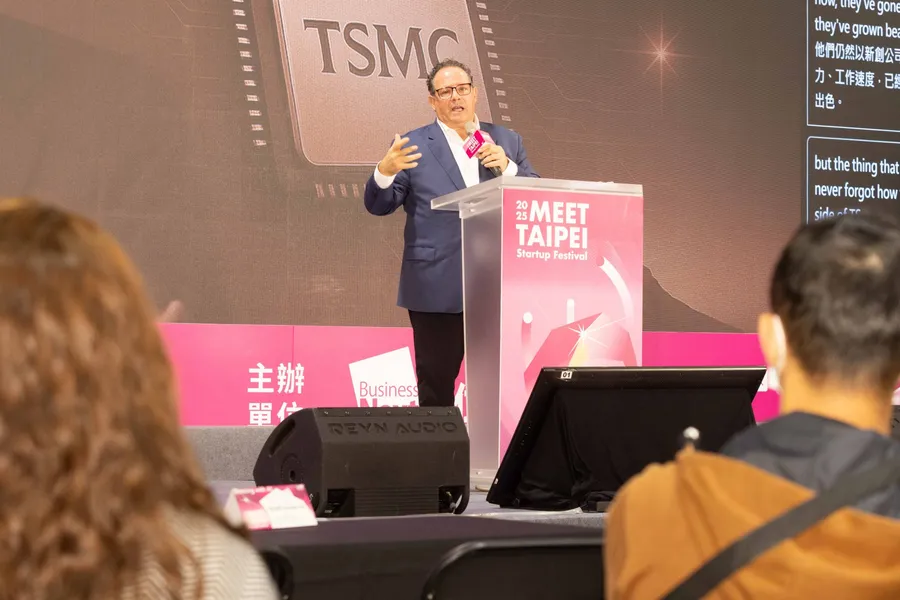
When people think of the next big tech hub, Arizona is probably not the first place that comes to mind. Yet, a transformation is underway in the desert, drawing the world’s attention to this region as a center for advanced manufacturing, artificial intelligence, and semiconductors. Andy Lombard, founder and managing partner of Tesoro Venture Capital, has watched Arizona evolve firsthand—from the early days of Motorola’s factories to the region’s current surge in global investment.
“Arizona is the next frontier for America, for AI and semiconductor,” Lombard remarked. He explained that the region’s connection to the semiconductor industry runs deep, with companies like Motorola and Intel establishing major operations in the Phoenix area decades ago. For years, Arizona’s role in the global chip sector was overshadowed as manufacturing moved overseas, but that began to change in recent years. “Bringing back some of the manufacturing capabilities to the United States became national security,” Lombard commented. According to him, Arizona’s rare mix of affordable land, the country’s largest nuclear power plant, reliable water supply, and a strong university system now makes it one of the most attractive places for high-tech manufacturing.
Arizona has also become a proving ground for innovation. “We were the first autonomous driving place in the world. Waymo, number one in Arizona,” Lombard noted. He pointed out that the state is now home to major data centers run by OpenAI, Microsoft, and Oracle, as well as a booming talent pipeline. “Arizona State University is the largest university in the United States. It has 190,000 students. It graduates 30,000 engineers a year,” he shared. The state’s affordability and outdoor lifestyle make it a draw for both established tech giants and startups eager to scale.
Tesoro VC and TSMC Nurture Deep Tech Talent
Against this backdrop, Tesoro Venture Capital and TSMC have launched a partnership aimed at accelerating the next generation of deep tech startups. Their new accelerator program will select around 60 startups each year, offering resources from advanced chip design to manufacturing and packaging support. Lombard emphasized the unique nature of this effort. “I only decided to do it if TSMC would partner with me,” he recalled. “If they did not partner, I would not have done this.”
This program is not limited to hardware. Tesoro’s team is actively seeking out software startups as well, as long as their technologies reach beyond surface-level solutions. “We will accept AI companies and deep tech. It is not just semiconductor and it is not just hardware,” Lombard emphasized. He explained that the future belongs to founders who can blend software and hardware—whether that means robotics, data centers, autonomous vehicles, or advanced medical applications. “They need to learn from each other,” he stated, describing how the accelerator is designed to create those connections.
When evaluating candidates, Lombard believes the team matters most. “The most important factor that we will look at is the team,” he stated. Experience is valuable, but so is resilience. “We love companies also that started a company and maybe did not succeed, but they learned a lot. In the United States, we call this scar tissue.” He went on to explain that persistence and the willingness to push through challenges are often what set successful founders apart.
The accelerator’s vision also includes support for “dual-use” startups—those building solutions that serve both commercial and defense markets. “A lot of the products that we create and the technologies are used for commercial growth, but also can be used in products that are for national security, defense, and others,” Lombard explained. By connecting startups to government partners, Tesoro VC aims to help them unlock new growth paths that may not be available in their home markets.
A Bridge for Taiwanese and Global Startups
For many Taiwanese founders, the question is why they should look beyond Taiwan, with its world-class engineering and supply chain ecosystem. Lombard’s answer is clear: “The United States is the largest market in the world. You need Taiwanese companies to be able to make it,” he explained. While technical excellence is crucial, startups need to adapt their product and communication for global markets if they hope to scale. “Your pain point, your problem, your product solution have to be articulated, communicated to the world,” Lombard explained.
The accelerator is designed to help international founders, including those from Taiwan, navigate this transition. Lombard and his team focus on helping companies refine their messaging, prepare for US venture capital standards, and recruit top local talent. “To be successful in the United States, you need to be able to take your product and communicate that to purchasers, customers, and markets in the United States,” he noted.
He also encourages founders to look at opportunities created by the US government’s focus on national security and dual-use technology. “All companies, I believe, especially in Taiwan, with the positive relationship with the United States, should always consider the applications and products that they are producing, and how might those also be used for national security, national defense purposes,” Lombard commented.
Arizona is now emerging as a strategic landing pad for ambitious startups from Taiwan and Asia looking to expand globally. Lombard’s advice is straightforward: “If you want to be number one in any technology and say that you can just do it in one country alone, I do not believe you are going to succeed,” he reflected. For founders who are ready to think globally, Arizona is opening doors—and the opportunities are only getting bigger.
©2026 Business Next Media Corp. All Rights Reserved. No.102, Guangfu S. Rd., Da'an Dist., Taipei City 106, Taiwan