©2026 Business Next Media Corp. All Rights Reserved. No.102, Guangfu S. Rd., Da'an Dist., Taipei City 106, Taiwan
Bridging Taiwan and Arizona for the Next Wave of Hardware Innovation
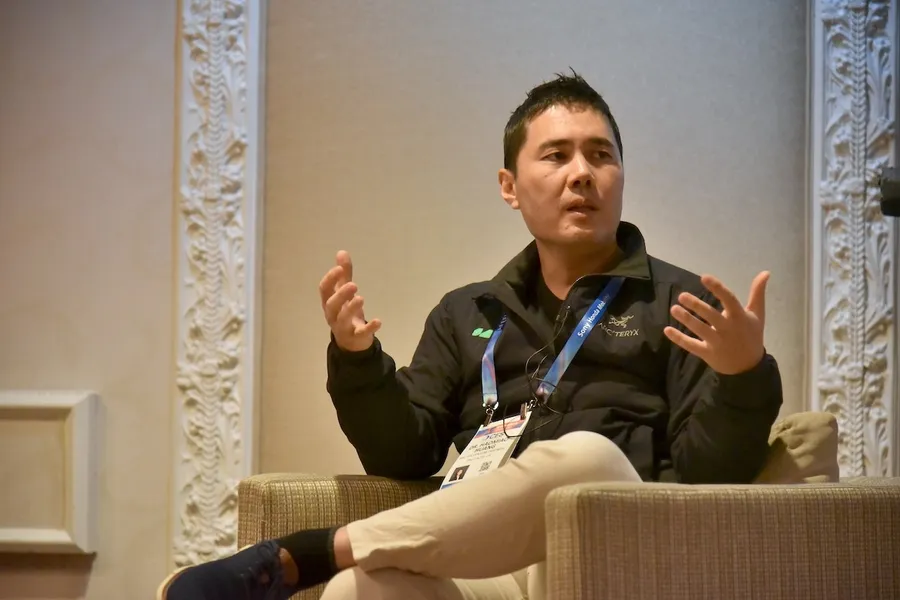
Silicon Valley may be famous for hardware, but in the past two decades, venture capital has shifted its focus almost entirely to software. At a recent Taiwan–Phoenix Tech Matchmaking event, Haomiao Huang, founding partner of Matter Venture Partners, put it bluntly: “Silicon Valley has invested far too little in hardware startups over the last 15 to 20 years.”
For Huang, this is a missed opportunity, especially as artificial intelligence depends more and more on advanced hardware. It’s why he left a major VC firm to start Matter Venture Partners, a fund built to support the next generation of deep tech, robotics, semiconductors, and physical AI. And it’s why he believes Taiwan’s hardware strengths, combined with new opportunities in Phoenix, could shape the future of tech.
What Silicon Valley Missed, Taiwan Is Grabbing
While some large VC funds in Silicon Valley have occasionally backed hardware, Huang explains that hardware is often treated like a side project. At a fund managing $800 million, only a small fraction ever goes to deep tech. This creates a major gap. Software founders can instantly scale on Amazon Web Services or follow tried-and-true formulas. Hardware founders working on chips or robotics, meanwhile, face tough obstacles and often feel isolated.
That’s why Matter Venture Partners was created to fill this gap. The first fund totaled $311 million, with a second on the way. The firm invests in companies building semiconductors, robotics, and advanced manufacturing—areas that most Silicon Valley VCs avoid.
What makes Matter unique is its lineup of limited partners, including TSMC, ASML, Quanta, MediaTek, GE, and Boeing. These industrial giants, despite record profits and market caps, still feel anxious about missing the next big thing. Huang calls it “the winner’s curse.” With so much value tied to a single sector or product, they fear being left behind by the next wave of innovation. For them, investing in a venture fund is a way to tap into the crazy ideas that might never make it past internal bureaucracy.
Huang sees this as a moment of opportunity for Taiwan’s supply chain. He points to Path Robotics, a Matter portfolio company, as an example. With help from Matter, the company switched from expensive US and Japanese components to Taiwanese suppliers, cutting its bill of materials by half and boosting productivity by 2.5 times. “You get Japanese-level quality at a much lower price,” Huang says, “and honestly, working with Taiwanese teams is just more fun.”
Redefining Hardware Value Beyond Cheaper Parts
It’s tempting to think hardware’s advantage is only about cost. Huang disagrees. “ROI is not just about cost. It’s about time to market,” he says. In sectors like data centers and defense, where customers may have backlogs of three or five years due to a shortage of skilled workers, companies are willing to pay a premium for automation if it means getting products out the door faster.
Huang urges founders not to settle for being a static replacement for cheap labor. Instead, he challenges hardware startups to take a page from TSMC: help your customers do twice as much at half the cost every two years. That’s how you build a moat and a sustainable business—not just by swapping in a machine for a five-dollar-an-hour worker.
Phoenix and Taiwan Are Building the Next Hardware Boom
The renewed focus on hardware is not happening by accident. As TSMC builds new fabs in Arizona, Phoenix is quickly becoming a magnet for semiconductor and manufacturing talent. At the event, Phoenix Vice Mayor Ann O’Brien revealed that the region expects a trillion dollars of investment over the next six years. The city is already home to 260 semiconductor companies, six new chip fabs, two advanced packaging centers, and TSMC’s R&D hub. Venture capitalists like Andy Lombard of Tesoro VC are working with local partners to attract the next generation of hardware startups.
Industry leaders from Taiwan are responding. Lewis Chen, executive director at the Industrial Technology Research Institute, noted that Taiwan sent 83 suppliers to CES this year, aiming to blend Taiwan’s world-class manufacturing with American innovation. Allen Fan, director of Startup Island TAIWAN, announced that a new partnership—the Taiwan–Phoenix AI and Semiconductor Innovation Alliance—would be officially launched in Taipei next week.
All these collaborations are about lowering the barriers for hardware startups, whether in technology, cost, or market access. Haomiao Huang sums it up with a dose of realism: “We try to lower the barriers, but I don’t think you can ever remove them completely. It’s those very challenges that make this business valuable.”
Silicon Valley may have forgotten how high the walls are for hardware founders. Taiwan, on the other hand, has never lost sight of the climb—and that’s why it just might lead the next era of innovation.
©2026 Business Next Media Corp. All Rights Reserved. No.102, Guangfu S. Rd., Da'an Dist., Taipei City 106, Taiwan