©2026 Business Next Media Corp. All Rights Reserved. No.102, Guangfu S. Rd., Da'an Dist., Taipei City 106, Taiwan
What Alex Honnold’s Taipei 101 Climb Really Teaches Us About Risk, Preparation, and Pushing Limits
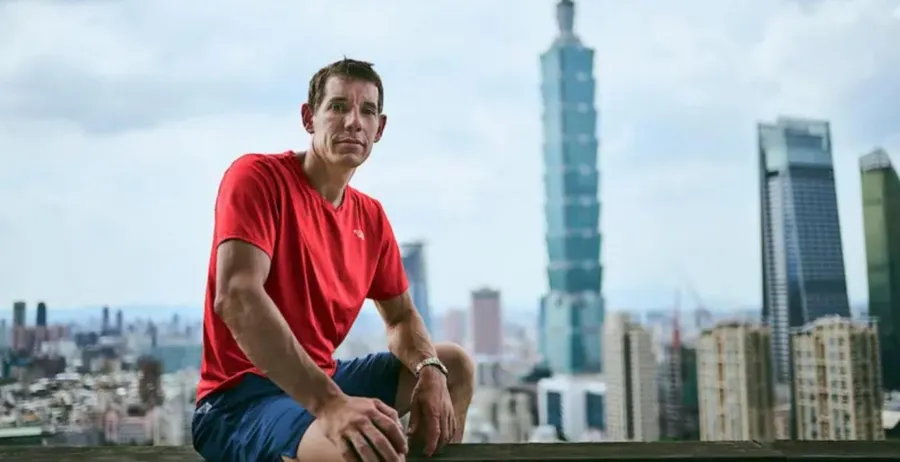
On January 25, 2026, legendary American climber Alex Honnold accomplished a breathtaking feat by scaling the 508-meter Taipei 101 without ropes or safety equipment. Netflix broadcast the climb live across the world. Almost instantly, it became a subject of heated debate. Some praised the event as the height of human determination. Others criticized it for turning the risk of death into entertainment and for seemingly disregarding professional safety standards.
As someone who has started companies, invests in startups, enjoys triathlon, and is also a parent, I watched this so-called reckless challenge from a different perspective. For me, the true lesson is not the adrenaline rush but rather the meaning of risk management and the pursuit of excellence.
Preparation Is the Real Difference Between Recklessness and Adventure
Most people view free solo climbing as nearly suicidal. For Honnold, though, this was never a wild gamble. According to media reports, he spent thirteen years scouting Taipei 101 for this moment. Now, at forty, he approaches these climbs with even more careful planning than he did in his twenties. Honnold himself said he would now gladly spend an extra day to prepare if it meant reducing risk.
During the event, a global audience watched as Honnold climbed all 101 stories in just over an hour and a half. When he reached the summit, he described the experience in a single word: “Sick.”
This level of preparation mirrors what happens in entrepreneurship and investing. Outsiders often see founders as gamblers. In reality, the most successful entrepreneurs are master risk managers.
We welcome challenges but never charge ahead blindly. True adventure is built on careful attention to detail, deep research, and honest self-assessment. When Honnold said the climb felt almost risk-free to him, he meant it. The confidence came from tens of thousands of hours of practice and planning.
What We Should Really Learn: Facing Fear and Building Resilience
Some critics, such as workplace safety organizations and sports scholars, worry that such feats could inspire copycats or glorify dangerous behavior.
In my view, the real value of Honnold’s performance was not “climbing without a rope.” The real lesson is about how he faced fear.
As a father, I do not want my child to copy risky stunts. Instead, I hope he learns that no great achievement is born from comfort. Honnold’s brain scans show that his amygdala, the part that processes fear, is less responsive than average. That does not mean he has no fear. He has simply learned how to live with it.
Staying calm under pressure, learning by doing, and improving from mistakes—these qualities represent a form of resilience that is often missing from today’s education.
Social Responsibility and Personal Ambition: Finding the Balance
As a member of society, I also understand the concerns of critics. When performance and spectacle overshadow the core of a sport, commercialization can dilute professionalism. Still, we need to ask ourselves whether eliminating every act that challenges the status quo in the name of safety would also erase the drive that pushes human progress.
In triathlon, we train, prepare, and endure pain to earn the dignity of crossing the finish line. The smile on Honnold’s face at the top of Taipei 101 was the clearest evidence of dedication and professionalism.
The Example Worth Following: Discipline, Not Recklessness
So should extreme challenges like this be held up as examples?
If what we are showing is carelessness or a desire for attention, then the answer is no. But if the lesson is about self-discipline in pursuit of a dream, systematic risk management, and self-awareness gained through constant challenge, then yes. That is a life lesson worth sharing.
To me, Honnold’s climb was not just about scaling a skyscraper. It was a meditation on how far humans can go. As an investor, I see efficient use of resources. As a triathlete, I see discipline and endurance. As a father, I hope this event sparks a conversation with my child about courage and responsibility.
We should not celebrate recklessness, but we should always encourage those who challenge the impossible through full preparation. The world moves forward because there are people who, after understanding every risk, still choose to climb higher.
This article is adapted with permission from 詹益鑑
©2026 Business Next Media Corp. All Rights Reserved. No.102, Guangfu S. Rd., Da'an Dist., Taipei City 106, Taiwan