©2026 Business Next Media Corp. All Rights Reserved. No.102, Guangfu S. Rd., Da'an Dist., Taipei City 106, Taiwan
The End of Art Theft? How One Tokyo Startup Pays Manga Artists to Train AI
In Japan, manga and anime are cultural pillars that shape global entertainment, but behind every popular series lies a complex web of creative ownership. Intellectual property, or IP, refers to the rights that protect these creative works, from characters to storylines to illustrations. As artificial intelligence opens new possibilities for production, many creators worry about how their IP will be used, who will access it, and whether technology will respect the craft they have spent years perfecting.
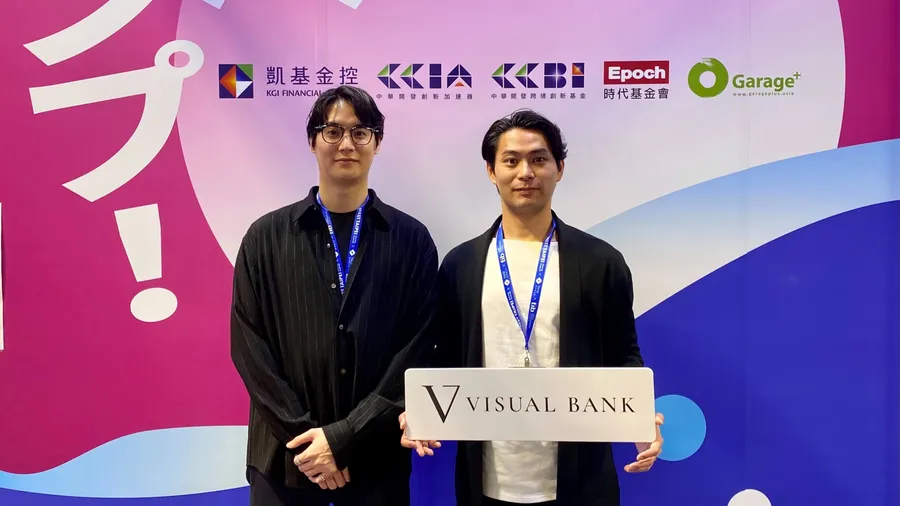
Visual Bank, founded by Saneyuki Nagai and Fumitaka Iizuka in Tokyo, is stepping into this sensitive intersection. By developing tools that support artists while protecting their rights, the company aims to show that AI and creative industries can grow together, not at each other’s expense.
Personal Stories Behind the Company’s Purpose
Both founders carry personal histories tied to manga and anime. “Japanese IPs like manga and anime helped me take the first step in communication and opening my world,” shared Fumitaka Iizuka, who spent six years of his childhood in Germany unable to speak the local language. “I had no friends, I felt very isolated and very lonely. So what helped me actually to take the first step of communication and opening my world was Japanese IPs like manga and anime.”
For him, objects like Tamagotchi, Dragon Ball, and Pokémon cards were not just toys. They were tools that helped him connect to other children. “I felt a lot of appreciation and gratitude towards Japanese IP and its creators. So I wanted to do something that I could give back in return to them.”
Saneyuki Nagai had a similar experience growing up in New York. He recalled learning English by watching American cartoons, while also receiving VHS tapes recorded in Tokyo. “I really learning any culture and language from cartoon and anime and manga. That’s my origin.”
Before Visual Bank, Nagai spent a decade at SMBC Nikko advising on M&A and IPO projects for tech clients. Iizuka worked for Mitsubishi Corporation, handling international trading, portfolio management, and joint ventures in Southeast Asia. “My background is like business management, finance, M&A and PMI,” he explained. The two met around seven years ago through a mutual acquaintance, forming a partnership rooted in shared personal experiences and a vision for the Japanese IP industry.
Can Technology Protect Artists While Powering Innovation?
The core problem Visual Bank set out to solve was the gap between AI developers who want high quality Japanese IP data, and the IP holders who hesitate to share it. “There is a gap, especially in the usage of data, data supply and demand,” noted Iizuka. “They do not have a clear visibility of who the users are and what they are using it for.”
About a year and a half ago, Visual Bank began working with Japan’s Ministry of Economy, Trade and Industry to build a next generation IP data library. This platform collects manga and illustration data directly from rights holders and makes it available to approved AI developers with transparency and revenue sharing. “We are collecting their data, constructing a data library so that anybody can use with transparency and also a system that creates a revenue distribution to the IP holders.”
At the same time, Visual Bank has built its own use case on top of this data infrastructure. Their product, called The Pen, supports professional manga artists in their illustration workflow. Artists submit rough sketches, and Visual Bank uses a combination of AI and manual refinement to turn them into polished line art. “Initially it took about 12 to 13 days to go from here to here. Now we have both technology and manual support to support the artists speed up their process. So it’s like a powered suit for them,” said Iizuka.
Every artist receives a unique database tailored to their style. “We create a database that is specific for each and every manga artist. So it’s their own database and it reflects their artistic touch.”
The service focuses entirely on professional creators. “Our client is professional manga artists. We are looking more not to the mass market, but we are focusing on the artists, each individual artist.”
Visual Bank currently supports three manga artists with ongoing serializations and plans to collaborate with around ten more. Instead of charging upfront fees, the company uses a royalty model. “We give to the artist first, support the artist first, they expand their ability and they expand their revenue, and we receive a portion of the enlarged pie. This is our philosophy.”
Securing Credibility in the Competitive IP Market
Trust is central to Visual Bank’s strategy. Early in its formation, the company acquired Amana Images, a respected Japanese visual content business with more than forty years of experience. “They are very trusted in terms of data management, IP management, and rights management,” Nagai explained. “We started our business from a method called entrepreneurship through acquisition, ETA. So we acquired this business first and their trust first, so that on top of it we layered a business of AI machine learning.”
Today, the Visual Bank group has about fifty employees between Visual Bank, Amana Images, and the joint venture behind The Pen. Most of the team is based in Japan, though the company is also exploring international connections. “We are also very interested in engineers in Taiwan that have passion towards Japanese IP,” said Iizuka. In August, the company closed a funding round of 1.1 billion yen, or about eight million US dollars, to expand production capacity, hire engineers, and grow into new markets.
Scaling the service brings operational challenges. “We are now facing like a scaling process, scaling phase. So it is meaning that we need to build the operating machine or operating system,” explained Iizuka. The company is seeing demand not only from manga artists but also from webtoon studios and international creators.
Introducing AI into the creative process remains sensitive. “Some of the highly talented, knowledgeable creators are welcoming the AI tool. Because new technology will be empowering their creativity,” Nagai shared. “But some of the creators do not know the details of AI technology. They fear losing their job or opportunity. So it is a divided situation.”
To avoid alienating artists, Visual Bank is careful about its language. “We do not communicate with the market as an AI tech company,” Nagai noted. “Our mission and our company’s goal is to empower creators. Sometimes we are using the AI technology if needed. The final decision is made by the creators.”
Harmony Between Creation and Technology
Visual Bank’s founding philosophy centers on coexistence between artificial intelligence and creative industries. “We want to provide coexistence in the two industries. This is the main reason why we are doing our business and we want to make harmony and coexistence,” stated Iizuka.
At its core, The Pen is not designed to replace artistic talent. It is a tool to strengthen it, making the creative process faster and more sustainable. “We never take away the ability to control the creativity. The final decision is made by the creators,” Nagai emphasized.
As the IP landscape shifts under the pressure of technological change, Visual Bank hopes to set an example for how innovation can respect and reinforce tradition. Their story suggests a future where AI becomes not a threat, but a collaborator, shaped by the people who create the stories the world loves.
©2026 Business Next Media Corp. All Rights Reserved. No.102, Guangfu S. Rd., Da'an Dist., Taipei City 106, Taiwan