©2026 Business Next Media Corp. All Rights Reserved. No.102, Guangfu S. Rd., Da'an Dist., Taipei City 106, Taiwan
An Overview of Taiwan Startup Ecosystem in 2021
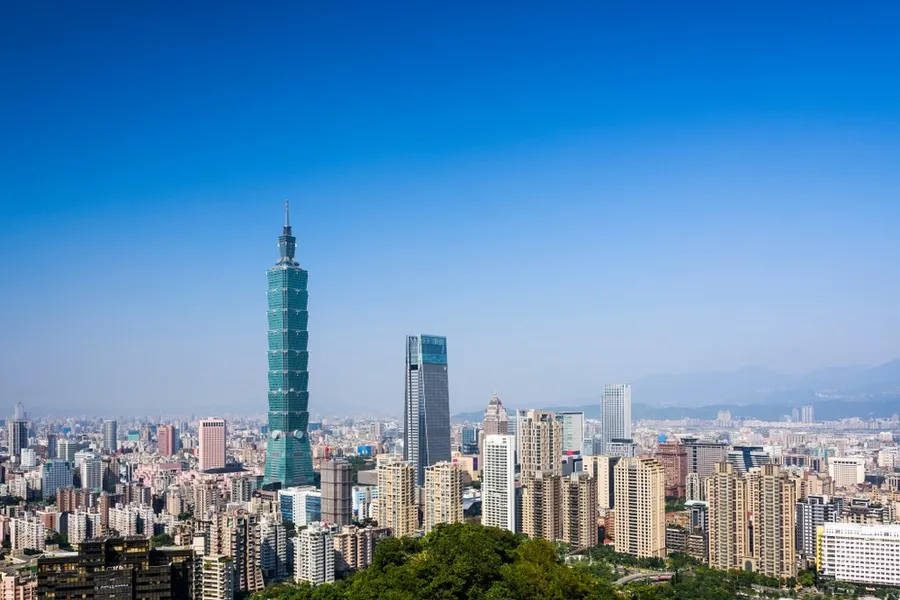
Taiwan is one of the newest ecosystems to enter into the StartupBlink 2020 Ecosystem Ranking Report and ranked 7th in Asia-Pacific. What's Taiwan startup ecosystem like?
Economies are already preparing for post pandemic conduct of businesses internationally, as developed countries are moving fast to vaccinate bulk of its population, including Taiwan's plan to achieve a 60% vaccination rate among its people.
Taiwan is continuously fighting to contain the number of local Covid 19 cases that it was able to maintain at zero until the first quarter of this year, it is also making sure that it could maintain its business attractiveness to the international community.
Amid the current Covid 19 setback, foreigners who are looking at starting a business in Taiwan should look at the economic indicators, government policies for attracting investments, the startup environment, and the overall infrastructure.
Strong economic indicators
For starters, Taiwan economy, as measured by gross domestic product (GDP) is forecast to grow by 4.64% in 2021 from last year, this growth rate would be the fastest growth it achieved since 2014. To be sure, Taiwan's GDP grew 3.11% in 2020, outpacing China's GDP growth for the first time.
Taiwan is the 5th largest economy in Asia. It is the 19th-largest in the world by purchasing power parity (PPP). It is the 8th largest in the world by GDP at purchasing power parity per capita (person), which means there is money circulating for starting businesses.
Taiwan is one of the newest ecosystems to enter into the StartupBlink 2020 Ecosystem Ranking Report.
"Jumping directly to 30th place on the Global Ranking this country has an incredible ecosystem for startups, the country is also ranked 7th in Asia-Pacific…The focus for future development of the Taiwan ecosystem is to continue the advance of the Taipei ecosystem while making sure more cities join Taipei in the rankings," according to the report.
Taiwan's industry advantage
Taiwan remains to be the powerhouse for manufacturing. This means startups are able to build prototypes faster. According to the data from Taiwan Ministry of Science and Technology(MOST), Taiwan makes 75% of personal computers, 50 percent of LCD screens, 25% of semiconductors, and 20% of smartphones globally.
"Taiwan is faster, nimbler, and even more cost efficient. When it comes to prototyping, you have thousands of SMEs here that are experts in making one little piece of a puzzle. You can call them up, provide the specs, and then they can do it a lot faster than a big giant company," described by Mosaic Venture Lab, Ltd. managing director Volker Heistermann in a previous interview.
Taiwan is home to Taiwan Semiconductor Manufacturing Company (TSMC), the world's largest contract chipmaker. Computer and hardware developers Acer and ASUS, electronics manufacturer Foxconn.
Taiwan's electric vehicle industry is another key growing area, leveraging Taiwan industry’s quick response and problem-solving capabilities. In fact, Mosaic's Movtec Mobility Fund I, a USD100 million venture capital fund for EV projects will likely be oversubscribed way ahead of schedule as investors from governments in Taiwan and other Asian countries and private sectors have already signified their interests and initiated the due diligence stage.
Higher than average funding
According to Dr. I-Chien (IC) Jan who is the Entrepreneur in Residence(EIR) in Meet, in his article for Startup Genome, an innovation policy advisory and research firm, startups in Taiwan has exceeded the global average seed funding at USD$500k median seed round compared to global average of 494k. Startups in Taiwan recorded even higher median series A round at USD$5 million compared to global average of USD$2.7 million.
For those who are seeking funding from the government, The Taipei City Government already established Taipei Municipal Self-Government Ordinance for Industrial Development that provides grants for SMEs and startups. It also provides up to 5 million dollars for Brands establishment; up to 3 million dollars for incubation; up to 1 million dollars for new startups.
Foreign-friendly environment
Taiwan has been ranked as the best place to live for the third year in a row. This was the result of a survey of 12,420 expats conducted by InterNations, a Munich-based expat network with about 4 million members. According to the report, the expats highlighted Taiwan's medical care, on top of quality of life. Taiwan was also named as one of the friendliest countries in the world.
Visas for attracting highly talented foreigners
Called Entrepreneur Visa, the Ministry of Foreign Affairs issues visa to those who wish to stay in Taiwan to build their startup. Apart from this, the government also created in 2018, the Taiwan Employment Gold Card, a combined open work permit, residence permit and visa for skilled professionals.
To be sure, the National Development Council (NDC) said that Taiwan is boosting its pool of talents in the AI application services.
Meanwhile, in a bid to attract and retain more white-collar professionals, the cabinet was given a greenlight to draft an amendment to the Act for the Recruitment and Employment of Foreign Professional Talent that would shorten the continuous residence requirement to be eligible for permanent resident, from five years to three.
Dedicated government agencies and support programs
The government has also set up some agencies that would be a starting point for startup founders. For example, the Taiwan Tech Arena is a startup ecosystem building program launched by the Taiwan Ministry of Science and Technology in 2018, set up inside the Taipei Arena in Taipei. The program funding of about USD 50 million comes from the ministry and is managed by the Industrial Technology Research Institute (ITRI). To date, has supported over 250 startups both locally and internationally.
Meanwhile, the National Development Council (NDC) the policy-planning agency of the government has listed a 5-point action plan for a robust ecosystem way back in 2018. It covers providing ample early-stage funding for startups, developing talent and adjusting regulations, building partnership between startups and the government, providing startups with various exit channels, and helping startups tap into global markets.
Presence of international VCs
The latest Taiwan Startup Ecosystem Report by Startupblink noted that that corporate venture capital is particularly strong in Taiwan, representing close to 50% of the industry, in comparison to around 25% worldwide.
"This speaks to highly involved corporations, but also could be a signal of risk-averse venture capital (which mainly invests in startups of the corporation's industry and startups that may be potentially useful to the enterprise)," the report said.
One of the noteworthy corporate VC in Taiwan is iPhone maker Wistron, which is one of biggest electronic manufacturer in the world. They are actively investing in startups in Taiwan. For seeking deeper cooperation with the startup ecosystem, Wistron formed the New Business Development Innovation Integration Center(IIC). Furthermore, they have teamed up with AppWorks, one of the largest venture capital firms in Asia to launch a Wistron accelerator program, to help technology startups.
Another is Taiwania Capital that backed by National Development Council. It has raised, since its foundation in 2017, 4 funds for a combined value of USD$400 million. The key areas in which they invest are enterprise software, autonomous systems, AI, IoT, robotics & drones, among others.
©2026 Business Next Media Corp. All Rights Reserved. No.102, Guangfu S. Rd., Da'an Dist., Taipei City 106, Taiwan